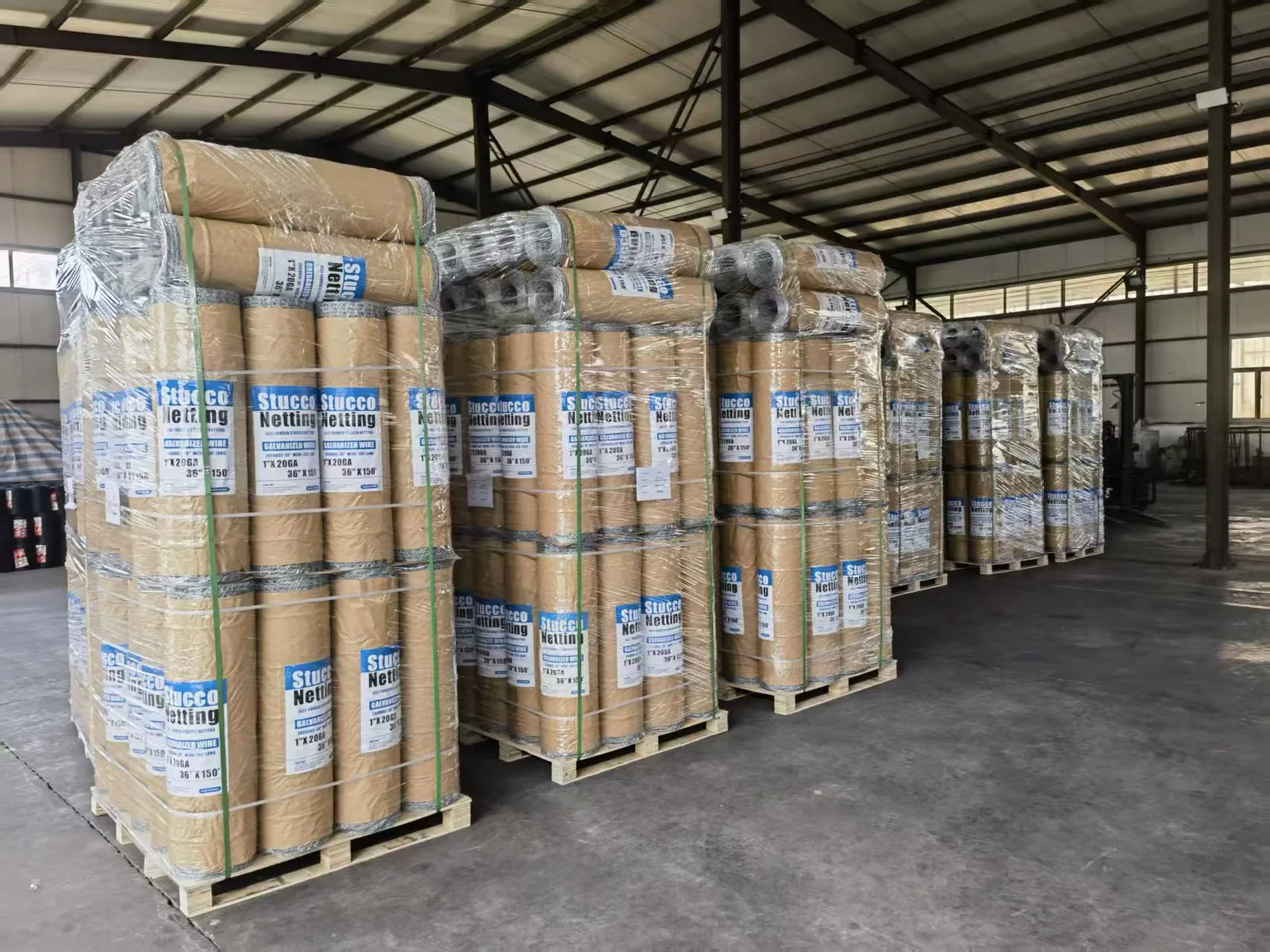
For Portland cement plaster (stucco) in North America, the plaster base is governed by three ASTM material specifications, all recognized by the International Building Code. They are not interchangeable line items — which one you name on the purchase order changes the price, the stiffness and how it installs.
The three recognized plaster bases
| Standard | Material | Best suited to |
|---|---|---|
| ASTM C1032 | Woven wire — stucco netting / hex netting | Flexible, economical base on framed & sheathed walls; wraps corners |
| ASTM C847 | Expanded metal lath (diamond-cut sheet) | Stiffer base where more rigidity is needed |
| ASTM C933 | Welded wire lath | Between woven and expanded |
Woven wire is the flexible, economical base most stucco is hung on; expanded metal lath is stiffer for surfaces that need more rigidity; welded wire lath sits between the two. Name the standard on the PO, not just "netting."
The coating is a spec, not a detail
All three must be galvanized, because the base is buried in wet cement that will corrode bare steel. C1032 woven wire plaster base is zinc-coated wire, supplied flat or self-furring, with or without stiffener wires and with or without a paper backing. Expanded metal lath to C847 carries a defined zinc coating (G60 to ASTM A653). When you compare quotes, the coating is a line item in its own right — a thinner or electro-only coating will not last behind stucco the way a proper galvanized base will.
Installation: the two numbers in ASTM C1063
Installation is a separate standard — ASTM C1063, Installation of Lathing and Furring — and two of its requirements decide whether stucco actually keys to the wall rather than bonding to the paper behind it.
| Requirement | ASTM C1063 |
|---|---|
| Offset from substrate | ≥ 1/4 in (6 mm) — what self-furring dimples provide |
| Side & end laps | ≥ 1 in (25 mm) |
| Orientation | Long dimension across the framing |
| Fastening | Into structural members, ~7 in (178 mm) o.c. in wood |
Skip the furring offset or the laps and the plaster bonds to the paper, not the steel — the number-one cause of stucco that later cracks or delaminates.
Plaster thickness: ASTM C926
The plaster itself follows ASTM C926. A traditional three-coat system over a metal plaster base is a nominal 7/8 in (22 mm) total:
| Coat | Thickness | Purpose |
|---|---|---|
| Scratch | 3/8 in (10 mm) | Keyed into the lath, then scratched so the next coat bonds |
| Brown | 3/8 in (10 mm) | Floated flat and cured |
| Finish | 1/8 in (3 mm) | Color and texture |
| Total | 7/8 in (22 mm) | Nominal three-coat over a metal base |
That 7/8 in is why the base has to be held off the wall and lapped properly: the wire carries three-eighths of an inch of cement before the wall face is even started.
How Leeter can help
Leeter manufactures galvanized woven wire stucco netting — plain and self-furring, in 1 in and 1-1/2 in hex mesh at 17–20 gauge — to the C1032 material spec, and can advise on the C1063 furring and lap detail your inspector will check. Tell us your wall type and climate and we will match the gauge, mesh, furring and roll size, with mill certification on the zinc coating.