
Anchor bolt selector
Look up the UNC thread and tap drill by diameter, compare ASTM F1554 grades, and check how to measure an anchor bolt you already have.
Ask Leeter AI ↓UNC thread
Tap drill (for the nut)
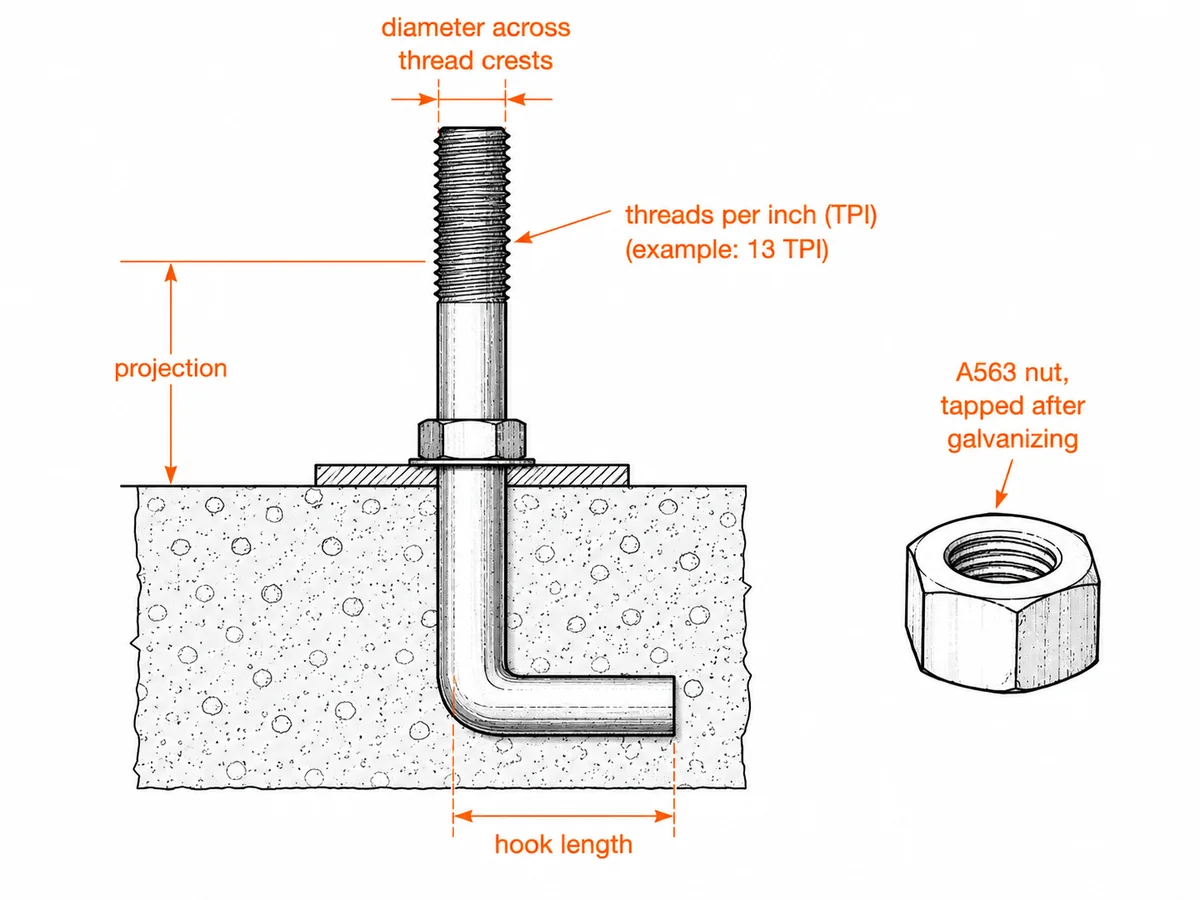
Measure an existing anchor bolt
- 1. Clean the threads — a wire brush or running a nut down removes rust and debris.
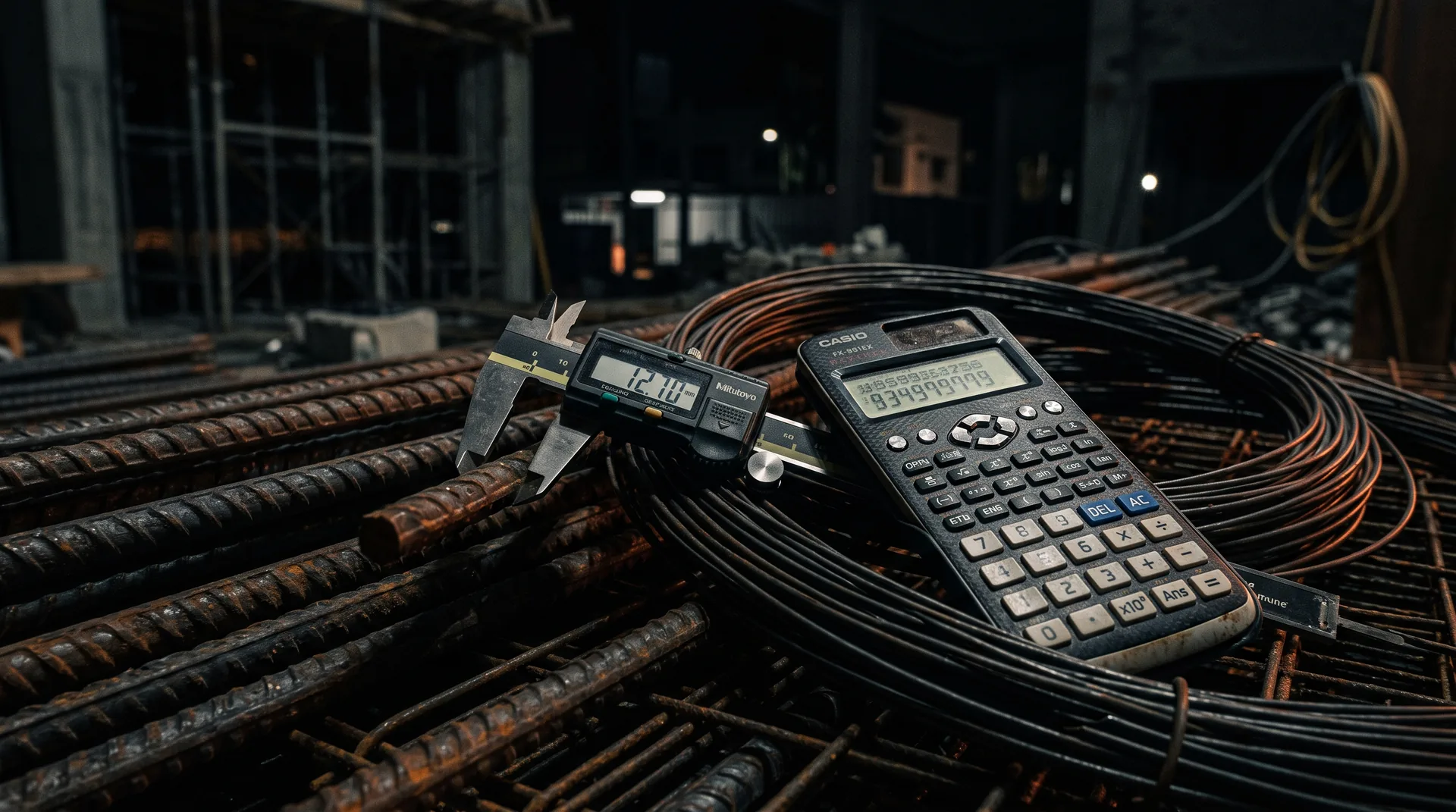
- 2. Measure diameter across the thread crests with a caliper (that is the nominal size).
- 3. Count threads over 1 inch to get the TPI, or use a thread pitch gauge — match it above.
- 4. Measure the projection (stick-out above concrete) and, if visible, the hook or plate.
- 5. Anchor rods are often unmarked — assume F1554 Gr 36 unless documentation or the blue/yellow/red end mark says otherwise, and confirm with the engineer.
- • Projection ≈ grout pad + base-plate thickness + washer + nut(s), plus ~2 threads / ½ × diameter of spare.
- • Embedment and edge distance are governed by ACI 318 / AISC Design Guide 1 — not a single rule of thumb. Hooked bolts are the weakest anchorage; headed or plate bolts are preferred for real tension.
- • Galvanized sets: a hot-dip bolt must pair with an A563 nut tapped oversize after galvanizing, or it will bind. Don't chase (re-cut) the bolt threads — that removes the zinc.
How this is calculated
- 1Thread & tap drill
Threads are the UNC coarse series to ASME B1.1; the tap-drill sizes shown are for 75% thread engagement (drill ≈ D − 0.9743/n). For an anchor rod the tap drill matters only when cutting matching internal threads (couplers, tapped plates, leveling-nut hardware) — the rod itself is male-threaded and takes a nut.
- 2Grade logic (ASTM F1554)
Grade 36 (blue) is general-purpose and always weldable — the default for bolted base plates. Grade 55 (yellow) is higher strength but weldable only if Supplement S1 is ordered. Grade 105 (red) is quench-and-tempered: do not weld or bend/hook it — use straight rods with nuts and plate washers. Tensile ranges: Gr 36 58–80, Gr 55 75–95, Gr 105 125–150 ksi.
- 3Measuring an existing bolt
Clean the threads, caliper the diameter across the thread crests for the nominal size, count threads over one inch for the TPI, and note the projection. Anchor rods are usually unmarked — assume Grade 36 unless a blue/yellow/red end colour, stamp or drawing says otherwise.
- 4Worked example
A ¾ in F1554 Gr 55 rod that needs a coupler tapped ¾-10 UNC → drill 21/32 in; if it will be welded, order Gr 55 S1 (or drop to Gr 36).
- 5Limits
Thread, tap and grade data are selection and fabrication facts. The actual design — embedment, edge distance, and tension/shear/breakout capacity — is governed by ACI 318 Chapter 17 and AISC base-plate detailing, set by the structural engineer, not this tool.
Leeter provides the tool, not a warranty of the result. Every figure above is a planning estimate for reference only — confirm structural, code and customs decisions with your engineer, inspector or broker.







From estimate to firm quote
These tools size the job. Send us the spec and we'll price the material, packing and lead time.