Gabion fill calculator
How much stone and how many baskets a gabion wall needs — using the in-gabion bulk density, not solid-rock density (the mistake that over-orders stone by ~60%).
Ask Leeter AI ↓≈ 8.0 t at 1.6 t/m³ · add ~10% for settlement/wastage
wall volume
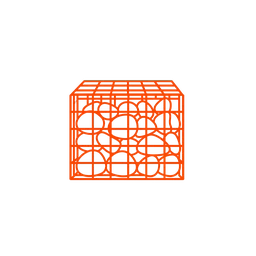
2×1×0.5 m baskets
How this is calculated
- 1Volume & tonnage
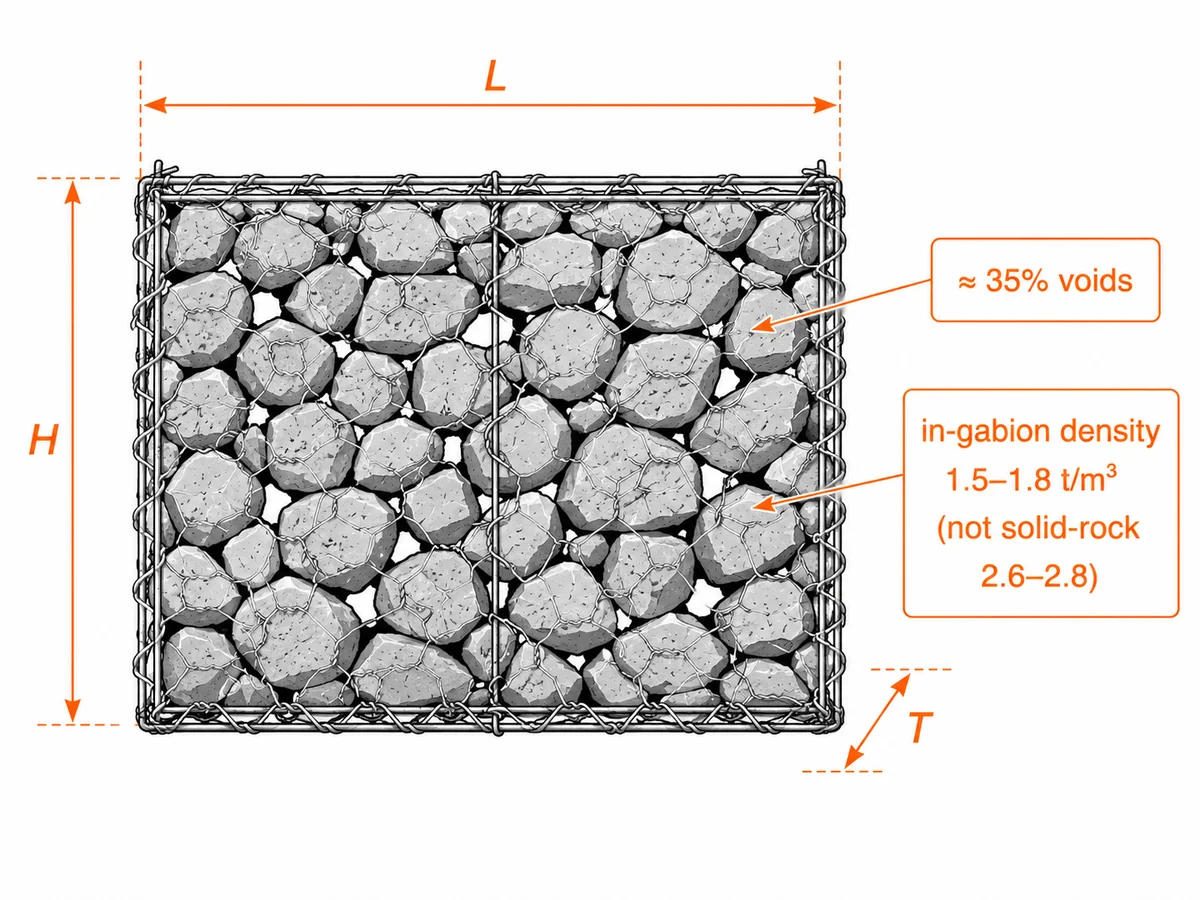
Wall volume V = L × H × T (m³) — you fill the whole cage, voids included, so V is the ordering basis. Stone tonnage = V × the in-gabion bulk density of 1.5–1.8 t/m³ (mid 1.6), which is solid-rock density (2.6–2.8) × (1 − void fraction ~0.35–0.40).
- 2The density trap
Using solid-rock density over-orders stone by ~60% — the exact mistake this tool exists to avoid, because a well-packed gabion is only ~60–65% rock. Denser stone (granite) sits at the top of the band; add ~10% for settlement and overfilling each 300 mm lift proud by 25–50 mm.
- 3Baskets
Baskets = ceil(wall volume ÷ basket volume). Choose a basket whose thickness matches the wall thickness T — a 2×1×1 m box (2 m³) does not suit a 0.5 m-thick wall even though the volume arithmetic “works”; use a 2×1×0.5 m box (1 m³) instead.
- 4Worked example
A 10 × 1 × 0.5 m wall = 5 m³ → stone 5 × 1.5–1.8 = 7.5–9.0 t (≈8.0 t at 1.6, ~8.8 t with 10% overfill); baskets = ceil(5 / 1) = 5 of the 2×1×0.5 m size (thickness 0.5 = wall T, so the geometry is valid).
- 5What’s excluded
Lacing/spiral wire (~5% of basket weight), internal bracing/connecting wires, geotextile filter fabric behind retaining walls, and foundation bedding are not counted — add them per the manufacturer’s spec. Fill stone should be angular, well graded, 1.5–2× the mesh aperture.
Leeter provides the tool, not a warranty of the result. Every figure above is a planning estimate for reference only — confirm structural, code and customs decisions with your engineer, inspector or broker.

From estimate to firm quote
These tools size the job. Send us the spec and we'll price the material, packing and lead time.