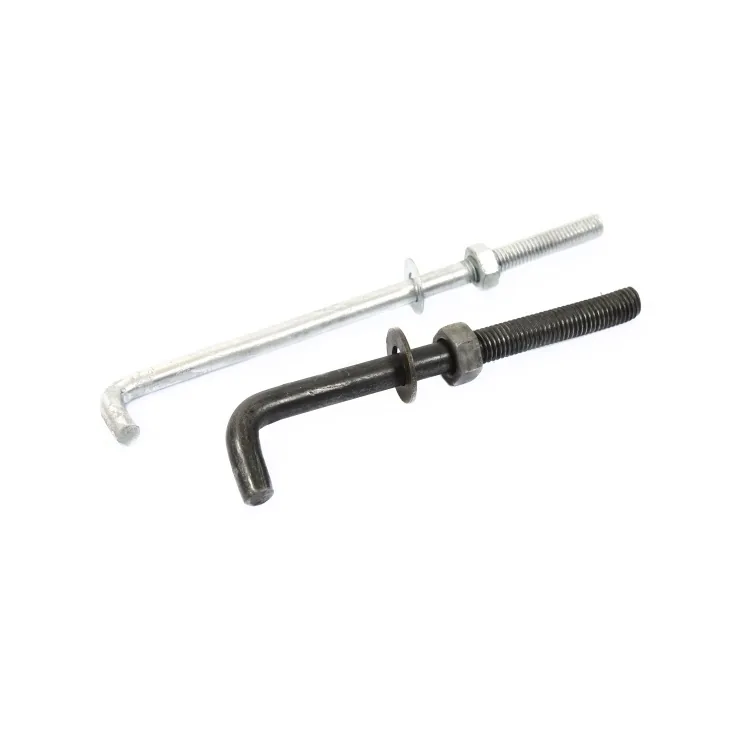
We are Hebei Leeter Import and Export Co., Ltd ("Leeter"). We manufacture cast-in anchor bolts — L, J and U — in Dingzhou, Hebei, produced and tested to ASTM F1554 Grades 36/55/105 with EN 10204 3.1 mill test reports. This guide maps the landscape and gives you the checklist that separates real F1554 capability from re-labeled commodity stock.
The cluster map
Yongnian, Handan, Hebei — the fastener capital
Yongnian is the volume centre of Chinese fasteners: 7,079 production and sales enterprises, 340,000+ workers, output of 7.8 million tons / 55 billion RMB (2025) — about 58% of China's fastener production by tonnage — covering all 12 major categories in China's fastener standards catalog, with 25,000 domestic outlets and exports to 110+ countries. The trade grew from village forges in the late 1960s into today's industrial district. Its character: commodity carbon-steel bolts, nuts and foundation bolts at volume prices — in our experience mostly metric grades (4.8–8.8, DIN 529-style foundation bolts).
Jiaxing / Haiyan, Zhejiang — the export cluster
Haiyan county is one of China's three major fastener manufacturing bases: 600+ fastener enterprises, fasteners as the county's #1 export, and more than 9% of the country's self-operated fastener exports (Jiaxing citywide is commonly credited with roughly a quarter of China's fastener foreign-trade exports, though no official customs breakdown is published). The cluster's character is the opposite of Yongnian's: export-facing, standards-driven — firms here have fought EU anti-dumping cases jointly and are moving into automotive and stainless work — shipping via Ningbo/Shanghai.
Also on the map
Anyang (Henan) hosts specialist producers of pre-assembled wind-turbine anchor cages and high-strength foundation bolt systems — a different, project-engineered class of product. And Hebei's broader advantage applies to anchor bolts as it does to wire: the province produces about one-fifth of China's crude steel (199.9 of 1,005 million tons, 2024), so round bar and rod are local, and Hebei-made bolts ship FOB Tianjin (Xingang).
The capability question: 8.8 is not F1554
ASTM F1554 defines anchor bolts by yield strength — Grade 36 (blue end), Grade 55 (yellow), Grade 105 (red) — with requirements that go well beyond a tensile number:
- Weldability is a supplement, not a default. Grade 55 is weldable only with Supplement S1 (restricted chemistry + carbon-equivalent limit). A Grade 55 bolt without S1 may not be welded to.
- Ductility is part of the spec. This is the classic substitution trap, and it's documented by US fastener engineers: a higher-strength substitute (1045 bar, A193 B7 — or a metric 8.8) can pass tensile and yield yet fail F1554's elongation and reduction-of-area requirements. Substituting without the engineer's review can be a code violation. The only substitution the standard itself permits runs one way: weldable Grade 55 may be supplied where Grade 36 was specified — never the reverse.
- The system is more than the rod: matched ASTM A563 nuts (Grade A for 36/55; DH for 105), F436 hardened washers, hot-dip galvanizing to F2329 (with nuts tapped oversize after galvanizing), and S4 Charpy impact testing at +40°F where the engineer requires it.
- Traceability: F1554 product should come with a mill test report traceable to the heat number — chemistry and mechanicals for the actual batch.
In our experience quoting against commodity factories: an enquiry for "F1554 Grade 55" is often answered with re-labeled metric 8.8 stock. The paperwork looks similar; the ductility, weldability documentation and traceability are not. For a structural cast-in fastener, that's the risk you're actually screening for.
The capability checklist
Before price, ask any factory to show:
- The grade and S1 on the mill test report itself — not just on the quotation.
- Heat-number traceability — MTR chemistry/mechanicals tied to the batch you'll receive.
- Matched hardware: A563 nuts (correct grade for the bolt), F436 washers — galvanized nuts tapped oversize after galvanizing.
- Galvanizing certificate to F2329 (not a generic "hot-dip" claim).
- Charpy capability (S4) if your engineer of record requires it.
- End colour coding (blue/yellow/red) or grade stamping for field identification.
A factory that hesitates on any of these is a commodity bolt maker, whatever the quotation says. Our bulk sourcing checklist covers the ordering process, and F1554 grades explained goes deeper on the grades.
The RFQ that gets comparable quotes
| Field | Example |
|---|---|
| Product | L-type cast-in anchor bolt |
| Standard & grade | ASTM F1554 Grade 55 + S1 (weldable) |
| Diameter × length | 1" × 36" overall; hook 6"; thread 8" |
| Finish | Hot-dip galvanized to ASTM F2329 |
| Hardware | 2 × A563 heavy hex nuts (tapped after galv.) + 2 × F436 washers per set |
| Quantity | 10,000 sets |
| Documentation | EN 10204 3.1 MTR with heat number; galvanizing cert; S4 Charpy if required |
| Packing | Export pallet/crate; setting templates if needed |
| Price basis | FOB Tianjin (Hebei) or Ningbo/Shanghai (Zhejiang) |
Then ask every supplier for heat number policy, tensile/yield/elongation test results, thread tolerance class, galvanizing thickness, capacity, lead time and third-party inspection availability. Rank on traceability and testing before price — a cheap anchor bolt with unverifiable steel is the most expensive thing on the site.
How we and our peers actually quote (first-hand convention, not a statistic): trial orders from about a pallet, standard production 15–45 days depending on diameter and finish, Hebei product FOB Tianjin, Zhejiang product FOB Ningbo/Shanghai, T/T or L/C.
Leeter's supplier snapshot
| Company | Hebei Leeter Import and Export Co., Ltd (Leeter) |
| Factory | Dingzhou, Hebei (export HQ Shijiazhuang) |
| Anchor bolts | L / J / U cast-in bolts, manufactured and tested to ASTM F1554 Gr 36/55/105 (S1 weldable option) |
| Hardware | Matched A563 nuts (tapped after galvanizing) + F436 washers; setting templates |
| Finish | Plain or hot-dip galvanized to F2329 |
| Documentation | EN 10204 3.1 mill test reports with heat-number traceability; third-party inspection welcome |
| Terms | Trial orders welcome; FOB/CIF Tianjin (Xingang) |
Frequently asked questions
Where are China's anchor bolt manufacturers located?
In two main clusters: Yongnian (Handan, Hebei) — "China's fastener capital", with about 7,079 fastener enterprises producing roughly 58% of national fastener tonnage — and Jiaxing/Haiyan (Zhejiang), the export-oriented cluster shipping over 9% of China's self-operated fastener exports from Haiyan alone. Wind-turbine anchor cages come from specialists in Anyang, Henan. Hebei product ships FOB Tianjin; Zhejiang product via Ningbo/Shanghai.
Is a metric Grade 8.8 foundation bolt the same as ASTM F1554?
No. F1554 defines anchor bolts by yield strength with ductility (elongation, reduction of area), weldability (S1 supplement for Grade 55) and traceability requirements a strength number alone doesn't satisfy. A substitute can pass tensile yet fail F1554's ductility requirements — a documented substitution trap — and the standard only permits substitution one way (weldable Grade 55 where 36 was specified). Ask for the grade and S1 on the mill test report itself.
What should I check before buying F1554 anchor bolts from China?
Six things: the grade and S1 shown on the MTR; heat-number traceability; matched A563 nuts (tapped oversize after galvanizing) and F436 washers; a galvanizing certificate to F2329; Charpy (S4) capability if your engineer requires it; and blue/yellow/red end colour coding for field identification. A factory that hesitates on any of these is quoting commodity stock.
What is the typical lead time and MOQ for anchor bolts from China?
As a manufacturer's convention rather than a published statistic: trial orders from about a pallet, standard production 15–45 days depending on diameter, grade and finish, quoted FOB Tianjin for Hebei factories or FOB Ningbo/Shanghai for Zhejiang. Sets (bolt + nuts + washers) and setting templates are ordered together so the hardware matches the galvanizing.
Which cluster should I buy from — Yongnian or Jiaxing?
Match the cluster to the product. Yongnian excels at volume commodity fasteners at aggressive prices; Jiaxing/Haiyan at export-spec and higher-documentation work. For ASTM F1554 structural anchor bolts, the decisive question isn't the cluster — it's whether the specific factory manufactures and tests to F1554 with heat-traceable MTRs, which you verify with the capability checklist, not the address.
Sources
- Hebei Provincial Government — Yongnian: national fastener production and distribution hub (58% share, enterprise count)
- MOFCOM trade-remedy portal — Haiyan fastener cluster and export share
- ASTM F1554 — Anchor Bolts, Steel, 36, 55, and 105-ksi Yield Strength
- Portland Bolt — ASTM F1554 grades, supplements and substitution warnings
- AJAX Fasteners — why there are no F1554 Grade 55 substitutes (ductility trap)
- China Steel News — 2024 crude steel output by province (NBS)
