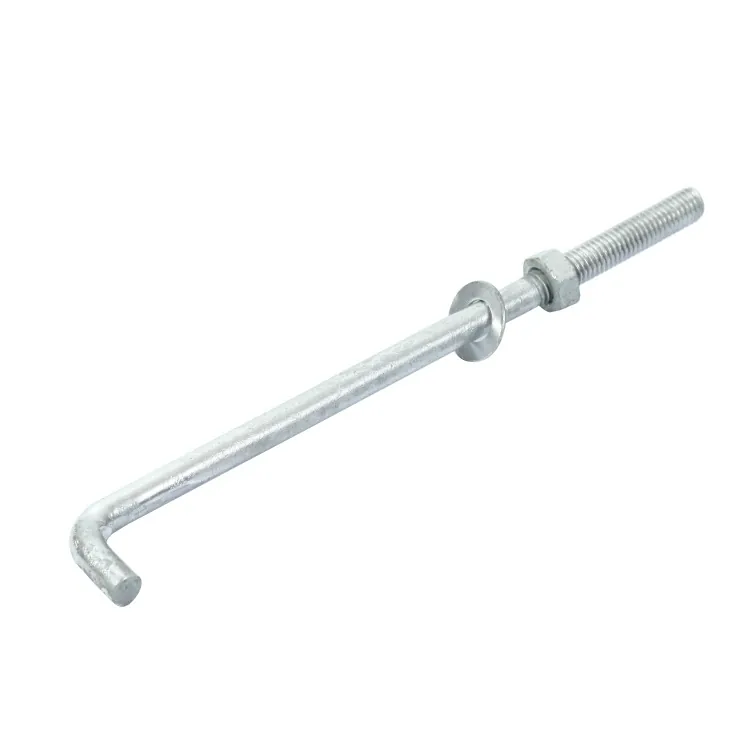
At Hebei Leeter Import and Export Co., Ltd ("Leeter"), we have shipped cast-in-place and headed anchor bolts to contractors and distributors across North America and Europe since 2006. Over that time the single most common documentation gap we see is buyers who order to a grade like ASTM F1554 Grade 36 but never ask for the record that ties the physical bolt to that grade. This guide explains what to require, why each document matters, and how to write it into your RFQ so nothing arrives unverifiable.
Why a mill test report matters for anchor bolts
Structural anchor bolts anchor columns, base plates, equipment, and light poles into concrete. They carry tension and shear that the whole structure depends on. A mill test report, often called an MTR or 3.1 certificate, is the manufacturer's certified record showing that a specific batch of steel meets the chemical and mechanical requirements of the named specification.
For anchor bolts the report matters more than for many other fasteners because the bolts are usually buried in concrete before load ever reaches them. You cannot pull one out later to test it. The MTR is your only permanent evidence that the embedded steel was the right material. If an inspector or engineer of record questions the anchors after the pour, the paperwork is what settles it.
A useful way to think about it: the grade marking on the bolt tells you what the manufacturer says it is, while the mill test report tells you what the steel actually tested at. Good documentation makes those two statements agree and lets a third party confirm it. For a deeper walkthrough of how these certificates are structured, see our guide to mill test reports explained.
What documents to require
Ask for a specific set of documents, not just "certs." Different pieces prove different things, and a complete package covers material, testing, coating, and identity. The table below lists the core documents we recommend requiring on any structural anchor bolt order and what each one actually proves.
| Document | What it proves |
|---|---|
| Mill test report (MTR / 3.1) | Chemical composition and mechanical properties of the steel meet the specified grade |
| Certificate of conformance | Supplier's signed statement that the product matches the purchase order specification |
| Heat / batch number linkage | Ties the finished bolts to a traceable heat of steel on the MTR |
| Galvanizing certificate | Coating thickness and process meet the specified hot-dip or zinc standard |
| Mechanical test report | Yield, tensile, and elongation results, and hardness where required |
| Dimensional / thread inspection | Length, diameter, thread class, and hook or bend geometry are within tolerance |
Not every order needs every document. A plain black F1554 Grade 36 bolt will not have a galvanizing certificate, for example. The point is to decide up front which documents apply and to state them in writing. When the spec calls for coating or supplemental testing, the matching certificate has to come with it.
One practical note from our own shipping experience: the certificate of conformance and the MTR are not interchangeable. A certificate of conformance is a supplier declaration. An MTR carries actual measured numbers from the steel mill. For structural work, insist on the MTR, and use the certificate of conformance as a supporting document rather than a substitute.
How to verify the anchor bolt grade
Grade verification means matching three things: the marking on the bolt, the values on the mill test report, and the requirements of the specification. For ASTM F1554, the standard covers three grades, and each has its own strength range and color code. Confirm that all three sources line up before you accept the material.
F1554 Grade 36 covers lower-strength carbon steel, Grade 55 is a mid-range weldable grade, and Grade 105 is high-strength alloy steel. The standard assigns a color to each grade so bolts can be identified visually: blue for Grade 36, yellow for Grade 55, and red for Grade 105. Some manufacturers also apply grade symbols to the exposed end. Check that the color or marking on the delivered bolts matches the grade on the paperwork.
To verify properly, read the mechanical results on the MTR against the grade's specified minimum yield and tensile strength, then confirm the heat number on the report appears on the shipping documents or bolt tags. If any link is missing, the verification chain is broken. For the full breakdown of each grade's properties and where each is used, our article on ASTM F1554 grades explained walks through the differences.
Reading the chemistry and mechanicals
The chemistry section of an MTR lists carbon, manganese, phosphorus, sulfur, and other elements by percentage. For weldable grades such as F1554 Grade 55, carbon equivalent matters because it affects weldability. If your detail calls for welding to the anchor, check that the report includes carbon equivalent or the elements needed to calculate it.
The mechanical section lists yield strength, tensile strength, and elongation. Compare each against the grade minimums. Grade 36 requires lower minimum strength than Grade 105, so a report showing Grade 36 values does not satisfy a Grade 105 order even though the bolt is real steel. Reading these numbers, rather than trusting a summary line, is the whole point of requiring the report.
Do galvanized anchor bolts need extra certification?
Yes. When anchor bolts are hot-dip galvanized or mechanically zinc coated, the coating is a separate process with its own specification, so it needs its own certificate. The galvanizing certificate documents the coating standard used, typically an ASTM hot-dip specification for structural fasteners, and confirms coating thickness and adhesion.
Galvanizing introduces two issues that certification helps you control. First, hot-dip galvanizing adds zinc to the thread profile, so nuts must be tapped oversize to fit, and the certificate should confirm the coating standard the nuts were matched to. Second, high-strength grades can be sensitive to the heat and chemistry of the galvanizing process, so the coating method has to be appropriate for the grade. The certificate is your record that the right process was applied.
In our experience the most common field problem with coated anchors is not coating failure but thread fit, where over-thick zinc keeps the nut from turning down. Requiring the galvanizing certificate and confirming the nut and thread allowance were coordinated prevents that headache before the bolts reach the site. Ask for coating thickness values, not just a pass statement.
What traceability to the heat really means
Traceability to the heat means every finished anchor bolt can be linked back to a single, identified batch of molten steel, called a heat, with its own unique number. That heat number appears on the mill test report, and the same number should follow the material through manufacturing to the shipping documents and, ideally, to a tag on the bundle.
Heat traceability is what turns a stack of paper into proof. If a quality question comes up later, the heat number lets everyone find the exact steel record, review its tested properties, and confirm the anchors in the wall came from that batch. Without the heat link, an MTR only proves that some steel somewhere met the grade, not that your bolts did.
Good suppliers preserve this chain by carrying the heat number on production travelers and marking or tagging bundles by heat. When you receive a shipment, spot-check that the heat numbers on the MTR match those on the packing list or tags. A mismatch, or a report with no heat number at all, is a signal to stop and ask questions before the material goes in the ground.
How to request certification in your RFQ
State your documentation requirements in the request for quotation, not after the order ships. The RFQ is the cheapest place to set expectations, because the supplier prices and plans around it. A vague RFQ produces vague paperwork. A specific one produces a matching document package.
Write the requirements as explicit line items. Name the specification and grade, for example ASTM F1554 Grade 55. Require a mill test report with heat numbers, a certificate of conformance, and, if coated, a galvanizing certificate to the named coating standard. If your project needs supplemental testing such as Charpy impact values or extra hardness checks, call those out separately, since they are not automatically included.
Two more clauses save trouble later. Ask that documents be provided before or with delivery, so you are not chasing paperwork after the pour. And ask that heat numbers on the bolts or bundles match the reports. When you request a quote from us, spelling out these points lets us confirm up front exactly what certification will travel with your anchor bolts, with no surprises at receiving.
A short RFQ checklist
Include the governing specification and grade. Require the mill test report with chemistry, mechanicals, and heat numbers. Add the certificate of conformance. Name the coating standard and require its certificate if the bolts are galvanized. List any supplemental tests. State when documents must arrive and that heat numbers must be traceable. Those seven items cover most structural anchor bolt orders.
Frequently asked questions
What is the difference between a mill test report and a certificate of conformance?
A mill test report contains actual measured chemical and mechanical test results tied to a specific heat of steel. A certificate of conformance is a signed statement that the product matches the specification, without the underlying numbers. For structural anchor bolts, require the mill test report and treat the certificate of conformance as a supporting document.
Is anchor bolt certification the same for all F1554 grades?
The type of documentation is the same across F1554 Grade 36, 55, and 105, but the tested values differ because each grade has its own strength requirements. Always match the mechanical results on the report to the specific grade ordered. A report showing Grade 36 values does not satisfy a Grade 105 requirement even though both are valid steel.
Do I need a separate certificate for galvanized anchor bolts?
Yes. Galvanizing is a separate process with its own specification, so hot-dip or zinc-coated anchor bolts need a galvanizing certificate in addition to the mill test report. That certificate should confirm the coating standard, coating thickness, and that nut threads were tapped to fit the coated bolt. Ask for the values, not just a pass statement.
How do I confirm traceability to the heat?
Check that the heat number on the mill test report also appears on the packing list, bolt tags, or bundle labels. That link connects the physical bolts to the tested steel record. If a report has no heat number, or the numbers do not match the shipment, ask the supplier to correct the documentation before you install the anchors.
When should I ask for certification documents?
Ask in the RFQ, before the order is placed. Naming the specification, grade, and required documents up front lets the supplier price and plan for them, and lets you require that documents arrive with or before delivery. Requesting certification after shipment often means delays while paperwork is reconstructed, and sometimes it cannot be produced at all.
Get certified anchor bolts with full documentation
Certification is not extra paperwork, it is the proof that your anchor bolts are what the drawings call for. Require the mill test report, verify the grade against it, insist on galvanizing certificates where coating applies, and confirm heat traceability from report to bundle. Build those requirements into the RFQ and the documents will match the product.
If you are sourcing structural anchor bolts and want certification handled correctly from the first quote, contact us to discuss your specification and the exact documents that will ship with your order.
