At Hebei Leeter Import and Export Co., Ltd ("Leeter"), founded in 2006 in Dingzhou, Hebei, we manufacture and export reinforcement accessories to contractors and distributors across North America and Europe. This guide explains why bridge decks are treated differently from ordinary slabs, which support types apply, and how to match your supports to a coated-bar system so the whole assembly works together.
Why bridge decks need more than ordinary chairs
Bridge decks live in one of the harshest environments any concrete faces. They take direct traffic loads, freeze-thaw cycling, and chloride attack from deicing salts or coastal spray. That combination drives chlorides toward the reinforcing steel, and once chloride passes a threshold at the bar surface, corrosion begins. Corroding steel expands, cracks the concrete, and spalls the deck. So the design response is more concrete cover and better-protected steel, and that changes what the supports have to do.
Cover is the first line of defense. A residential slab might specify three-quarters of an inch to an inch of cover, but bridge decks routinely call for 2.5 to 3 inches over the top mat, with the exact figure set by the project specification and the governing agency. That much cover means the top-mat supports have to stand tall, stay vertical under load, and resist tipping while workers walk the mat and screed the concrete. Short, flimsy chairs simply do not belong here.
The second line of defense is the coating on the bars. When reinforcement is epoxy coated or galvanized, every accessory that touches it has to preserve that barrier. A bare, sharp steel chair can scratch epoxy, and an unprotected contact point becomes the exact spot where corrosion starts. That is why bridge deck rebar supports are usually coated, capped, or made from plastic where they meet the steel. The support system and the corrosion-protection system are one system, not two.
What are the main support types for bridge decks?
Bridge decks rely on three families of support: continuous high chairs for the top mat, individual high chairs and bolsters for spot support, and plastic or coated variants that protect coated bars. Each has a role, and most decks use a combination based on span, bar layout, and the specified corrosion-protection level. The engineer's drawings and the governing specification decide the mix, not the crew's convenience.
Continuous high chairs (CHC)
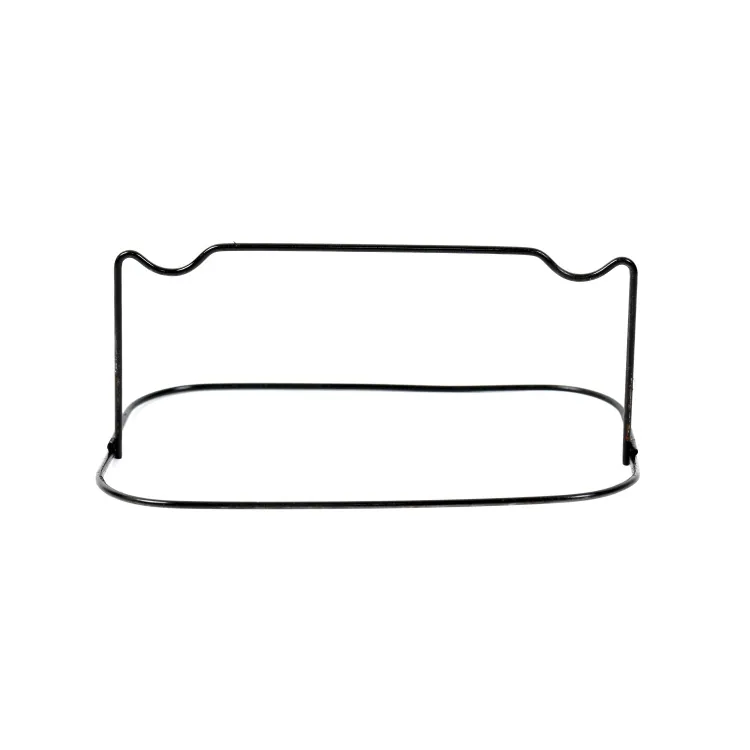
Continuous high chairs, often shortened to CHC, are the workhorse for supporting the top mat on a bridge deck. They run as long lengths of formed wire with legs at regular intervals, so they spread load along a line instead of a single point. That continuous footprint gives the top mat far better stability during the concrete pour, which matters when crews and screed equipment are moving across the steel. CHC comes in a wide range of heights, letting the fabricator hit the specified cover precisely.
Because they carry the top mat, continuous high chairs take the most abuse. They must resist lateral push from workers and equipment, hold height as concrete is placed, and avoid rolling or twisting. On coated decks, the CHC is coated or fitted with plastic tips so it never scratches the epoxy on the bars it supports. Our related guide on continuous high chairs for top mats walks through spacing and height selection in more detail.
Individual high chairs, bolsters, and rod chairs
Alongside continuous runs, crews use individual high chairs, beam bolsters, and rod chairs to support bars at specific points or along beams. These pieces fill gaps where a continuous run does not fit, support the bottom mat, or add height where the deck thickens. Rod chairs in particular give a stable, wide base for holding a single bar line at a set elevation, and they are easy to place quickly across a large area.
The right choice depends on load and geometry. Individual chairs work well for spot support, while bolsters are built to carry bars along beams and girders. For a full comparison of how these pieces differ between decks and ground-supported slabs, see our guide on slab-on-grade versus deck supports, which covers why base area and leg design change with the application.
Plastic and coated supports for coated bars
When a deck uses epoxy coated or galvanized reinforcement, the supports must match. Plastic supports and plastic-tipped wire chairs are common because plastic does not conduct or corrode and cannot scratch the coating. Epoxy coated wire chairs are another route, giving the strength of steel with a protective barrier at every contact point. The goal is the same either way: no bare metal touching a coated bar, and no accessory that becomes a weak point in the corrosion system.
How do you match supports to a coated-bar system?
Matching supports to a coated-bar system means the accessory protection level should equal or exceed the bar protection level. If the deck uses epoxy coated bars, the supports should be epoxy coated wire or plastic; if the bars are galvanized, use galvanized or plastic supports. Mixing a bare steel chair into a coated system defeats the purpose and creates a corrosion cell. The specification will usually state the required accessory type, so read it before ordering.
The table below summarizes how support choices track with the bar system. Treat it as a starting point, and always defer to the project drawings and the governing agency specification, which override any general guidance.
| Bar system | Recommended support type | Contact protection | Typical use |
|---|---|---|---|
| Uncoated (black) bar | Coated wire or plastic-tipped chairs | Plastic tips reduce staining | Interior slabs, some decks |
| Epoxy coated bar | Epoxy coated wire or plastic supports | No bare metal contact | Bridge decks in chloride zones |
| Galvanized bar | Galvanized or plastic supports | Matched barrier at contacts | Coastal and deicing exposure |
| Stainless or MMFX | Plastic or stainless-compatible supports | Avoid galvanic pairing | High-durability, long-life decks |
Two practical points guide the match. First, avoid galvanic pairing, which happens when two dissimilar metals contact in a moist, chloride-rich environment and one corrodes faster. Plastic contacts sidestep the issue entirely. Second, protect the coating during handling, not just in the finished deck. Coated bars and coated supports both scratch if dragged, so crews should carry rather than drag, and inspectors should patch any coating damage before the pour with the approved repair material.
What keeps supports stable during the pour?
Stability comes from base area, leg geometry, correct spacing, and tying the supports to the mat. A support with a wide footprint resists tipping better than a narrow one, and continuous runs beat isolated points for holding a top mat level. Spacing matters too: place supports close enough that the mat cannot sag between them under the weight of wet concrete and the crews walking it. Under-spacing supports is one of the most common causes of low cover in a finished deck.
Tying is the step crews sometimes rush, and it costs them. Securing the mat to the supports with the specified ties keeps everything from shifting as concrete flows around it. During placement, the deck sees real forces: the surge of concrete off the pump or bucket, workers moving across the steel, and vibration from screeds and finishing equipment. Supports that are well chosen but loosely tied still drift, and drifted steel means the cover no longer matches the drawings.
Height accuracy is the payoff for all of this. The whole point of a bridge deck support is to hold the specified cover so the corrosion protection works as designed. That means ordering supports in the correct height for the mat position, verifying that height against the drawings, and checking a sample after tie-off. A support that holds 2.75 inches of cover exactly is doing its job; one that settles to 2 inches under load has quietly reduced the service life of the deck.
How to specify and order bridge deck supports
Start with the project specification and the reinforcement drawings, because they set cover, bar coating, and often the accessory type. Confirm the required cover over the top and bottom mats, identify whether bars are epoxy coated, galvanized, or uncoated, and note any agency-specific accessory rules. From there, choose continuous high chairs for the top mat, add individual chairs or bolsters where needed, and select the contact protection that matches the bar system.
Quantities depend on spacing, so calculate support counts from the specified spacing and the deck area rather than guessing. It helps to involve your supplier early, since a manufacturer can advise on available heights, coating options, and lead times for coated or plastic parts. If you are comparing options for a specific deck, you can request a quote and share your cover and bar-coating requirements so the supports arrive matched to the job. Browse the full range of rebar supports to see the height and style options available.
Frequently asked questions
How much concrete cover do bridge decks require?
Bridge decks commonly require 2.5 to 3 inches of cover over the top mat, though the exact figure is set by the project specification and the governing agency. This is far more than the residential slab range because decks face chlorides, traffic, and freeze-thaw. Always confirm the required cover on the drawings before selecting support heights.
Why can't I use ordinary steel chairs with epoxy coated bars?
Bare steel chairs can scratch epoxy coating and create a bare contact point where corrosion starts, defeating the coated-bar system. Supports for epoxy coated bars should be epoxy coated wire or plastic so no bare metal touches the steel. The accessory protection level should equal or exceed the bar protection level specified for the deck.
What are continuous high chairs used for?
Continuous high chairs, or CHC, support the top mat of reinforcement across a bridge deck. Their continuous formed-wire base spreads load along a line, giving the mat strong stability during placement when crews and equipment move across it. They come in many heights so fabricators can hit the specified cover for the top mat precisely.
Do galvanized bars need special supports too?
Yes. Galvanized bars pair best with galvanized or plastic supports so the contact points share a matched barrier and avoid galvanic corrosion between dissimilar metals. Using a bare or mismatched support in a galvanized system creates a weak point in the corrosion protection. Check the specification, which usually states the required accessory type.
How do I know how many supports to order?
Calculate support quantities from the specified spacing and the deck area, not from a rough guess. Spacing is set so the mat cannot sag between supports under wet concrete and foot traffic, which protects the cover. Share your cover, bar coating, and spacing requirements with your supplier so the height and quantity match the job.
Bridge decks reward careful reinforcement support and punish shortcuts, because the cover and coating you build in today determine how long the structure lasts. Match your supports to the coated-bar system, choose continuous high chairs that hold the top mat, and verify height under load. To get supports matched to your deck specification, request a quote and tell us your cover and bar-coating requirements.
