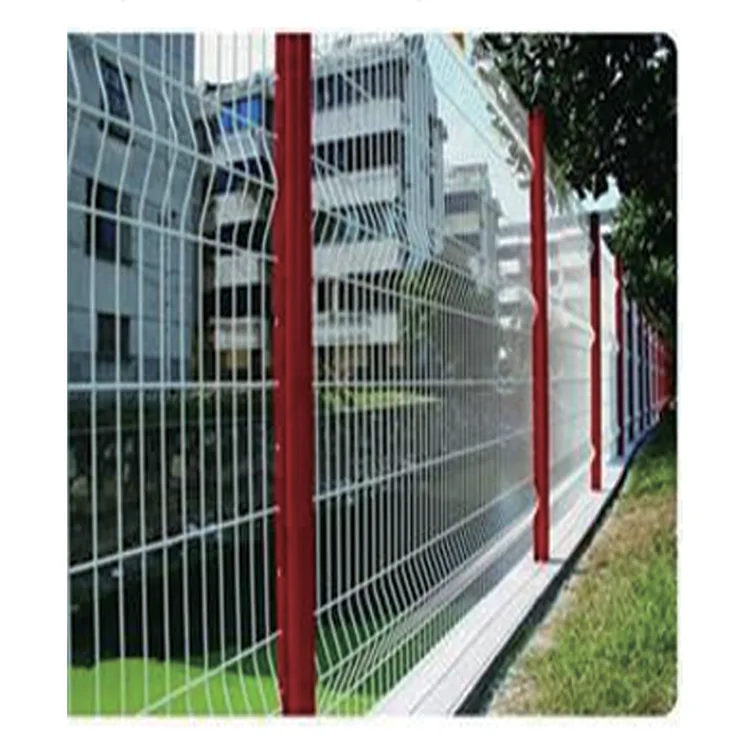
We are Hebei Leeter Import and Export Co., Ltd ("Leeter"), a welded fence panel manufacturer in Dingzhou, Hebei, exporting since 2006. These are rigid welded panels — not rolled field fence, which is woven and sold in rolls — so this guide gives the panel dimensions, gauge and weights the way a farm-store buyer or importer needs them.
Livestock panel spec table
Vertical stays are 8 in on every type; the horizontal spacing is graduated — tight at the bottom, wider up the panel — which is what stops small stock from pushing through or rooting under.
| Panel type | Length × Height | Line wires | Wire gauge | Openings | Weight (Select – heavy) |
|---|---|---|---|---|---|
| Cattle | 16 ft × 50 in | 10 | 4 ga (or ¼" heavy) | ~6" × 8" (4" at bottom) | 32 – 44 lb |
| Hog | 16 ft × 34 in | 11 | 4 ga (or ¼" heavy) | 2" × 8" at bottom → 6" top | 29 – 42 lb |
| Combination (combo) | 16 ft × 50 in | 13 | 4 ga (or ¼" heavy) | 2" × 8" at bottom → 6" top | 37 – 52 lb |
| Sheep & goat | 16 ft × 42–48 in | 11 | 4 ga | 3" × 8" at bottom → 6" top | ~32 lb |
| Horse / tall | 16 ft × 60 in | — | 4 ga to ¼" | ≤ 2" × 4" (small) | ~50 – 60 lb |
| Utility | 16 ft × 48 in | — | 6 ga (0.192" / 4.88 mm) | ~2" × 4" | lighter |
| Handy / half | 8 ft × 50 in | 10 | 4 ga | same as cattle | ~14 lb |
The single most-searched fact is the height, and it varies: cattle 50 in, hog 34 in, sheep/goat 42–48 in, horse 60 in. Assuming every panel is 50 in is the classic mistake.
The gauge nuance: Steel Wire Gauge, not AWG
"4 gauge" on a livestock panel means the US Steel Wire Gauge (Washburn & Moen) value of 0.2253 in ≈ 5.72 mm — not AWG, where 4 gauge is only 0.204 in. That difference matters to importers specifying in millimetres. Three wire sizes cover the whole category:
- 6 gauge — 0.192 in / 4.88 mm: lighter utility panels.
- 4 gauge — 0.225 in / 5.72 mm: standard "Select" cattle, hog and combo panels.
- ¼ inch — 0.250 in / 6.35 mm: heavy "feedlot" grade, the heaviest and most rigid.
The Select-vs-heavy split is the real reason weights disagree across catalogs — they are two grades of the same panel, not contradictory data. State the grade (Select or heavy/feedlot) on any order.
Why the spacing is graduated
A plain cattle panel has roughly uniform 6" × 8" openings, but hog, combo and sheep/goat panels are graduated: the horizontal wires bunch close together near the ground and spread out toward the top. A hog panel packs several 2-inch spaces at the bottom before widening to 6 inches; a combo panel steps 2" → 3" → 4" → 6". That tight bottom is the whole point — it stops piglets, lambs and kids from slipping under while keeping the panel light higher up. Treating a combo or hog panel as a uniform grid misreads the product.
Which panel for which animal
- Cattle / corrals / feedlots: the 50 in, 10-line cattle panel — or the heavy ¼" feedlot grade for bulls and crowd pressure.
- Pigs: the 34 in hog panel, with its tight bottom rows.
- Sheep and goats: the 42–48 in sheep/goat or 13-line combo panel — the graduated bottom holds small, agile stock.
- Horses: a 60 in panel with small ≤ 2" × 4" openings so hooves can't go through.
- Repurposing: the same rigid cattle panels are widely used as trellises, garden arches, tomato cages, greenhouse hoops and dog runs — the strength that holds cattle also holds a structure.
Two disambiguations worth stating plainly: a livestock panel is not the same as rolled field fence (woven, in rolls, lighter 9–12.5 ga wire), and a "cattle panel" is not a "cattle guard" — the guard is a pit grid over a road crossing, a completely different product.
Finish and buying for import
Livestock panels are galvanized, and the method is worth confirming:
- Most economy panels are galvanized before welding (GBW) — a smoother finish that eliminates weld icicles and sharp burrs, and the industry norm for this category. Galvanized-after-weld (better coverage at the weld nodes) is rare on economy panels; specify it if the panels face harsh exposure.
- Better lines meet ASTM zinc-coating standards — ask for the coating class.
When ordering, specify panel type, exact length × height, wire grade (4 ga Select vs ¼" heavy), gauge in millimetres, the graduated spacing pattern, and the galvanizing method. As the manufacturer we supply cattle, hog, combination, sheep/goat and utility panels in 16 ft and 8 ft lengths, 4-gauge or ¼" heavy, galvanized before or after welding — send your type, height and grade and we will confirm the wire diameter and weight before production. For choosing between panels, rolls and posts, see our fence post options comparison.
Frequently asked questions
How tall is a cattle panel?
A standard cattle panel is 50 inches tall and 16 feet long, with 10 horizontal line wires. Hog panels are shorter at 34 inches, sheep and goat panels are 42–48 inches, and horse panels run 60 inches. So "how tall is a cattle panel" is 50 in specifically — but check the type, because the other livestock panels are deliberately different heights.
How much does a cattle panel weigh?
A 16 ft × 50 in cattle panel weighs about 32 lb in the standard "Select" 4-gauge grade and up to about 44 lb in the heavy ¼-inch "feedlot" grade. The weight difference is the wire diameter, not an error between sources — a Select panel uses 0.225 in wire and a heavy panel uses 0.250 in. Hog panels run 29–42 lb and combination panels 37–52 lb by the same grade split.
What is the difference between a cattle panel and a combination panel?
A cattle panel (10 line wires, ~6" × 8" openings) is built for cattle. A combination or "combo" panel has 13 line wires with graduated spacing — about 2 inches between wires at the bottom, widening to 6 inches at the top — so it also contains sheep, goats and pigs. Both are 16 ft × 50 in; the combo's tight bottom is what makes it multi-species.
What gauge wire are cattle panels?
Standard cattle, hog and combination panels use 4-gauge wire, which in the US Steel Wire Gauge system is 0.225 in (5.72 mm) — not AWG, where 4 gauge would be only 0.204 in. Heavy "feedlot" panels step up to a ¼-inch (0.250 in / 6.35 mm) rod, and lighter utility panels use 6-gauge (0.192 in / 4.88 mm). Always confirm the gauge and grade when ordering.
Are cattle panels and field fence the same thing?
No. A cattle panel is a rigid, welded steel panel, typically 16 ft long, made from heavy 4-gauge or ¼-inch rod. Field fence is a woven (not welded) wire fabric sold in long rolls, made from lighter 9–12.5 gauge wire. Panels are self-supporting and good for corrals and repurposing; rolled field fence covers long runs cheaply but needs stretching between posts.
Sources
- OK Brand — Max-50 cattle and combination panels (line wires, spacing, weights)
- OK Brand — hog panels (graduated spacing, weights)
- Red Brand — stockade panels (heights 34–60 in, 4/6 ga to ¼", ASTM galvanized)
- Tractor Supply — Max 50 feedlot cattle panel 16 ft × 50 in
- Howard Wire — Steel Wire Gauge chart (6 ga = 0.192" / 4.88 mm)
