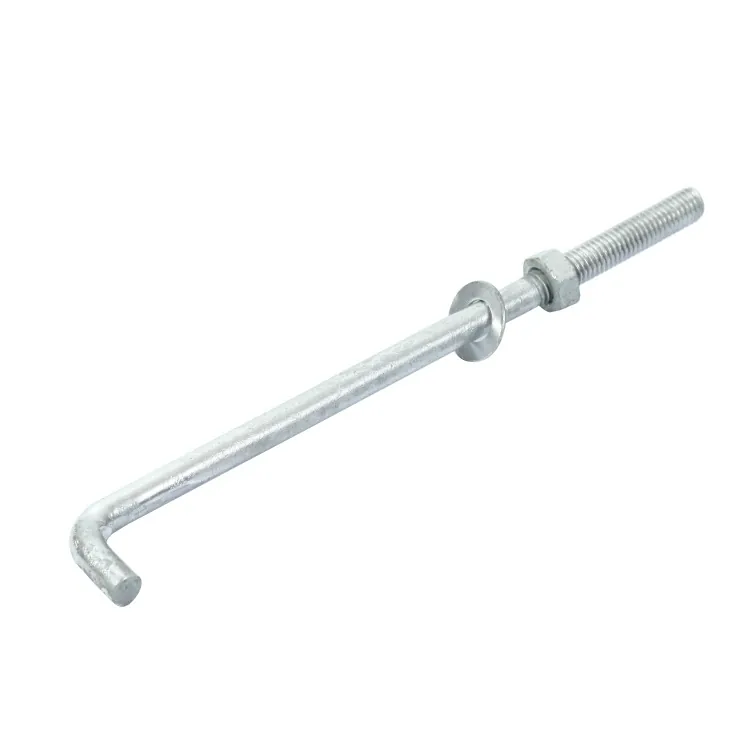
What double-nut leveling actually does
Double-nut leveling turns each anchor bolt into a small adjustable jack. Instead of resting the base plate directly on the concrete or on a stack of steel shims, the plate sits on a leveling nut threaded onto each anchor bolt. Turn the leveling nut up or down and the corner of the plate rises or falls. Once all corners read level and the column reads plumb, a second nut, the anchor nut, is tightened down from the top. The plate is now clamped between two nuts on every bolt, held rigidly in the air above the concrete.
That gap between the underside of the plate and the top of the foundation is intentional. It gets filled with non-shrink grout once the steel is set. The grout carries the vertical load in bearing after it cures, while the two nuts control position during erection and resist uplift and overturning afterward.
The method is common on medium to heavy columns because it lets one or two ironworkers dial in elevation to a few millimeters without cranes holding the load or without hunting through a bag of loose shims. It is described in the AISC steel construction practices and is a standard approach for larger base plates in North America and Europe.
Hardware you need per anchor bolt
Each anchor bolt in a double-nut assembly needs more parts and more thread projection than a plate that simply bolts flat to the concrete. Getting the bill of materials right at the order stage saves a return trip to the supply house.
For every anchor bolt you plan to level with the double-nut method, plan for the following.
| Item | Quantity per bolt | Purpose |
|---|---|---|
| Leveling nut (lower nut) | 1 | Supports and adjusts the plate elevation |
| Leveling washer | 1 | Spreads load, protects thread under the plate |
| Anchor nut (upper nut) | 1 | Clamps the plate down from above |
| Top washer | 1 | Bearing surface under the upper nut |
| Extra thread projection | added length | Room for two nuts plus adjustment travel |
The single most common mistake is ordering bolts with too little projection above the concrete. A flat-mount plate needs enough thread for one nut and a washer. A double-nut plate needs room for the leveling nut, the plate thickness, the anchor nut, both washers, and a margin for the leveling travel so the plate can be raised without running out of thread. Short bolts cannot be fixed in the field without couplers or drilling, so it pays to confirm projection during shop drawing review.
Nut and washer grade should match the anchor bolt grade. For common F1554 anchor rods in Grade 36, 55, or 105, use the heavy hex nuts and hardened washers specified for that grade. Under-grade nuts can strip or fail to develop the rod's capacity. If you are unsure which nut and washer set pairs with your rod, our anchor bolt nuts and washers guide walks through the matching, and you can request a quote for pre-matched sets so nothing is mismatched on site.
How the leveling procedure works step by step
The sequence matters. Rushing the nut adjustment is where plumb errors creep in and where grout later cracks because load was never seated properly.
Setting the leveling nuts
Start by running a leveling nut and its washer down each anchor bolt to roughly the target elevation. Use a rotating laser or an optical level to set the top of each leveling nut to the same plane. Because the plate will rest on these nuts, their tops define the underside elevation of the steel. Getting the four nuts close before the column arrives means less crane time spent hanging while you fine-tune.
Landing and adjusting the column
Lower the column so the base plate lands on the leveling nuts. With the load resting on the nuts, check elevation at each corner and check the column for plumb in both directions. Small corrections are made by turning individual leveling nuts up or down a partial turn. This is the real advantage of the method: you can nudge one corner a millimeter or two without lifting the whole assembly.
Tightening the anchor nuts
Once elevation and plumb are confirmed, install the top washer and anchor nut on each bolt and tighten down. The plate is now clamped between the leveling nut and the anchor nut. Recheck plumb after tightening, because pulling the top nuts down can shift a column slightly. Adjust and recheck until the readings hold.
Grouting the gap
After the nuts are set and the column is verified, the space under the plate is packed with non-shrink grout. This is not optional filler. The grout is what transfers the column's vertical compression into the concrete foundation across the full plate area. Without it, load would concentrate on four small nut contact points, and the plate could deform over time.
Use a non-shrink cementitious or epoxy grout rated for the bearing pressures in your design. Dam the perimeter, then pour or pack from one side so grout flows under the plate and pushes air out the far side, leaving no voids. Grout hole and vent details in the plate help on larger footprints. Follow the grout manufacturer's mixing and cure instructions, and keep the assembly undisturbed until the grout reaches strength.
One honest caution: some designers require the leveling nuts to be left in place permanently, while others treat the grout as the sole bearing element. Which applies depends on the structural drawings and the loads in play. Do not remove or back off leveling nuts after grouting unless the engineer of record calls for it, since they often contribute to uplift and shear resistance in the finished connection.
When to use double nuts versus shims
Double nuts and steel shim packs both level a base plate, but they suit different jobs. The choice usually comes down to plate size, adjustment precision, and how much the crew wants to fuss with loose parts.
| Factor | Double-nut leveling | Steel shim packs |
|---|---|---|
| Typical use | Medium to heavy columns | Light columns, small plates |
| Adjustment | Fine, by turning nuts | Coarse, add or remove shims |
| Extra hardware | Two nuts, two washers per bolt | Shim stock only |
| Bolt projection | Longer needed | Standard |
| Crane hold time | Short, plate self-supports | Longer while shimming |
| Grout gap control | Precise and consistent | Depends on shim stack |
For a small equipment stand or a light interior column, a few shims under the plate are quick, cheap, and perfectly adequate. For a tall or heavily loaded column where plumb tolerance is tight and the plate is large, the double-nut method gives finer control and frees the crane sooner. Many contractors standardize on double nuts for structural building columns simply because the adjustment is repeatable and does not depend on scavenging shim stock of the right thickness.
There is also a hybrid worth knowing. Some crews use a leveling plate or setting plate grouted flush ahead of time, then set the column on that. Double nuts remain the more flexible field option when the foundation elevation is not perfectly known in advance, which on real job sites is most of the time.
Common mistakes and how to avoid them
The failures we hear about from customers almost always trace back to a handful of avoidable issues. Too little thread projection tops the list, as covered above. Mismatched nut grade is second, where a rod is properly specified but the nut is a generic hardware-store part that cannot develop the rod.
The third is skipping the plumb recheck after tightening the top nuts. The fourth is poor grouting, either a weak mix or voids left under the plate that show up as cracking later. The fifth is disturbing the assembly before the grout cures. None of these are exotic. Each is prevented by ordering matched hardware, checking projection at drawing review, and following a disciplined field sequence.
Keeping a simple checklist at the column line helps: leveling nuts set to plane, column landed, elevation checked, plumb checked, top nuts tight, plumb rechecked, grout placed, cure protected. Work that list every time and the connection comes out right.
Frequently asked questions
How much extra bolt projection does double-nut leveling need?
Enough to stack a leveling nut, the plate thickness, an anchor nut, both washers, and a margin for leveling travel. There is no single number because it depends on nut height, plate thickness, and how much adjustment you want. Confirm the required projection during shop drawing review rather than in the field, since short bolts are hard to fix on site.
Do I leave the leveling nuts in place after grouting?
It depends on the structural drawings. Some designs treat the grout as the only bearing element, while many leave the leveling nuts in permanently to help resist uplift and shear. Do not back off or remove leveling nuts after grouting unless the engineer of record specifically directs it, because they often carry design load in the finished connection.
What nut and washer grade should I use?
Match the nut and washer to the anchor bolt grade. For F1554 rods in Grade 36, 55, or 105, use the heavy hex nuts and hardened washers specified for that grade. Under-grade nuts can strip before the rod reaches capacity. Ordering pre-matched nut and washer sets avoids mismatches on site.
Can I use double nuts on small light columns?
You can, but steel shims are often faster and cheaper for small plates and light loads. Double-nut leveling shines on larger, heavily loaded columns where fine adjustment and short crane hold time matter. For a small equipment base, a shim pack usually does the job with less hardware.
Why is grout still needed if the nuts hold the plate?
The nuts control position during erection and resist uplift, but they only touch the plate at small points. Non-shrink grout fills the gap so the column's compression spreads across the full plate into the foundation. Without grout, load concentrates on the nut contact areas and the plate can deform over time.
Talk to Leeter about your anchor hardware
Double-nut leveling is only as good as the hardware under the plate. If the bolts are too short, the nuts are the wrong grade, or the washers do not match, the method fails no matter how careful the crew is. Leeter manufactures anchor bolts, nuts, and washers as matched sets sized to your project, and we ship to contractors across North America and Europe. Send us your base plate and bolt details and we will confirm projection, grade, and quantities before anything is cut. Request a quote and we will get you the right parts the first time.
