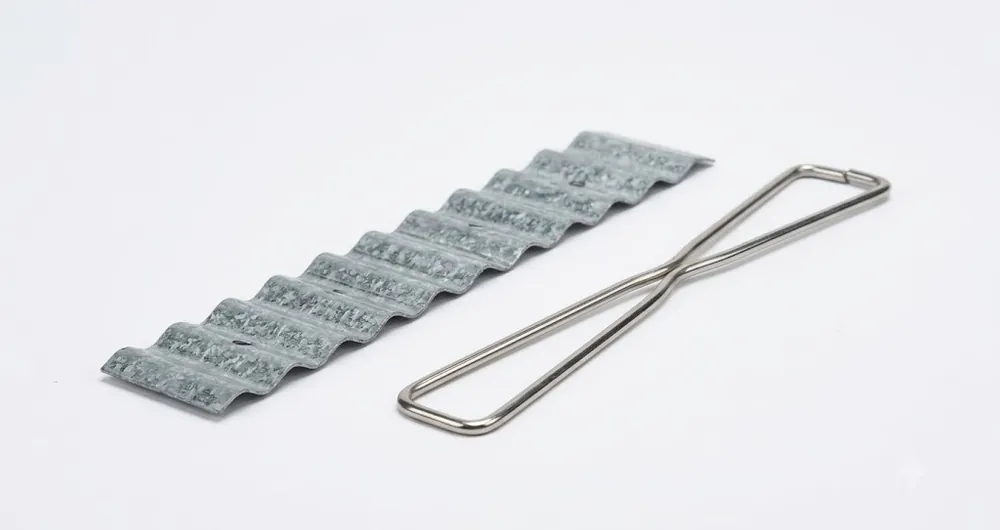
The honest answer depends on where the tie lives. Hot-dip galvanized ties are a sound, economical choice for interior, dry or moderate-exposure walls. Stainless 304 earns its premium in coastal air, high humidity, chemically aggressive masonry, or any structure meant to stand for generations. Below we break down why, using how these materials behave rather than marketing claims.
What is the real difference between galvanized and stainless steel ties?
The core difference is coating versus inherent resistance. A galvanized wall tie is carbon steel wrapped in a sacrificial zinc layer; a stainless tie is corrosion-resistant metal all the way through. That single distinction drives everything else, service life, price, and the exposure conditions each one tolerates.
Galvanizing works by galvanic protection. Zinc sits higher on the electrochemical scale than steel, so it corrodes first and shields the base metal underneath. That protection is genuine and well proven, but it is finite. Once the zinc is consumed, or once it is breached by a cut edge, weld spatter or bending crack, the exposed steel starts to rust. The tie's life is therefore tied to how much zinc it carries and how fast the environment eats it.
Stainless steel behaves differently. Its chromium content, at least 10.5 percent, forms a thin, self-repairing passive oxide film across the whole surface. Scratch it, cut it, bend it, and the film reforms in the presence of oxygen. There is no coating to run out. That is why we describe stainless as having inherent resistance rather than applied protection.
Hot-dip galvanized versus electro-galvanized
Not all galvanizing is equal, and the gap matters for wall ties. Electro-galvanized (or "zinc plated") wire carries a thin bright zinc layer, often only a few microns, suited to indoor, dry uses. Hot-dip galvanizing immerses the finished tie in molten zinc, building a much thicker, metallurgically bonded coating that stands up far better outdoors.
When we quote galvanized brick wall ties for cavity construction, we specify hot-dip almost every time. The heavier coating buys years of extra service, and the bond resists the abrasion of being pushed through mortar. Electro-galvanized ties belong in benign interior work, never in an exposed exterior wall.
How long do galvanized and stainless steel wall ties last?
Service life scales with two things: coating thickness for galvanized ties, and exposure severity for both. A well-detailed hot-dip galvanized tie in a dry, sheltered interior wall can serve for decades. The same tie in salt-laden coastal air may deteriorate far sooner, because chlorides strip zinc quickly.
Stainless steel wall ties in grade 304 are built to match or outlast the masonry itself. In normal and moderately aggressive conditions they show effectively no structural corrosion over the design life of the building. This is why many national building standards now require stainless ties in exposed or high-durability applications, and why we see specifications moving toward stainless as the default for anything near the coast.
We put it plainly to customers: with galvanized, you are buying a coating budget, and the environment spends it. With stainless, you are buying the metal, and the environment has far less to work with. The failure mode also differs. Galvanized ties fail progressively as zinc depletes; stainless ties, if they ever fail, usually do so only under specific chemical attack such as concentrated chlorides on lower grades.
Why hidden ties make longevity critical
Wall ties sit buried in the cavity, invisible once the wall is built. You cannot inspect them, and you cannot easily replace them. Remedial tie replacement means drilling into finished masonry, an expensive, disruptive job. That hidden nature is exactly why longevity deserves more weight than the small per-tie price difference suggests.
Corroding ties do not just weaken; expanding rust can crack surrounding mortar and, in severe cases, lift brick courses. The cost of getting the tie wrong is measured in scaffolding and rework, not in cents per piece. We have had buyers return to stainless after a single remediation project taught them the math.
Which is more corrosion resistant, and where does that matter?
Stainless steel wins on corrosion resistance in almost every measurable way, but the size of the win depends on exposure. In a dry interior partition, both materials perform well and galvanized is the sensible economy. As moisture, salt and pollutants climb, the performance gap widens fast, and stainless becomes the safer specification.
Chlorides are the deciding factor. Coastal spray, de-icing salt and some admixtures attack zinc aggressively and can undermine galvanized ties within a fraction of their expected life. Grade 304 stainless resists these conditions well; where chloride loading is extreme, such as swimming pool halls or heavy marine splash zones, specifiers step up to 316 stainless with added molybdenum. Sulfur pollution and acidic rain in industrial areas also favor stainless.
Masonry chemistry plays a role too. Some fired-clay bricks contain soluble sulfates, and certain mortars stay damp or alkaline longer than expected. In those walls, a galvanized coating works harder and depletes faster. When we cannot verify the brick and mortar chemistry, we recommend erring toward stainless for exterior work, because the tie has to survive whatever the wall throws at it.
Galvanized vs stainless steel wall ties: side-by-side comparison
Here is how the two options stack up across the factors buyers weigh most. Use it as a starting point, then match the choice to your actual exposure and design life.
| Factor | Hot-dip galvanized ties | Stainless steel (304) ties |
|---|---|---|
| Corrosion mechanism | Sacrificial zinc coating protects steel until consumed | Inherent chromium passive film, self-repairing |
| Best exposure | Interior, dry or moderate outdoor conditions | Coastal, humid, polluted, high-durability builds |
| Chloride/salt resistance | Limited, zinc depletes quickly in salt | High, excellent for coastal and de-icing exposure |
| Typical service life | Long in dry conditions, shorter in aggressive ones | Matches or exceeds masonry design life |
| Damaged/cut edges | Vulnerable once coating is breached | Passive film reforms, edges stay protected |
| Relative material cost | Lower upfront | Higher upfront, lower lifetime risk |
| Failure mode | Progressive rust as zinc runs out | Rare, mostly chloride pitting on lower grades |
| Where we recommend it | Budget-conscious interior and sheltered walls | Anything near coast, long service life, or unknown chemistry |
The table simplifies real projects, of course. A sheltered south-facing wall in a dry inland climate is a very different animal from an exposed gable a mile from the sea. Still, the pattern holds: the harsher and wetter the environment, the more stainless pays back its premium.
How do you choose the right tie for your project?
Start with exposure, then layer in design life and budget. If the wall is interior, dry, or moderately sheltered and the structure has a conventional service life, hot-dip galvanized ties are usually the economical, sound choice. If the wall meets salt air, persistent damp, pollution, or a long design life, specify stainless 304, stepping to 316 for the most aggressive chloride environments.
A few practical checks we walk buyers through:
- Distance to coast. Within roughly a few kilometers of salt spray, default to stainless. Salt travels further than people expect.
- Building lifespan. Public, heritage and premium residential work justifies stainless for the durability margin alone.
- Cavity moisture. Full-fill insulation and walls prone to wetting keep ties damp longer, favoring stainless.
- Code and specification. Many standards now mandate stainless for exposed masonry, so check the governing document before you value-engineer down to galvanized.
- Tie geometry. Cut, welded and sharply bent details expose base steel on galvanized ties; stainless avoids that weak point.
When the answer is genuinely borderline, we lean toward stainless for exterior structural ties, because the downside of under-specifying a hidden component is so high. For interior and non-critical work, we are happy to supply galvanized and help you keep the budget lean. If you want a second opinion on a particular wall, request a quote with your exposure details and we will suggest a grade.
Frequently asked questions
Are stainless steel wall ties worth the extra cost?
For exterior, coastal, humid or long-life masonry, yes. The tie is a small fraction of total wall cost but sits hidden and hard to replace. Stainless 304 typically lasts the life of the building, so the modest premium offsets the far larger expense of drilling out and replacing corroded galvanized ties later.
Can I use galvanized wall ties near the coast?
We do not recommend it. Coastal air carries chlorides that strip zinc coatings quickly, so galvanized ties can corrode well before their expected life. Stainless 304 is the sensible minimum near the sea, and 316 stainless suits severe marine splash zones. Reserve galvanized ties for dry, sheltered or interior walls.
What is the difference between 304 and 316 stainless ties?
Both resist corrosion far better than galvanized steel. Grade 316 adds molybdenum, which improves resistance to chlorides and pitting, so it handles marine, pool and heavily salted environments better. Grade 304 covers most exposed masonry at lower cost. Choose 316 only where chloride loading is genuinely severe.
Do galvanized ties fail suddenly or gradually?
Galvanized ties fail gradually. The zinc coating is consumed over time, then the exposed steel begins to rust, and expanding corrosion can crack surrounding mortar. Because ties are hidden in the cavity, this decline is easy to miss until damage shows on the wall face, which is why exposure-matched specification matters.
Does hot-dip galvanizing perform better than zinc plating?
Yes, substantially. Hot-dip galvanizing builds a thick, metallurgically bonded zinc layer that resists abrasion and outdoor exposure far better than thin electro-galvanized (zinc plated) coatings. For any exterior cavity wall, we specify hot-dip galvanized as the minimum. Zinc-plated ties belong only in dry interior applications.
Talk to us about the right tie
Choosing between coating and inherent corrosion resistance comes down to where your wall lives and how long it must stand. We manufacture both galvanized and stainless brick wall ties and ship them across North America and Europe. Send your exposure conditions, cavity detail and volumes, and we will recommend a grade and finish. Request a quote and get a straight answer on what will last.
