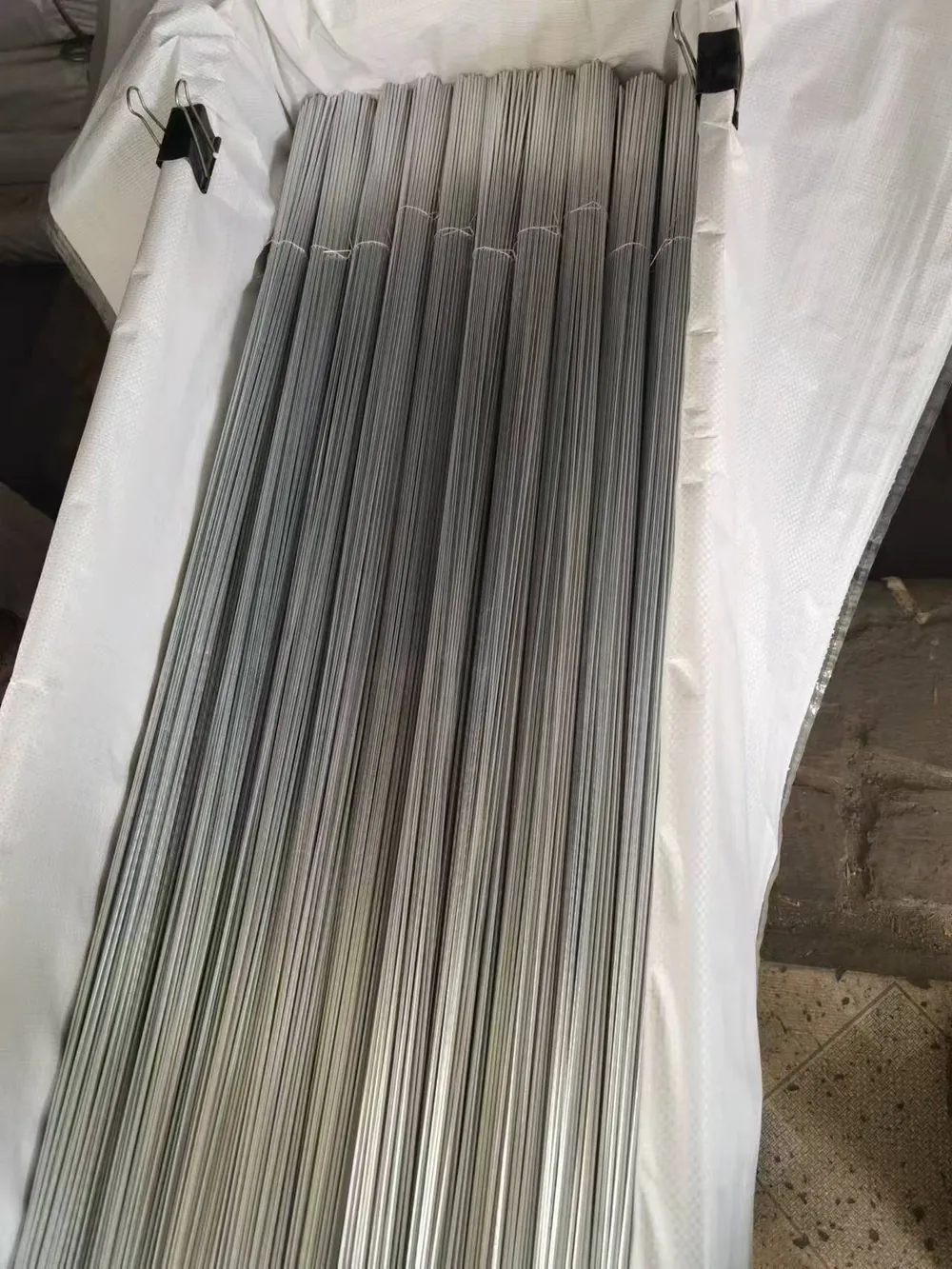
We are Hebei Leeter Import and Export Co., Ltd ("Leeter"), a construction wire and mesh manufacturer in Dingzhou, Hebei, China, exporting since 2006 to buyers across North America and Europe. Hanger wire is one of the products in our suspend & support application system alongside cut wire and wall ties. This guide gives distributors and contractors the gauge, galvanizing, and spacing facts they need to specify and source hanger wire in bulk with confidence.
What gauge hanger wire is used for suspended ceilings?
The gauge you choose depends on how much load each wire carries. Twelve gauge is the workhorse for standard acoustic tile and drywall grid ceilings. As the suspended load rises, from added light fixtures to mechanical services, you step up to a heavier, lower-gauge wire. Lower gauge numbers mean thicker wire and higher capacity.
| Gauge | Diameter | Typical use |
|---|---|---|
| 12 GA | 0.106 in (2.68mm) | Standard acoustic and drywall ceiling suspension |
| 9 GA | 0.148 in (3.76mm) | Heavier ceilings, longer spans, added services |
| 8 GA | 0.162 in (4.11mm) | Ductwork, mechanical loads, high-load suspension |
The rule of thumb: never go lighter than what the drawings call for. When a specification is silent, 12 gauge is the accepted default for typical ceiling grids, but a structural engineer's callout always governs. For bulk orders we draw hanger wire to the exact gauge you specify and hold tight diameter tolerance so the wire feeds cleanly and hangs straight.
Why ASTM A641 galvanizing matters
Hanger wire lives in plenums and ceiling cavities where humidity, condensation, and long service life demand corrosion protection. ASTM A641 is the standard specification for zinc-coated (galvanized) carbon steel wire, and it defines coating classes by zinc weight. Class 1 carries a lighter coating for interior, protected environments; Class 3 carries a heavier zinc layer for longer service life and more humid conditions.
| ASTM A641 class | Zinc coating | Typical application |
|---|---|---|
| Class 1 | Lighter | Dry interior plenums, short service exposure |
| Class 3 | Heavier | Humid areas, longer service life required |
Specifying the coating class is not a detail to leave blank. Thin zinc in a damp plenum leads to rust bleed and weakened wire over decades of service. We confirm coating class against your order and can provide coating-weight data on request so you know the zinc you paid for is the zinc you received.
How far apart should ceiling hanger wires be?
Spacing is governed by ASTM C754, the standard for installing steel framing to receive gypsum panel products, which covers suspended ceiling grillage. Hanger wires typically run at a maximum of 48 inches (1220mm) on center along the main runners or carrying channels, with additional wires required within a set distance of every main runner end and at grid intersections.
Key spacing principles under ASTM C754:
- Main hangers: maximum 48 in (1220mm) o.c. along carrying channels, verify to project loads.
- End hangers: a hanger within roughly 6 in (150mm) of each runner end or wall.
- Higher loads: tighter spacing, as the design load or fixture weight increases, spacing decreases.
Remember that 48 inches is a maximum, not a target. Heavier ceilings, seismic zones, or added mechanical loads push spacing tighter and gauge heavier. The engineer's reflected ceiling plan and structural notes are the final authority. Our role as the manufacturer is to make sure the wire itself meets gauge and coating spec so the installer can hang to the drawing without surprises.
Lengths, bundling, and buying in bulk
We cut galvanized hanger wire to standard stock lengths of 4, 6, 8, 10, 12, 14, 16, and 20 feet (1.2 to 6.1m), and we cut to custom lengths for large projects. Standard packaging is 100 pieces per bundle and 20 bundles per master bundle, with crate options for ocean freight and rough job sites.
| Spec item | Standard offering |
|---|---|
| Material | Low-carbon steel, hot-dip galvanized (ASTM A641) |
| Standard gauge | 12 GA (2.68mm); also 8 GA, 9 GA |
| Cut lengths | 4, 6, 8, 10, 12, 14, 16, 20 ft (1.2 to 6.1m) |
| Bundling | 100 pcs/bundle, 20 bundles/master bundle |
| Packaging options | Master bundle or export crate |
For wholesale buyers, consistent cut length and clean galvanizing matter as much as gauge. Wire that varies in length wastes installer time, and thin or flaking zinc becomes a warranty problem years later. If you tell us your gauge, coating class, length mix, and packaging preference, we will confirm the full specification before production. You can request a quote and we will match the order to your project requirements.
Frequently asked questions
What gauge hanger wire is used for suspended ceilings?
Twelve gauge (2.68mm) galvanized wire is the standard for typical acoustic and drywall suspended ceilings. Heavier loads such as ductwork or long spans use 9 gauge (3.76mm) or 8 gauge (4.11mm) wire. The structural drawings set the required gauge, so use 12 gauge as the default only when the specification does not call for something heavier.
How far apart should ceiling hanger wires be?
Under ASTM C754, hanger wires are typically spaced a maximum of 48 inches (1220mm) on center along the main runners, with a hanger near each runner end. Heavier ceilings, added fixtures, or seismic requirements reduce that spacing. The 48-inch figure is a code maximum, and the project engineer's ceiling plan is the final authority.
What ASTM standard applies to hanger wire?
Two standards apply together. ASTM A641 covers the galvanized (zinc-coated) carbon steel wire itself, including coating classes such as Class 1 and Class 3. ASTM C754 governs how the wire is installed to suspend the ceiling grid, including hanger spacing. Specify both the wire standard and the coating class when you order.
Is 12 gauge hanger wire strong enough for a drywall ceiling?
Yes, 12 gauge (2.68mm) hanger wire is the accepted standard for typical drywall and acoustic ceiling grids. It becomes insufficient only when the ceiling carries heavier loads, such as mechanical services or large fixtures, in which case the design steps up to 9 or 8 gauge and often tightens hanger spacing. Confirm against the structural specification.
