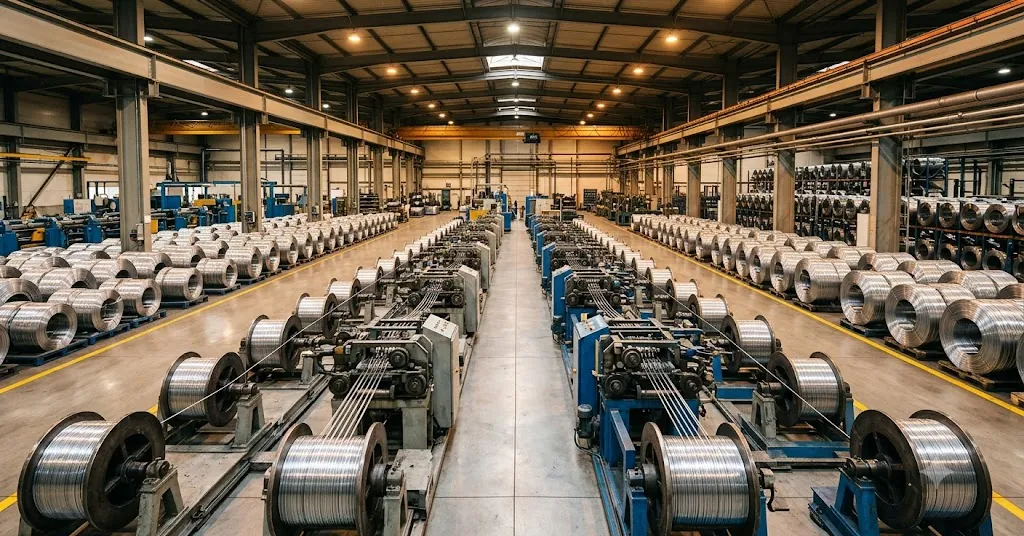
We are Hebei Leeter Import and Export Co., Ltd, a construction hardware exporter based in Dingzhou, Hebei, shipping to North America and Europe since 2006. We handle classification questions from buyers every week. What follows is how the system works, why classification changes your landed cost, how the main product families split across different chapters, and the broker workflow we recommend to every customer.
What is an HS code and why does it exist?
An HS code is a standardized number used by customs authorities in more than 200 countries to identify a traded product. HS stands for Harmonized System, a framework maintained by the World Customs Organization. The first six digits are the same worldwide. Countries then add more digits for their own tariff and statistics needs, so the full code you file at the border is usually eight, ten, or more digits long.
Think of the structure as a funnel. The system is divided into chapters, then headings, then subheadings, and each step narrows the description. A product moves from a broad category down to a precise line that carries a duty rate. Because the first six digits are shared internationally, a supplier and a buyer can talk about the same goods, but the country-specific digits, and therefore the duty, differ depending on where the goods land.
The code is not a formality. Customs uses it to assess duty, apply quotas, enforce trade remedies, and gather trade data. An incorrect code can mean underpaid duty, penalties, shipment holds, or a retroactive bill years later. That is why classification deserves real attention, not a guess copied from a previous shipment.
How does classification change your import duty?
Classification directly controls the duty rate, and small differences in description can move a product from one line to another with a different rate. Two items that look similar to a warehouse worker may sit under separate subheadings because of coating, tensile strength, diameter, thread type, or intended use. The customs code, not the appearance, drives the number on your entry.
Duty is only the start. The classification can also trigger additional measures layered on top of the base rate. Anti-dumping duties, countervailing duties, safeguard tariffs, and preferential rates under a free trade agreement all attach to specific codes and, in many cases, specific countries of origin. A product from one origin might enter at a modest base rate, while the same product from another origin under an active trade remedy could carry a far heavier total charge.
This is where buyers get surprised. The unit price on the invoice looks attractive, but the landed cost depends on duty, and duty depends on the code. We have seen orders where the correct classification, confirmed early, changed the whole business case. That is not a reason to avoid importing. It is a reason to confirm the code before you commit, so there are no surprises when the container arrives.
Do wire, mesh, and fasteners share the same HS code?
No. Wire, welded or woven mesh, and fasteners generally fall under different chapters of the Harmonized System, because the System classifies by what the product is and how it is made, not by the job site it ends up on. A coil of wire, a panel of mesh made from that wire, and a bolt that holds two members together are three distinct products in customs terms, even when a single project buys all three.
As a rough map, primary steel wire products tend to sit within the iron and steel chapters, while many finished threaded fasteners fall under articles of iron or steel further along in the tariff. Woven and welded products, along with grille and netting items, occupy their own headings again. The table below is a general orientation only. It is not a classification ruling, and it does not replace your broker.
| Product family | General HS chapter area | Notes for buyers |
|---|---|---|
| Steel wire (drawn, galvanized) | Iron and steel (Chapter 72 area) | Coating and diameter can change the line |
| Nails, staples, tacks | Articles of iron or steel (Chapter 73 area) | Often split from threaded fasteners |
| Bolts, nuts, screws, washers | Articles of iron or steel (Chapter 73 area) | Thread type and grade matter |
| Welded and woven wire mesh | Articles of iron or steel (Chapter 73 area) | Grille, netting and fencing vary by weave |
| Wire rope and cable | Articles of iron or steel (Chapter 73 area) | Construction and coating affect the code |
Notice that several of our construction hardware lines land in the same broad chapter yet split into separate subheadings once you look at the detail. Coating matters. Diameter matters. Whether a bolt is threaded through its full length matters. This granularity is exactly why a description like "steel fasteners" is not enough to classify anything with confidence.
Why should a broker confirm the code, not the supplier?
The supplier can tell you what the product is, but a licensed customs broker in your country is the party qualified to tell you how your customs authority will classify it. We know our materials, dimensions, coatings, and manufacturing process in detail, and we share that gladly. What we cannot do responsibly is issue a binding tariff opinion for the United States, Canada, Germany, or any other market. That authority belongs to the importer of record and the broker acting on their behalf.
There is a practical reason too. Classification and duty depend on your country's tariff schedule, your country of origin rules, and any trade remedies active on the day of entry. Those change. A code that was correct last year may attract a new anti-dumping order this year. A broker tracks these changes for your specific market. A factory in Hebei cannot monitor every tariff update across North America and Europe with the accuracy your entry requires.
The honest position is simple. We give you complete, accurate product specifications. Your broker turns those specifications into the correct code and the correct duty. If any supplier promises a guaranteed low duty or tells you not to worry about classification, treat that as a warning sign, not a convenience.
What does the broker classification workflow look like?
The workflow starts with detailed product data and ends with a documented classification you can file with confidence. In our experience, buyers who follow these steps early avoid the costly ones later. Below is the sequence we walk through with customers who ask us how to prepare.
Step one: gather full product specifications
Collect the material grade, dimensions, coating, tensile properties, thread details, and the manufacturing method for every line. Photos, drawings, and mill certificates help. The more precise the description, the more precise the classification. Vague terms lead to vague codes, and vague codes lead to disputes.
Step two: brief a licensed broker in your market
Send the full specification package to a broker or customs consultant licensed in your destination country. Ask them to classify each product, state the base duty, and check for any anti-dumping, countervailing, or safeguard measures tied to the code and the country of origin. Ask them to put it in writing.
Step three: consider a binding ruling for high-volume lines
For products you plan to import repeatedly, ask whether your customs authority offers a binding or advance ruling. Many do. A ruling gives you a documented, defensible classification that protects you from reassessment. It costs some time upfront and saves argument later.
Step four: keep records and re-check on repeat orders
Store the classification, the ruling if you obtained one, and the supporting specs. Before each repeat order, confirm nothing has changed in the tariff or in a trade remedy affecting your code. Origin, product spec, and the regulatory landscape can all shift between shipments.
We support each step by supplying accurate documentation on request. When you request a quote, tell us the destination country and we will make sure the specification detail your broker needs is included from the start.
How do trade remedies affect wire and fasteners specifically?
Steel wire and steel fasteners are among the product groups most frequently touched by trade remedies, because they are high-volume commodities that several jurisdictions have investigated over the years. That does not mean every shipment is affected. It means the risk is real enough that you should always check the current status for your code and your origin before you order.
Anti-dumping and countervailing duties attach to specific product descriptions and specific exporting countries. Two identical bolts can carry very different total charges depending on where they were made and whether an order covers that origin. This is one more reason origin transparency matters, and one more reason we document our products honestly. A broker cross-references your confirmed code against active measures so you know your true landed cost before the goods leave the port.
We will not quote you a rate or promise a remedy does not apply. What we will do is give your broker the exact product and origin information needed to reach a reliable answer. Straight facts beat optimistic estimates every time your container clears customs.
Frequently asked questions
Can I use the HS code my supplier puts on the invoice?
Use it as a starting point, not a final answer. The supplier's six-digit code helps identify the product, but the full country-specific code and the duty must be confirmed by a licensed broker in your destination country. The importer of record, not the supplier, is responsible for a correct entry.
Why do wire and fasteners fall under different HS chapters?
Because the Harmonized System classifies by what a product is and how it is made, not by its end use. Steel wire generally sits in the iron and steel chapters, while many finished bolts, screws, and nails fall under articles of iron or steel. A single project can buy from several chapters at once.
Does the same product always have the same duty everywhere?
No. The first six HS digits are shared internationally, but each country adds its own digits and sets its own duty rates, quotas, and trade remedies. A code that carries a low rate in one market may carry a much higher total charge in another, especially once anti-dumping measures are considered.
What is a binding ruling and do I need one?
A binding or advance ruling is a written classification decision from your customs authority that you can rely on for future shipments. It is worth requesting for products you import regularly or in large volumes, because it removes uncertainty and protects you from later reassessment and penalties.
Can Leeter guarantee my import duty rate?
No, and be cautious of any exporter that does. We supply complete, accurate specifications, coatings, dimensions, grades, and origin details, so your broker can classify correctly. The duty and any trade remedy depend on your country's tariff schedule and current regulations, which only a licensed broker in your market should confirm.
Confirm the code before you commit
The right HS classification protects your margin, your timeline, and your compliance record. Get accurate specifications, brief a licensed broker in your destination country, and confirm the duty and any trade-remedy status before you place the order. That single habit prevents the great majority of customs surprises we see buyers face.
Hebei Leeter has exported construction hardware to North America and Europe since 2006, and we are happy to provide the detailed product documentation your broker needs. Explore our construction hardware range, and when you are ready, request a quote with your destination country so we can prepare the right specifications from day one.
