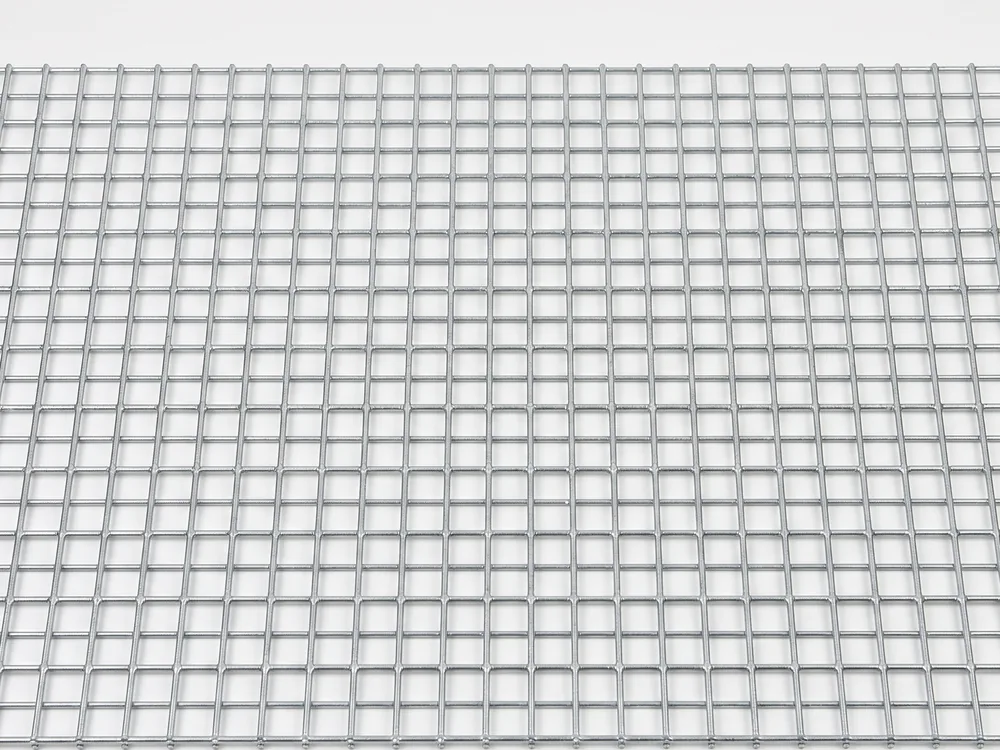
What is PVC coated welded mesh?
PVC coated welded mesh starts life as a standard welded wire mesh panel or roll, then receives a layer of polyvinyl chloride over the metal. The steel provides structure and strength. The plastic provides a barrier against moisture, salt and abrasion. Together they last far longer in harsh conditions than bare or lightly galvanized wire.
The welded grid gives the product its rigidity. Each wire crosses another at a right angle, and every intersection is fused by resistance welding. That fixed geometry means the mesh holds its shape under tension, unlike woven products that can shift. The PVC layer then seals the surface without changing the underlying pattern.
Because the plastic hides the metal, buyers should treat the coating as a finish, not as the only line of defense. What sits under the plastic matters just as much as the plastic itself. We will return to that point later, because it is the single most common reason customers are disappointed with cheap imports.
How is the coating built?
The best plastic coated mesh follows a two-step sequence: galvanize first, then coat. The wire is drawn, coated in zinc, welded into a grid, and finally sheathed in PVC. The zinc protects the steel even if the plastic is nicked, scratched or cut on site. Skipping the zinc step is where quality problems begin.
Galvanize first, then apply PVC
Galvanizing before coating gives you two barriers instead of one. If a stone strike or a wire cutter breaks the plastic, the exposed spot still carries a zinc layer that resists rust. Panels made from bare steel with only a plastic wrap fail quickly at every cut end and every abrasion point, because raw steel is exposed the moment the skin is broken.
There are two ways the PVC itself is applied. Dip coating pulls the mesh through molten or liquid plastic and builds a thick, even layer. Spray or fusion-bonded coating lays plastic powder onto heated wire, which then melts and flows into a continuous film. Dip coating tends to give a heavier, more forgiving finish for fencing, while fusion bonding gives a tighter, thinner skin often used on finer decorative grids.
PVC thickness and total wire diameter
Coating thickness is usually quoted as the added layer on each side, commonly in the range of a few tenths of a millimeter up to around one millimeter. A common way to specify the wire is to give the inner steel diameter and the outer diameter after coating. For example, a wire might measure roughly 1.8 mm of steel that finishes near 2.5 mm once coated. Always ask for both numbers so you know how much of the diameter is steel and how much is plastic.
What colors and finishes are available?
Green is the most requested color for garden and boundary fencing because it blends into hedges and foliage. Black is popular for a low-visibility, architectural look that seems to disappear against a background. Leeter also supplies other standard colors on request, and can match many RAL references for larger orders.
Color is more than decoration. A darker or matched coating reduces the visual weight of a fence line, which is why landscapers often specify black for premium residential jobs. Green remains the default for allotments, sports surrounds and rural boundaries. Whatever the shade, the PVC also softens the surface, so hands and animals meet plastic rather than sharp galvanized wire.
| Property | Typical option | Notes |
|---|---|---|
| Base wire | Galvanized then coated | Zinc under plastic resists rust at cuts |
| Coating type | Dip or fusion-bonded PVC | Dip is thicker; fusion is tighter and thinner |
| Common colors | Green, black, others on request | RAL matching for larger orders |
| Mesh openings | Ranges from fine to wide | Choose by security and visibility needs |
| Roll or panel | Both formats supplied | Rolls for runs, panels for rigid frames |
| Coating thickness | About 0.3 mm to 1.0 mm per side | Confirm steel vs finished diameter |
Where is PVC coated welded mesh used?
PVC coated welded mesh performs best where moisture, salt or human contact would punish bare steel. Coastal fencing, garden boundaries, animal enclosures, sports surrounds and decorative screens all suit the product. The plastic resists the salt spray and constant damp that would strip a thin galvanized coating within a few seasons.
Fencing and boundaries
Boundary and garden fencing is the largest use we see. The colored finish lets a fence sit quietly in a landscape while the coating shrugs off rain and lawn chemicals. For homeowners, the softer surface is safer around children and pets, and the color hides the industrial look of raw metal.
Animal enclosures and agriculture
Poultry runs, rabbit hutches, kennels and aviaries benefit from the smooth, easy-clean plastic surface. Droppings and moisture wipe away rather than sitting on rough zinc and starting corrosion. The coating also gives animals a gentler surface to lean and climb against.
Coastal and wet environments
Salt air is brutal on steel. Near the sea, or around pools and drainage, the combination of zinc plus plastic buys years of extra service. This is where the two-barrier construction earns its cost, because a single coating rarely survives constant salt exposure.
Decorative and architectural screens
Designers use black or custom colors to build trellises, balustrade infills, planters and facade screens. The clean welded grid reads as an intentional pattern rather than utility fencing, and the color choice ties the mesh into a wider palette.
What are the trade-offs?
The main honest trade-off is that you cannot inspect the steel underneath a finished coating. Once the plastic is on, the zinc layer, the weld quality and the true wire diameter are all hidden. A poor panel and an excellent panel can look identical on a pallet, which is why supplier trust matters more here than with bare mesh.
There are other limits to weigh. PVC can degrade slowly under years of strong ultraviolet light, so color may fade and the surface may chalk on sun-exposed runs. Sharp impacts, careless cutting or dragging over concrete can split the skin and expose the wire. In very high heat the plastic is not suitable, and at the end of life the coated steel is harder to recycle than clean metal.
To protect yourself, ask for the steel diameter before coating, confirm that the wire is galvanized first, request the coating method and thickness, and ask for samples you can cut and inspect. A reputable maker will answer all of this without hesitation. When you are ready to compare grades, you can request a quote and ask us to state each of these figures in writing.
PVC coated versus plain galvanized mesh
Plain galvanized mesh costs less and lets you see the metal, but it offers one barrier and no color. PVC coated welded mesh costs more, hides the steel, and delivers longer life in wet or salty settings plus a safer, colored surface. The right choice depends on your environment and how long the fence must last.
For a dry interior partition or a short-term barrier, plain galvanized often makes sense. For a coastal boundary, an animal run or a visible garden fence meant to last many years, the coated product usually pays back its premium through longer service and lower maintenance. Match the product to the exposure rather than to the lowest sticker price.
How to specify and order
Specify PVC coated welded mesh by listing mesh opening, steel wire diameter, finished diameter after coating, roll or panel size, color, and coating method. These six figures remove almost all ordering confusion. Vague requests lead to substitutions, so the more precise your specification, the closer the delivered product matches your expectation.
For export orders, also confirm packaging, roll length and pallet configuration so the goods survive long-haul shipping. Leeter has packed containers for North America and Europe since 2006, and we can advise on the roll and panel formats that travel and unload most efficiently for your project.
Frequently asked questions
Is PVC coated mesh better than galvanized alone?
For wet, coastal or decorative use, yes. The plastic adds a second barrier over the zinc, extends service life, softens the surface and provides color. For dry indoor use or short-term barriers, plain galvanized mesh may be enough and costs less. Match the finish to your exposure and expected lifespan.
Can I see the steel quality under the coating?
No, and this is the key trade-off. Once PVC covers the wire, the zinc layer, weld quality and true steel diameter are hidden. Ask your supplier for the steel diameter before coating, confirm the wire is galvanized first, and request cuttable samples so you can inspect a cross-section yourself.
What colors does PVC coated welded mesh come in?
Green and black are the most common. Green suits gardens and rural boundaries because it blends with foliage, while black gives a low-visibility architectural look. Other standard colors are available on request, and larger orders can often be matched to specific RAL references for a consistent project palette.
How thick is the PVC coating?
Coating thickness commonly ranges from about 0.3 mm to 1.0 mm per side, depending on the application and coating method. Dip coating tends to be thicker and more forgiving for fencing, while fusion-bonded coating is thinner and tighter for finer grids. Always ask for both the steel diameter and the finished diameter.
Where should I not use PVC coated mesh?
Avoid it in very high heat, where the plastic is unsuitable, and expect gradual fading on runs exposed to years of strong sunlight. Sharp impacts or rough cutting can split the skin, so handle it with care during installation. For clean recycling at end of life, bare galvanized steel is easier to process.
Ready to compare grades and get honest figures on steel diameter, coating method and color? Request a quote and Leeter will put every specification in writing before you buy.
