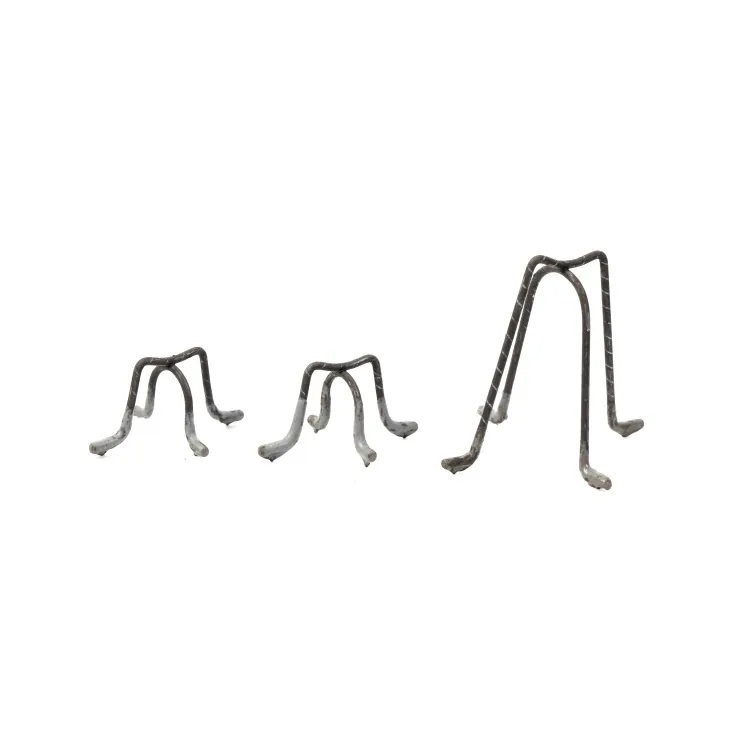
At Hebei Leeter Import and Export Co., Ltd ("Leeter"), we have manufactured and exported wire bar supports from Dingzhou, Hebei since 2006, mostly to buyers in North America and Europe. This guide explains what these products are, the heights and lengths you can order, the difference between plain and plastic-tipped runners, and how to choose between slab, beam, and upper bolsters.
What a slab bolster is and what it does
A slab bolster is a long, low support formed from steel wire. It has two or more continuous bottom runner wires and a top wire bent into a repeating corrugated or truss shape. The rebar rests in the valleys of that corrugation, which spaces the bars off the formwork and holds them at a consistent height while the crew places and vibrates concrete.
The purpose is simple and non-negotiable: keep the bottom steel at the correct clear cover. Concrete cover protects rebar from corrosion, fire, and bond loss. If bars sag to the deck, cover disappears and the slab loses durability at exactly the surface that faces moisture and soil. A slab bolster spreads support along a whole line rather than at single points, so long runs of bar stay flat and level between the forms.
Because the support is continuous, one bolster can carry many parallel bars at once. Crews lay bolsters perpendicular to the bottom mat, typically spaced 4 to 5 feet apart, then drop the rebar across them. That makes placement fast and predictable compared with setting individual rebar chairs under every bar.
What is the difference between a slab bolster and a beam bolster?
The core difference is load capacity and where each one is used. A slab bolster is designed for the lighter, evenly spread load of a bottom slab mat. A beam bolster is heavier, made from larger-gauge wire, and shaped to sit inside the narrow, deep cage of a beam or footing where the bottom bars are larger and more concentrated.
Beam bolsters usually carry a heavier bundle of bottom steel over a shorter width. They are built with more legs per foot and stouter wire so the top corrugation does not deflect under big bars. Slab bolsters run across broad slab areas and prioritise coverage and economy. In practice, a supplier will list them as separate line items with different wire diameters and different published load ratings, so you order by the actual demand, not by name alone.
Both share the same basic anatomy: continuous bottom runners and a corrugated top. The difference lives in the metal. Think of the slab bolster as the wide, light option and the beam bolster as the narrow, strong option.
Slab bolster, beam bolster, and upper bolster compared
| Feature | Slab bolster | Beam bolster | Upper bolster (SBU/BBU) |
|---|---|---|---|
| Primary use | Bottom mat of slabs | Bottom bars of beams and footings | Supporting a top mat above a bottom mat |
| Relative load | Light to moderate | Heavier | Moderate, with extended legs |
| Common heights | 3/4" to 3" | 3/4" to 3" | Taller effective reach via long legs |
| Runner options | Plain or plastic-tipped | Plain or plastic-tipped | Plain or plastic-tipped |
| Typical spacing | 4 to 5 ft apart | 4 to 5 ft apart | 4 to 5 ft apart |
| Bears on | Formwork or subgrade | Formwork | The lower bar mat |
Upper bolsters, often labelled SBU (slab bolster upper) and BBU (beam bolster upper), deserve a note. They look like a standard bolster but ride on the lower reinforcing mat instead of the form. Longer legs let them support a second, upper layer of steel in a thicker slab or mat foundation. Use them when a single pour has two mats and you need to hold the top mat at its own cover distance.
What heights and lengths do slab and beam bolsters come in?
Standard bolster heights follow the same increments used across the wire support industry: 3/4 inch, 1 inch, 1-1/2 inch, 2 inch, and up to about 3 inch. The height number is the clear distance from the bearing surface to the top of the corrugation, which sets where the bottom bar sits. Choose the height that equals your specified bottom cover.
Length is the other choice. Bolsters are commonly supplied in 5-foot and 10-foot sections, with 5 feet being the everyday unit for handling and 10 feet reducing the number of pieces on large flat pours. Sections butt end to end along a support line, so you can build any run length from these two units. Shorter 5-foot pieces are easier to carry and cut on site; 10-foot pieces speed up big commercial slabs.
A quick worked example: a slab specified for 1-1/2 inch bottom cover takes a 1-1/2 inch slab bolster. If the deck is uneven or you are placing over vapour barrier on grade, plastic-tipped runners help protect the membrane and keep the height honest. Confirm the exact height and length availability when you request a quote, since stock increments vary by market.
Plain runners versus plastic-tipped runners
The runner is the continuous bottom wire that bears on the form or subgrade. Plain runners are bare steel: economical, strong, and the default for most structural slabs on solid formwork. They transfer load directly through steel-to-form contact and are the right choice when appearance and membrane protection are not concerns.
Plastic-tipped runners, sometimes called plastic-capped or with plastic runners, add a moulded plastic foot along the bearing wire. They do two useful things. First, they spread the contact area so the support does not punch into softer surfaces such as vapour barriers, foam insulation, or compacted subgrade. Second, they isolate the steel foot from the outside face of the concrete, which reduces the chance of a rust spot bleeding through at the slab underside on exposed or architectural work.
Choose plain runners for standard structural pours on plywood or steel forms. Choose plastic-tipped runners when you place over a membrane, on grade, on insulation, or where the slab soffit stays visible. The height rating is the same for both; only the bearing detail changes.
How do you select the right bolster for a pour?
Selection comes down to four questions: what height, how much load, what surface, and top or bottom mat. Get those right and the rest follows. Start with the specified concrete cover, because that number is the bolster height. A 2-inch bottom cover means a 2-inch bolster, full stop.
Next, judge the load. For a normal bottom slab mat, a slab bolster is correct. For heavy bottom bars in a beam, grade beam, or footing, step up to a beam bolster so the top corrugation will not deflect. When a design has two mats in one pour, add upper bolsters to carry the top layer at its own cover.
Then read the surface. Formwork and steel decks suit plain runners. Vapour barriers, foam, and subgrade favour plastic-tipped runners. Finally, plan the spacing and quantity. Bolster lines run perpendicular to the bars they support, usually 4 to 5 feet on centre, adjusted for bar size and construction traffic. Heavier bars and workers walking the mat call for closer spacing.
One honest caution: published load values and exact wire gauges differ between manufacturers and between regional standards. Always match the product datasheet to your project spec rather than assuming one supplier's rating equals another's. Our team can cross-reference slab bolsters against the height and load you need and confirm what ships from stock.
Common mistakes to avoid
The most frequent error is ordering by height alone and ignoring load. A tall slab bolster is not a substitute for a beam bolster when the bars are heavy; the corrugation can flatten under concentrated steel. Match both the height and the load class.
A second mistake is skipping plastic runners over a vapour barrier. Bare steel feet can dimple or tear a membrane and leave rust telegraphing through a finished soffit. A third is spacing bolster lines too far apart. When workers walk the mat during the pour, wide spacing lets bars sag between supports, and the cover you carefully specified disappears where you cannot see it. Tighten spacing under foot traffic and around heavy bundles.
Frequently asked questions
What does a slab bolster support?
A slab bolster supports the bottom mat of reinforcing bars in a concrete slab. Its continuous corrugated top cradles many parallel bars at once and holds them at a fixed height above the formwork or subgrade, which maintains the specified bottom concrete cover across the full run.
What is the difference between a beam bolster and a slab bolster?
A beam bolster is built with heavier wire and more legs to carry concentrated bottom bars inside beams, grade beams, and footings. A slab bolster is lighter and made for the evenly spread bottom mat of a slab. Same basic shape, different load capacity and application.
What heights and lengths are available?
Bolsters commonly come in heights from 3/4 inch to about 3 inch, in increments such as 1 inch, 1-1/2 inch, and 2 inch. Lengths are usually 5-foot and 10-foot sections that butt end to end to build any run length. The height equals your specified concrete cover.
When should I use plastic-tipped runners?
Use plastic-tipped runners when you place over a vapour barrier, rigid insulation, or compacted subgrade, and on any slab with an exposed soffit. The plastic foot spreads the bearing load, protects the membrane, and keeps steel away from the outside face so no rust spot shows through.
What is an upper bolster?
An upper bolster, labelled SBU or BBU, has extended legs that rest on the lower reinforcing mat instead of the form. It supports a second, upper layer of steel at its own cover distance in thicker slabs and mat foundations where a single pour contains two bar mats.
Get help specifying your bolsters
Choosing between slab, beam, and upper bolsters is straightforward once you know your cover, load, surface, and mat layout. If you want a second set of eyes on a bill of materials, or you need to match heights and lengths to a project spec, our team is ready to help. Contact Leeter to request a quote and we will confirm available heights, runner options, and lead times for your market.
