We are Hebei Leeter Import and Export Co., Ltd ("Leeter"), a construction wire and mesh manufacturer in Dingzhou, Hebei, China, exporting since 2006 to buyers across North America and Europe. This guide helps distributors and contractors match the right plaster base to the job and specify it by the correct ASTM standard.
What is the difference between stucco netting and metal lath?
The core difference is how the reinforcement is made and how rigid it is. Stucco netting is woven from continuous wire into a hexagonal pattern, so it is flexible, conforms to curves, and rolls out fast over large wall areas. Metal lath is a stiff sheet: expanded metal lath is slit and stretched from a solid sheet into a diamond pattern with sharp keys, while welded wire lath is made from wires welded at each intersection into a rigid grid.
| Property | Stucco netting (woven hex) | Expanded metal lath | Welded wire lath |
|---|---|---|---|
| Form | Woven hexagonal wire mesh | Slit-and-stretched diamond sheet | Welded wire grid |
| Rigidity | Flexible, conforms | Rigid, sharp keys | Rigid, dimensionally stable |
| Governing standard | ASTM C1032 | ASTM C847 | ASTM C933 |
| Best for | Three-coat stucco on framing | Corners, soffits, curved and hard-key work | Flat, dimensionally stable substrates |
| Plaster keying | Full embedment via furring | Aggressive mechanical key | Consistent grid embedment |
All three share a job: to give portland cement plaster something to grip. The right choice depends on the coat system, the substrate, and how much stiffness the detail demands.
Which lath is best for stucco?
There is no single "best." The best plaster base is the one matched to your coat system and substrate.
- Three-coat stucco over open wood or steel framing: woven stucco netting (ASTM C1032) is the traditional choice. Its flexibility lets it follow framing, and self-furring dimples hold it off the substrate so the scratch coat fully embeds.
- One-coat (single-coat) stucco systems over rigid sheathing and foam: expanded metal lath (ASTM C847) is common because its rigidity and aggressive key suit the thinner, proprietary coat.
- Corners, soffits, arches, and hard-to-key details: expanded metal lath, whose stiff diamonds hold plaster keys strongly on irregular geometry.
- Flat, dimensionally stable backs where a clean, uniform grid helps: welded wire lath (ASTM C933).
Whatever the base, installation follows ASTM C1063, the standard for installing lath and furring for portland cement plaster. C1063 sets the rules for attachment spacing, laps, and furring so the plaster keys correctly and the wall resists cracking.
Standards you should name on the submittal
Specifying a plaster base by trade nickname invites the wrong product on site. Name the ASTM standard.
| Standard | Covers |
|---|---|
| ASTM C1032 | Woven wire plaster base (stucco netting) |
| ASTM C847 | Expanded metal lath (diamond mesh) |
| ASTM C933 | Welded wire lath |
| ASTM C1063 | Installation of lath and furring for portland cement plaster |
When you state, for example, "self-furring woven wire plaster base per ASTM C1032, installed per ASTM C1063," every party from the estimator to the inspector knows exactly what is required. As a manufacturer, we supply to these standards and confirm gauge, opening size, and furring against your submittal before production.
Gauge, opening, and furring at a glance
For stucco netting specifically, the common configuration is a galvanized hex mesh with 1 inch (25mm) or 1.5 inch (38mm) openings in 17 to 20 gauge wire, usually self-furring so dimples hold the mesh about 1/4 inch (6mm) off the substrate for full plaster embedment. Lighter gauge lowers cost and weight; heavier gauge adds stiffness and durability. Expanded and welded laths are specified instead by weight per square yard and by their C847 or C933 grade.
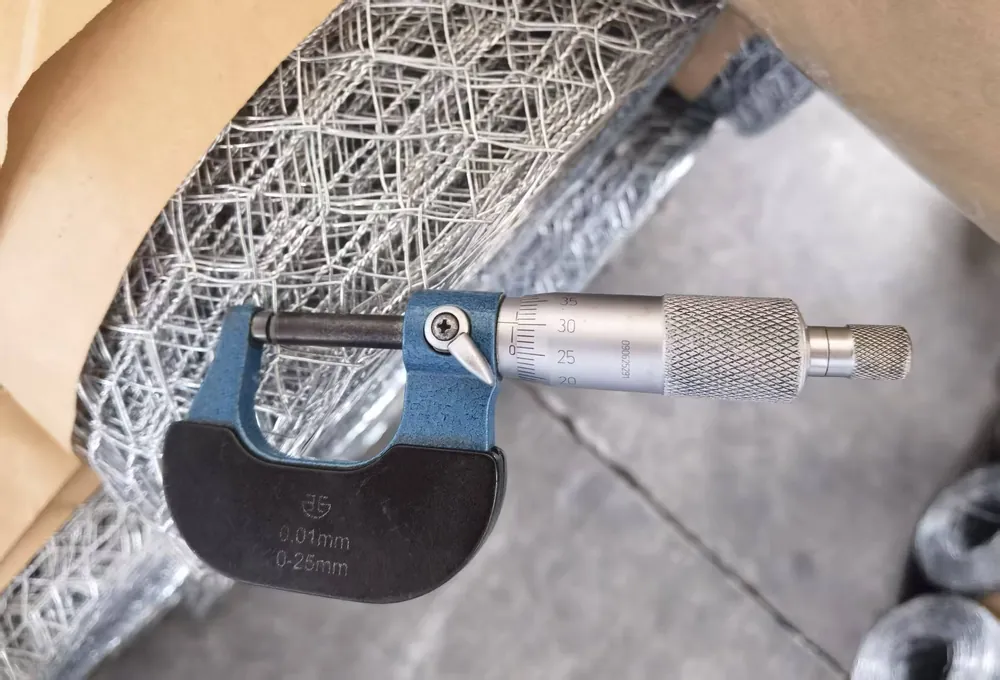
The honest sourcing point: the mesh that looks identical in a photo can differ in wire gauge, zinc coating weight, and furring consistency. Those three variables decide whether plaster embeds fully and whether the base rusts inside the wall years later. Ask any supplier for gauge, opening size, coating, and furring depth in writing. Tell us your coat system and we will recommend a base, name the standard, and confirm the full specification. You can request a quote to match the order to your project.
Frequently asked questions
What is the difference between stucco netting and metal lath?
Stucco netting is flexible woven hexagonal wire mesh (ASTM C1032) that rolls out over framing and embeds in the scratch coat of three-coat stucco. Metal lath is a rigid sheet, either expanded diamond mesh (ASTM C847) or welded wire grid (ASTM C933), whose stiffness keys plaster aggressively on corners, soffits, and one-coat systems. Netting conforms; lath stays rigid.
Which lath is best for stucco?
It depends on the system. Woven stucco netting suits conventional three-coat stucco on open framing. Expanded metal lath suits one-coat systems, corners, and curved or hard-to-key details because of its rigidity and sharp keys. Welded wire lath suits flat, dimensionally stable substrates. Match the base to the coat system and substrate rather than seeking one universal best.
What ASTM standard covers stucco netting?
Woven wire stucco netting is covered by ASTM C1032 (woven wire plaster base). Expanded metal lath falls under ASTM C847 and welded wire lath under ASTM C933. Installation of any of these for portland cement plaster is governed by ASTM C1063. Cite the material standard and C1063 together on your submittal.
Can I use stucco netting for a one-coat system?
One-coat (single-coat) stucco systems are usually proprietary and most often specify expanded metal lath (ASTM C847) for its rigidity and aggressive mechanical key. Some systems accept woven netting, but you must follow the system manufacturer's listing. Always confirm the plaster base against the specific one-coat system's approved details before ordering.
