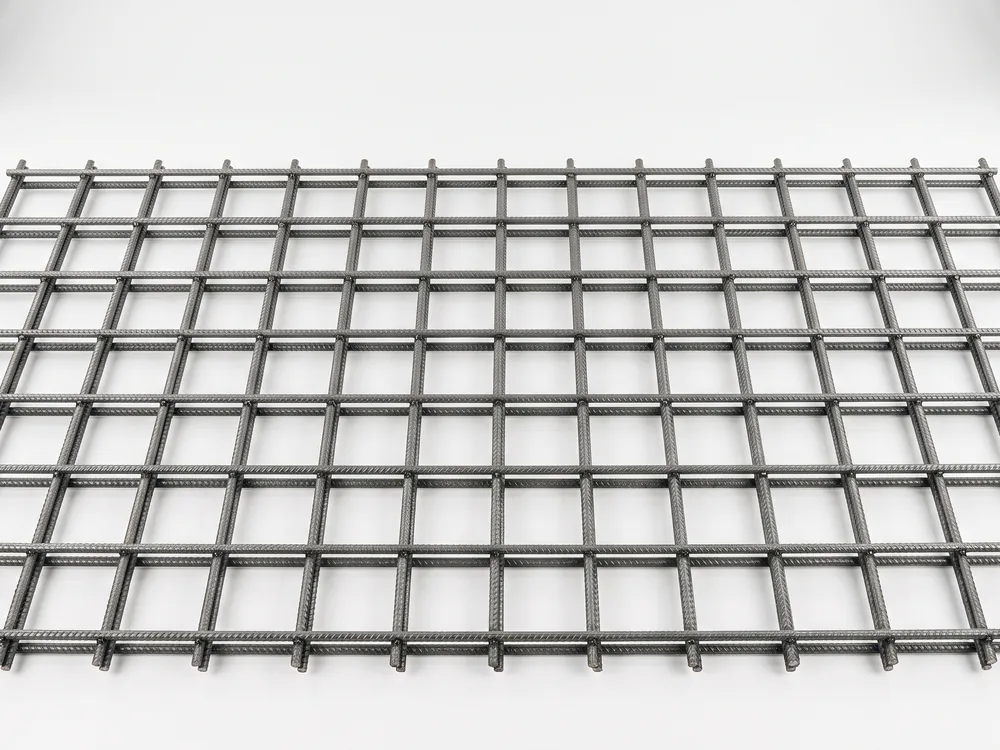
At Leeter, a wire and mesh exporter based in Dingzhou, Hebei since 2006, we quote against these specifications every week for buyers across North America and Europe. This guide explains what each standard actually controls, why you still see legacy references, and how to name them in a request so you get exactly what you need.
Why ASTM A1064 replaced A185 and A497
For decades, US buyers referenced two separate documents. ASTM A185 covered plain (smooth) welded wire reinforcement, and ASTM A497 covered deformed welded wire reinforcement. Both were widely used in slabs, pavements, precast panels, and pipe. The problem was duplication. The two standards shared most of their requirements for material, welding, and testing, yet they lived in separate books.
ASTM International merged them. A1064, titled "Standard Specification for Carbon-Steel Wire and Welded Wire Reinforcement, Plain and Deformed, for Concrete," now covers both plain and deformed products in a single specification. It also folded in the older cold-drawn wire specifications that used to sit under A82 (plain wire) and A496 (deformed wire). So one document now governs the wire itself and the finished welded reinforcement.
The practical takeaway is simple. When you write a new specification today, cite ASTM A1064. When you read an old drawing that says A185 or A497, treat it as historical shorthand for what A1064 now covers. The withdrawn numbers still appear on legacy plans, in older contracts, and in software templates that were never updated.
What does a welded mesh standard actually govern?
A welded mesh standard controls three things that matter to structural performance: the base material, the strength of each weld, and dimensional tolerances. Get any one wrong and the sheet may look correct while failing to carry load. ASTM A1064 sets minimum requirements across all three so an engineer can rely on the product without testing every sheet.
Material and mechanical properties
The standard defines the steel. It sets requirements for cold-drawn carbon steel wire, including minimum tensile strength and yield strength, plus reduction-of-area and bend behavior that prove the wire is ductile enough to work in concrete. Deformed wire carries surface indentations that improve bond, and the standard describes how those deformations are measured and qualified.
Because A1064 absorbed the old wire specs, it now covers the raw wire and the assembled mesh together. That matters for traceability. When we supply concrete reinforcing mesh against A1064, the mill certificate can trace the finished sheet back to the wire properties in the same standard.
Weld shear strength
The weld is what makes welded wire reinforcement behave as a grid instead of loose wires. The standard specifies a minimum weld shear value, tied to the cross-sectional area of the larger wire at each intersection. Testing pulls one wire against the crossing wire until the weld fails, and the recorded load must exceed the minimum. This is the property that separates true structural welded mesh from lightweight decorative or fencing grids that share a similar appearance.
Buyers sometimes assume any welded sheet qualifies for concrete. It does not. A fence panel welded from low-strength wire will not meet the weld shear or tensile requirements of a reinforcing mesh standard, even if the spacing looks identical.
Dimensional tolerances
The standard also fixes tolerances for wire spacing, sheet length and width, and overall flatness. These limits keep the steel where the designer placed it, so cover depth and bar area per foot stay within design assumptions. When spacing drifts, the effective reinforcement ratio changes, and inspection can flag the lot.
How do US and European standards compare?
The US and Europe use different documents that pursue the same goal: guaranteed material, weld, and tolerance quality. ASTM A1064 governs the United States. In Europe, EN 10218 covers steel wire and wire products (general and dimensional rules), while EN 10080 covers steel for the reinforcement of concrete, including weldable reinforcing steel. National annexes and product standards then build on EN 10080 for mesh.
Here is how the main references line up.
| Standard | Scope | Region / status |
|---|---|---|
| ASTM A1064 | Plain and deformed steel wire and welded wire reinforcement for concrete | United States, current |
| ASTM A185 | Plain welded wire reinforcement | United States, withdrawn (replaced by A1064) |
| ASTM A497 | Deformed welded wire reinforcement | United States, withdrawn (replaced by A1064) |
| ASTM A82 / A496 | Plain / deformed cold-drawn wire | United States, withdrawn (folded into A1064) |
| EN 10080 | Weldable reinforcing steel for concrete, general | Europe, current |
| EN 10218 | Steel wire and wire products, general and dimensions | Europe, current |
A common question from importers is whether an A1064 sheet automatically satisfies an EN 10080 job. It does not. The two systems use different test methods, marking rules, and acceptance criteria. If your project is specified to EN 10080, ask your supplier to certify against that standard specifically rather than assuming equivalence from an ASTM certificate.
Regional codes also matter beyond the material spec. In the US, ACI 318 and building codes reference the material standard for design, while European design follows Eurocode 2. The material standard tells you the product is sound; the design code tells you how much of it you need.
Legacy references buyers still encounter
Withdrawn standards do not disappear from the field. Older structural drawings, retrofit projects, and long-running master specifications still call for A185 or A497 by name. Precast plants that qualified processes years ago sometimes keep the old numbers in their internal documents. Estimating software and product catalogs occasionally lag behind, too.
None of that is a problem if you know the mapping. A185 (plain) and A497 (deformed) are both covered by A1064 today. A82 and A496, the old wire specs, live inside A1064 as well. When a drawing cites a withdrawn number, the correct current product is A1064 in the matching style, plain or deformed. We recommend confirming this in writing with the engineer of record rather than assuming, because contract language sometimes freezes a withdrawn standard for a specific job.
Style designations also survive. You will still see mesh described with the W/D system, such as 6x6 W2.9xW2.9, where W means plain wire and D means deformed, followed by the cross-sectional area in hundredths of a square inch. That labeling convention carried over into A1064, so it remains a reliable way to describe a sheet regardless of which document number appears on the plan.
How should you name standards in an RFQ?
Name the current standard, the wire style, and the exact sheet geometry, and you eliminate almost all ordering errors. A precise request lets a supplier quote the right product on the first pass instead of guessing. Vague requests, such as "6x6 mesh," produce vague quotes and mismatched deliveries. The few extra lines of detail pay for themselves.
A strong reinforcing mesh line item includes the following:
- Standard: ASTM A1064 (or EN 10080, if your project is European).
- Style: plain (W) or deformed (D) wire.
- Designation: spacing and wire size, for example 6x6 W2.9xW2.9.
- Sheet or roll: flat sheets with dimensions, or rolls with width and run length.
- Finish: bright, galvanized, or epoxy-coated, if required.
- Certification: mill test report and the standard you want it certified against.
For imported orders, also state your destination code environment. Telling us the job follows ACI 318 in the US or Eurocode 2 in the EU helps us match certification and marking to what your inspector expects. When you send us a drawing, we cross-check the mesh callout against A1064 before quoting, and we flag any withdrawn reference so nothing stalls at inspection.
If you are still deciding between styles or coatings, our welded wire mesh range covers plain and deformed sheets in the common spacings, and you can request a quote with your drawing attached for a specification check.
Frequently asked questions
Is ASTM A185 still valid to specify?
ASTM A185 has been withdrawn and replaced by ASTM A1064, which now covers plain welded wire reinforcement. You will still see A185 on legacy drawings and older master specs. For new work, cite A1064 and specify plain (W) wire. If a contract freezes A185 for a specific job, confirm the intended product with the engineer of record in writing.
What is the difference between A1064 plain and deformed wire?
Plain wire (designated W) has a smooth surface and relies on the welded grid for anchorage in concrete. Deformed wire (designated D) carries rolled or indented surface deformations that improve mechanical bond. ASTM A1064 covers both in one standard. Choose deformed wire where bond and crack control matter most, and plain wire for general slab and pavement reinforcement.
Does ASTM A1064 equal EN 10080?
No. ASTM A1064 governs welded wire reinforcement in the United States, while EN 10080 governs weldable reinforcing steel in Europe. They use different test methods, marking rules, and acceptance criteria, so one certificate does not automatically satisfy the other. If your project is specified to EN 10080, ask your supplier to certify against that European standard directly.
What does 6x6 W2.9xW2.9 mean?
The first pair, 6x6, gives the wire spacing in inches, so wires sit six inches apart in both directions. The W means plain wire, and 2.9 is the wire cross-sectional area in hundredths of a square inch (0.029 sq in). A deformed equivalent would read D instead of W. This W/D system carried over into ASTM A1064.
Which standard controls weld strength in reinforcing mesh?
For US products, ASTM A1064 sets the minimum weld shear requirement, tied to the cross-sectional area of the larger wire at each intersection. This weld shear value is what makes welded wire reinforcement act as a structural grid. Decorative or fencing panels do not meet it. In Europe, EN 10080 and related product standards define the equivalent weld requirements.
Getting the specification right the first time
The standards system looks tangled from the outside, but the logic is clean. ASTM A1064 is your current US reference, it absorbed A185, A497, A82, and A496, and EN 10080 with EN 10218 covers European work. Name the standard, the wire style, and the exact designation in your RFQ, and inspection becomes a formality instead of a risk.
If you want a second set of eyes on a mesh callout, send us the drawing. Our team checks it against the correct welded mesh standard, flags any withdrawn references, and quotes the matching product. Request a quote and we will confirm the specification before you order.
