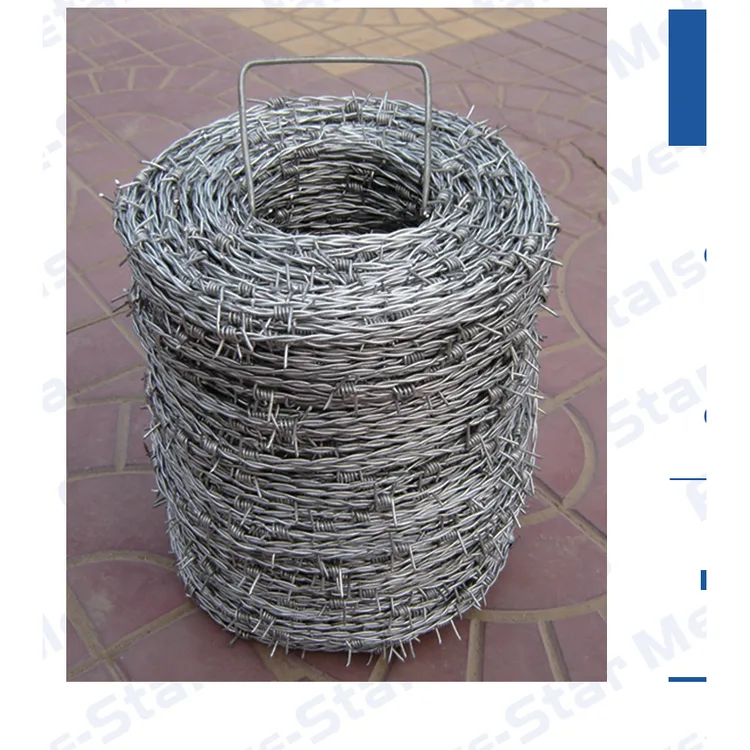
 Actual product reference
Barbed Wire
Double-strand twisted wire with 2-point or 4-point barbs
Barbed wire is double-strand twisted fencing wire with sharp barbs at regular spacing, used on land boundaries, livestock fencing and security toppings. It is specified in the US under ASTM A121, where the zinc coating class — Class 1 (0.28 oz/ft²) or Class 3 (0.80 oz/ft²) — sets field life from 2–12 years up to 13–30. Leeter manufactures normal-twist and reverse-twist barbed wire in electro-galvanized, hot-dip galvanized (Class 1 or Class 3) and PVC-coated finishes, with strand and barb gauges built to your market.
Specification locked
Process controlled
Dimension verified
Packing documented
Technical specifications
Final values confirmed on approved order| Specification item | Available range | Order control |
|---|---|---|
| Standard | ASTM A121 (metallic-coated carbon steel barbed wire) | Confirmed on sample, drawing or order sheet |
| Type | Normal twist or reverse twist, double strand | Confirmed on sample, drawing or order sheet |
| Strand × barb gauge | 10#×12#, 12#×12#, 12#×14#, 14#×14#, 14#×16#, 16#×16#, 16#×18# (SWG) | Confirmed on sample, drawing or order sheet |
| Barb spacing | 75–150mm (3"–6") | Confirmed on sample, drawing or order sheet |
| Barb length | 15–30mm (0.6"–1.2") | Confirmed on sample, drawing or order sheet |
| Finish | Electro-galvanized, hot-dip galvanized, PVC-coated | Confirmed on sample, drawing or order sheet |
| Zinc coating class | Class 1 (0.28 oz/ft², ~2–12 yr) or Class 3 (0.80 oz/ft², ~13–30 yr) | Confirmed on sample, drawing or order sheet |
| PVC option | Core 1.0–3.5mm, coated OD 1.4–4.0mm, coating 0.4–0.6mm, colors available | Confirmed on sample, drawing or order sheet |
| Coil format | 25–50kg coils or custom lengths, carton or woven-cloth wrapped | Confirmed on sample, drawing or order sheet |
Get pricing, packing and lead time.
Trial orders welcome
15–35 days from PO
FOB and CIF planning
Packing built around handling
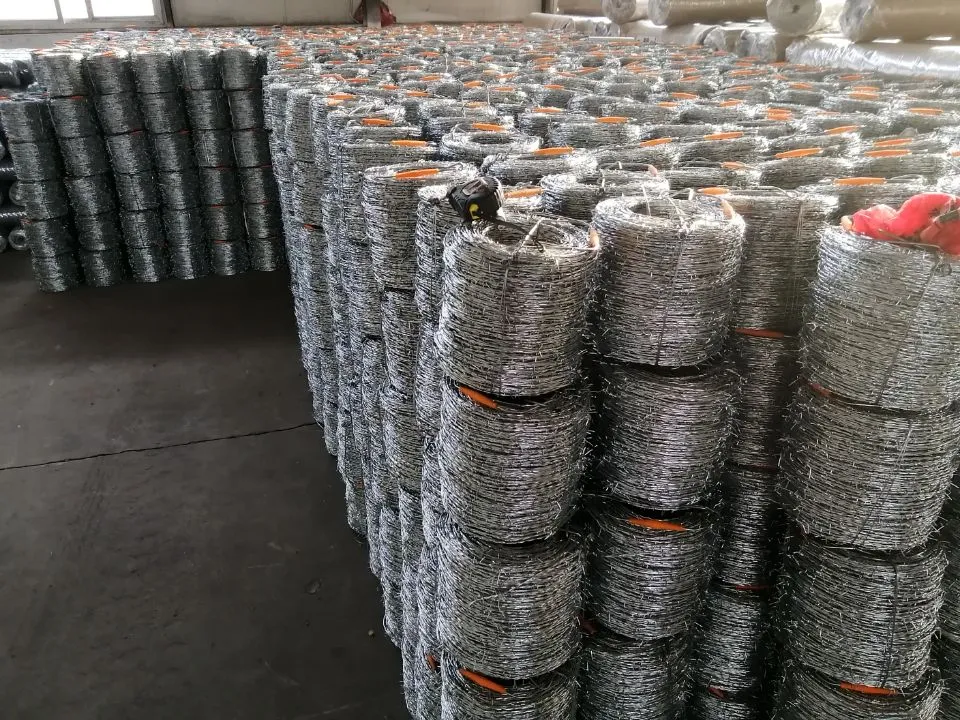
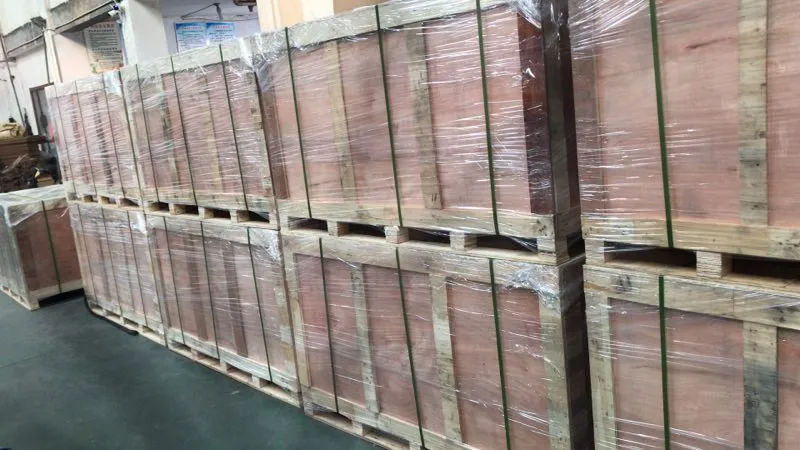
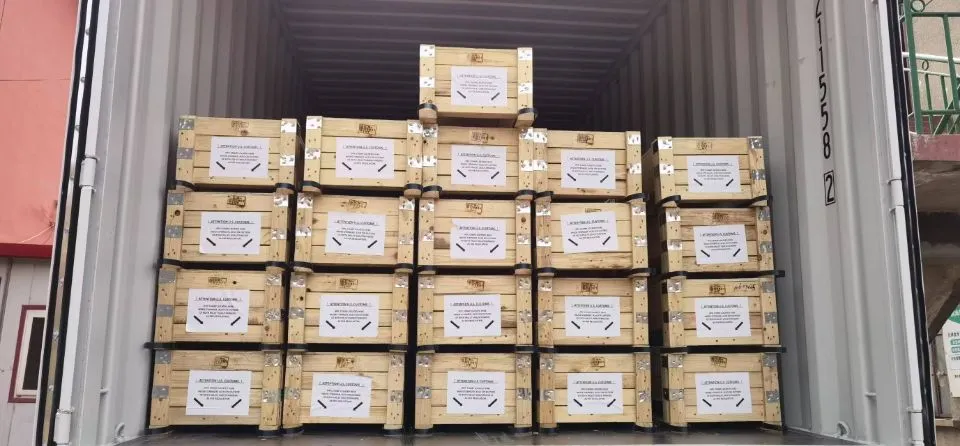
Packing reference
Coils wrapped with waterproof paper or woven cloth, palletized or floor-loaded. Custom coil weights and private labels available.
- ✓ Unit and outer pack confirmed
- ✓ Shipping marks checked
- ✓ Loading plan and photos available
Quality documents
Applications
- →Cattle and livestock fencing
- →Land and crop boundary protection
- →Security topping on chain link and panel fencing
 Explore applications →
Related buyer guides
Barbed Wire Specifications: Gauges, Twist Types and Coatings
Strand and barb gauge combos, twist types, barb spacing and coatings for export barbed wire, from a China factory.
8 min read →Form Stakes & FencingHow Much Barbed Wire Do You Need? Rolls Per Acre and Per Mile
A standard roll is 1,320 ft. Work out rolls per acre and per mile, strands by livestock, and posts and staples per run.
8 min read →Form Stakes & FencingBTO vs CBT Razor Wire: Blade Profiles, Coil Sizes and How to Specify
What BTO and CBT razor wire codes mean, blade profile specs, concertina coil sizes and how to specify an order.
7 min read →Form Stakes & FencingChain Link Fence Fabric: Mesh Size, Gauge and Selvage Explained
How to specify chain link fabric: mesh size, BWG wire gauge, knuckled vs twisted selvage, heights and roll lengths.
7 min read →Buyer FAQ
Which barbed wire gauge should I order?
The most traded export combinations are 12#×14# and 14#×14# SWG — heavy enough for livestock fence lines while keeping coil weight economical. Use heavier 10#–12# strands for high-tension boundary runs and lighter 16# combinations for security toppings.
What is the difference between normal twist and reverse twist?
Normal twist winds both strands in one continuous direction. Reverse twist alternates the twist direction between barbs, which locks the barbs more firmly and keeps the strands from unravelling when cut — preferred in many African and Middle East markets.
What is the difference between Class 1 and Class 3 galvanized barbed wire?
The class is the zinc coating weight under ASTM A121. Class 1 carries about 0.28 oz/ft² of zinc and lasts roughly 2–12 years; Class 3 carries about 0.80 oz/ft² — nearly three times as much — and lasts about 13–30 years. Class 1 suits dry-climate or short-life boundary fence; Class 3 earns its extra cost on coastal, humid or long-service runs. A quote that just says "galvanized" is usually Class 1, so name the class if you need the longer life.
Is barbed wire made to ASTM A121?
Yes. ASTM A121, Metallic-Coated Carbon Steel Barbed Wire, is the US standard: a two-wire strand with barbs, in zinc (Type Z), aluminum (Type A) or zinc-aluminum alloy (Type ZA) coatings. We manufacture to A121 and confirm the strand gauge, barb pattern and coating class on the proforma; SWG combinations are matched to their millimeter diameters so there is no gauge-system confusion.
Need a matched answer?
Send the drawing, destination and expected quantity to the same team that prepares your quotation.
Talk to our buyer desk
Ready to source Barbed Wire?
Turn your requirement into a quote.
Pricing, packing and lead time tied to the confirmed specification.