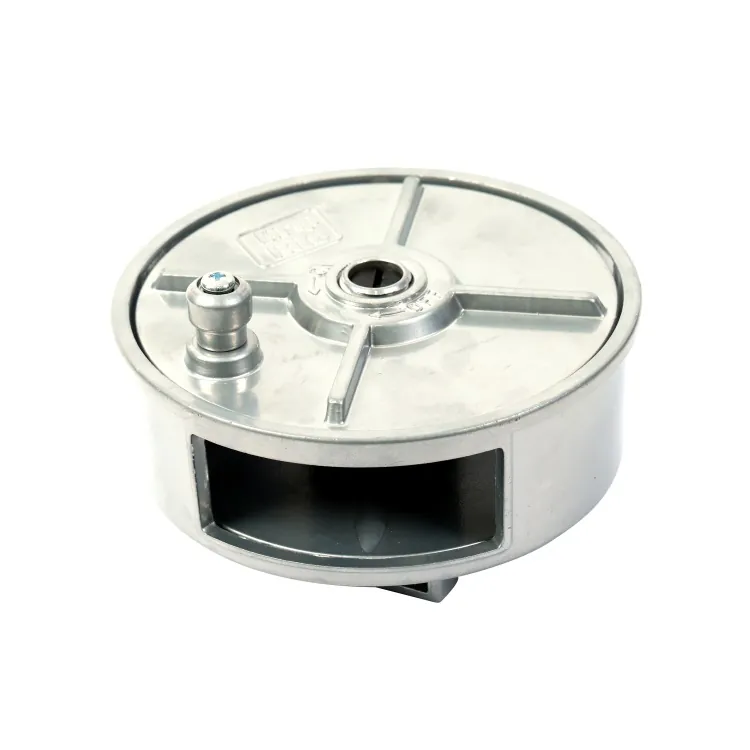
What is private-label tie wire?
Private-label tie wire is standard annealed or coated wire, drawn and packed to your specification and sold under your brand rather than ours. The wire itself is the same product families we already export: black annealed rebar tie wire, galvanized tie wire, PVC-coated wire, and pre-cut looped ties. What changes is the presentation layer around it: coil weight, spool type, carton graphics, labels, barcodes and lot codes.
For a distributor, the appeal is control. A generic import carton tells buyers nothing and builds no loyalty. A branded carton with your logo, part number and specifications turns the same steel into a repeat-purchase SKU. In our experience selling into North America and Europe, distributors who invest in their own packaging protect pricing better because their product is no longer a pure commodity comparison against the next unbranded coil on a marketplace.
The mechanics are simple. You send us artwork, target specifications and volumes. We draw the wire to gauge, anneal or coat it, wind it to your coil weight, and pack it into cartons printed with your design. Every step happens in-house at our Dingzhou plant, so there is no third-party trading margin stacked on top.
What can be customized on OEM tie wire?
Almost every physical and printed attribute of the product can be changed, within the limits of the raw material and the winding equipment. The core variables fall into four groups: the wire, the coil or reel format, the packaging, and the markings. Below is a practical view of what distributors most often specify.
| Attribute | Common options | Notes |
|---|---|---|
| Wire diameter | 0.8 mm to 2.0 mm (roughly 21 to 14 gauge) | 16 and 16.5 gauge are the highest-volume tie sizes |
| Finish | Black annealed, hot-dip galvanized, electro-galvanized, PVC-coated | Coating adds corrosion life and cost |
| Temper | Soft annealed for hand tying, semi-soft for tools | Soft wire ties tighter with fewer breaks |
| Coil / reel weight | 1 kg, 1.5 kg, 3.5 kg, 25 kg, 50 kg | Small coils suit retail; large coils suit jobsite bulk |
| Spool type | Loose coil, plastic spool, cardboard core, tie wire reels for tools | Tool-fed reels must match the gun spindle |
| Carton print | 1 to 4 color offset, your logo and layout | Full-color raises the plate setup cost |
| Labels | Printed sleeve, adhesive label, hang tag | Include SKU, gauge, weight, origin |
| Barcodes | UPC, EAN, GS1-128, QR | We print your assigned codes; you own the numbers |
| Lot coding | Batch number, production date, shift code | Supports recalls and warranty tracing |
Coil weight and format
Coil weight is the specification distributors underestimate most. A hardware retailer selling to homeowners wants light 1 kg to 3.5 kg coils that sit on a peg or shelf. A rebar contractor buying by the pallet wants 25 kg or 50 kg coils that last through a pour without constant reloading. If you serve both channels, you may need two coil weights under the same brand, which effectively doubles the packing and labeling setup.
Reels for battery-powered tying tools are a separate discipline. The wire spool has to match the tool spindle diameter and the wire has to feed at a consistent temper, or the tool jams. If you sell tool-fed wire, tell us the exact tool models your customers use so we wind to the right spool geometry.
Finish and corrosion life
Finish drives both performance and price. Black annealed wire is the cheapest and ties beautifully, but it rusts once exposed to weather. Galvanized wire resists corrosion for outdoor and coastal work. PVC-coated wire adds a clean, non-marking layer used in landscaping, vineyards and cosmetic applications. Your brand should carry a consistent finish story so buyers know what they are getting every time.
How does private label affect MOQ?
Custom work raises the minimum order because each printed carton and label is made to order and cannot be resold to another customer. Setup costs for print plates and label dies are fixed, so they only make sense spread across enough volume. A plain export coil can ship at a low minimum, but branded packaging pushes the practical floor higher.
There are two minimums to think about, and they interact. The first is the wire production minimum, which is driven by how much of a given gauge and finish we run in a batch. The second is the packaging minimum, driven by the print run for cartons and labels. Print vendors rarely make short carton runs economical, so the carton minimum often sets the real order size rather than the wire itself.
| Order type | Typical MOQ direction | Main driver |
|---|---|---|
| Unbranded stock coil | Lowest | Wire batch size only |
| Branded label, plain carton | Moderate | Label print run |
| Full custom printed carton | Higher | Carton plate and print run |
| Multiple SKUs or finishes | Highest | Setup repeated per SKU |
The practical lesson is to consolidate. If you launch a private-label line, start with one or two hero SKUs at meaningful volume rather than ten variants at token quantities. You reach better pricing, and your first production run funds the plates you reuse on later orders. For a fuller breakdown of volume economics, see our guide on buying tie wire in bulk and understanding MOQ.
What are the lead times and setup steps?
Lead time for a first private-label order runs longer than a repeat order because artwork approval and tooling happen only once. The one-time steps are artwork proofing, plate and die production, and a pre-production sample. After those are locked, repeat orders behave like normal wire production and ship on the standard manufacturing schedule.
Here is the honest sequence we walk distributors through:
- Specification lock. We agree gauge, finish, temper, coil weight and reel type in writing.
- Artwork exchange. You send print-ready files; we return a die-line proof showing how your design maps onto the real carton and label.
- Sample approval. We produce a physical sample coil and packed carton for you to inspect and photograph.
- Tooling. Print plates and label dies are cut. This is the step that adds calendar time on a first run.
- Production and packing. Wire is drawn, annealed or coated, wound, and packed into your cartons with lot codes applied.
- Inspection and loading. We check weight, gauge and print quality, then load the container.
The single biggest cause of delay is artwork. Files that arrive in the wrong color space, without bleed, or with a barcode that fails a scan test force a second proof cycle. Send vector artwork with the barcode you have already validated, and the first run moves faster.
Who owns the branding and barcodes?
You own your brand assets and barcode numbers; we simply reproduce them on your product. We do not register UPC or EAN codes on your behalf, and we do not reuse your artwork for any other customer. This separation matters for distributors who need clean chain-of-custody for retail listings and warranty claims.
Barcodes deserve special care. A UPC or EAN number is assigned to your company, and each SKU needs its own unique code. If you sell through large retailers or online marketplaces, the barcode has to scan reliably on the first pass, so we print at the correct magnification and quiet-zone spacing and verify it on the sample. Lot coding sits alongside the barcode: a date and batch stamp that lets you trace any coil back to its production run if a customer ever raises a quality question.
A quick reality check many first-time private-label buyers miss: your brand promise now rides on our consistency. If your carton says a coil weighs 25 kg, every coil has to weigh 25 kg. We hold tolerances tight for exactly this reason, because a private-label program only works when the product behind the label is dependable batch after batch.
Is private-label tie wire worth it for distributors?
For distributors selling repeat volume into a defined market, private label usually pays back through margin protection and customer retention rather than a lower unit cost. The wire costs the same to make; the branded packaging adds a modest per-unit cost. What you buy is differentiation, and differentiation is what stops your customers from price-shopping you against an anonymous coil.
The math is straightforward. If a branded carton lets you hold even a small pricing premium and reduces churn, it outperforms selling generic coils at razor-thin margins. The distributors who struggle with private label are those who fragment into too many low-volume SKUs, because each variant carries its own setup and none reaches efficient scale. Focus wins here. Pick the sizes your market actually buys, brand them well, and reorder consistently.
If you are weighing this decision, the fastest way to get real numbers is to send us your target gauges, finishes, coil weights and annual volume, and we will return honest MOQ and lead-time figures rather than a generic price list. You can request a quote and we will scope a first run around your actual market.
Frequently asked questions
What is the difference between OEM tie wire and private-label tie wire?
OEM tie wire means we manufacture the wire to your specification, while private-label adds your branding on top. In practice the two overlap: most private-label programs are OEM production packed under the distributor's brand. The wire is ours to make; the label, carton and barcode are yours to own.
Can I put my own logo and barcode on the cartons?
Yes. You send print-ready artwork and your assigned UPC, EAN or GS1 barcode, and we reproduce them on your cartons and labels. You own and register the codes; we only print them. We verify the barcode scans correctly on the pre-production sample before the full run so it works at retail.
What coil weights can you produce for private label?
We wind common weights from light 1 kg to 3.5 kg retail coils up to 25 kg and 50 kg jobsite coils, plus reels sized for battery tying tools. Tell us your channel and, for tool-fed wire, the exact tool models, so we match the spool geometry and temper to how your customers actually work.
How long does a first private-label order take?
A first order takes longer than repeats because artwork approval, plate tooling and sample sign-off happen once. Those setup steps add calendar time up front. After tooling is locked, repeat orders follow the standard production schedule. Sending validated vector artwork early is the single best way to shorten the first cycle.
Does private label increase the minimum order quantity?
Usually yes. Printed cartons and labels are made to order and cannot be resold, so the print run sets a practical floor above a plain stock coil. Consolidating into one or two high-volume SKUs keeps pricing efficient and lets your first run fund the reusable plates for later orders.
Ready to build your own branded line? Send your specifications and volumes and request a quote, and we will scope an OEM tie wire program around your market.
