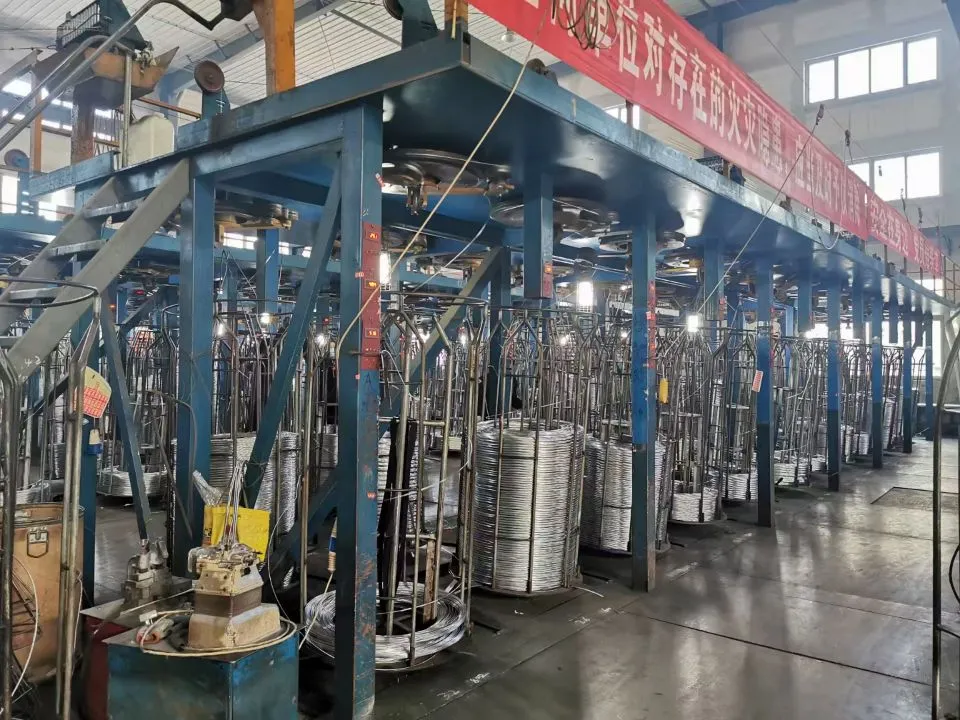
We are Hebei Leeter Import and Export Co., Ltd ("Leeter"), a construction wire and mesh manufacturer in Dingzhou, Hebei — one of China's main steel-wire regions — exporting since 2006. Rebar tie wire is our founding line, so the guide below is written from the factory floor, not a catalogue: the specs that matter, the standard that actually applies, and the checks we tell buyers to run on any Chinese supplier, including us.
What "16-gauge tie wire" actually means
Tie wire is sized on the US Steel Wire Gauge (the Washburn & Moen system), and this trips up a lot of buyers because it is not the same as BWG (Birmingham) or SWG (British) gauge — sellers routinely blur all three. The differences are small on a soft tie, but they are real, and a supplier can quietly ship a thinner wire "measured on a different scale."
| Gauge | Diameter (US Steel Wire Gauge) | Common use |
|---|---|---|
| 16 GA | 0.0625 in / 1.588 mm | The standard hand-tie gauge; strong, general purpose |
| 16.5 GA | ~0.058 in / ~1.47 mm | A tie-wire trade size (no gauge authority defines it); slightly lighter, ties faster |
| 18 GA | 0.0475 in / 1.207 mm | Lighter tying, small bars, less holding power |
| 19 GA | ~0.041 in / ~1.04 mm | Auto-tie-tool wire (see below) |
Two honest notes buyers rarely get told: "0.063 in" on a product page is just 0.0625 in rounded (true 16 gauge), not BWG's 0.065 in; and 16.5 gauge is a trade convention, not a standardized size — fine to buy, but confirm the diameter in millimetres on the order so there is no argument later.
Material and temper: soft is the whole point
Tie wire is low-carbon steel (grade C1006/C1008), drawn and then dead-soft "black" annealed. The annealing is the point: it makes the wire tough but pliable — easy to twist by hand or tool, hard to snap. If crews report wire breaking during the twist, the usual cause is under-annealed or hard-drawn wire sold as tie wire, not operator error.
Because softness — not strength — is what a tie wire is bought for, tensile numbers are secondary and, frankly, not standardized: soft annealed tie wire runs roughly 300–550 N/mm² (about 43–80 ksi), with most product data clustering 350–450 N/mm². Don't chase a tensile figure; require a mill test report instead (more on that below).
Finish: pick it by where the wire lives
| Finish | Coating | Corrosion life | When to use it |
|---|---|---|---|
| Black annealed (bare) | None (black oxide) | Rusts; can stain | Interior and standard cast-in-place work where the wire is fully embedded. Cheapest, most common. |
| Electro-galvanized | ~5–15 µm zinc | Years indoors, short outdoors | Cleaner handling, light corrosion delay. Auto-tool wire uses a thin ~5 µm zinc. |
| Hot-dip galvanized | ~45–100+ µm zinc | Roughly 10× electro-galv | Exposed, humid or exterior work; longer service life. |
| PVC / vinyl coated | ~0.18 mm over an annealed or galvanized core | Highest barrier | Tying epoxy-coated or galvanized rebar — the plastic won't scratch the bar's coating — plus marine, bridge and wastewater work. |
The decision is exposure, not price: bare black for embedded interior; galvanized where the wire sees weather; PVC when the rebar itself is coated and must not be scratched. For hot-dip galvanized, ask for the coating weight (g/m²) or coating class, because "galvanized" with a 5 µm flash and "galvanized" at 60 µm are not the same product.
The standard that actually applies (and the two you should not accept)
This is where most supplier pages — and a lot of AI answers — are simply wrong. Rebar tie wire has no dedicated ASTM standard. In practice, project and DOT specs just call for "annealed steel wire, 16 gauge minimum, black." Where a material standard is genuinely invoked, the correct one is:
- ASTM A853 — Steel Wire, Carbon, for General Use. This covers annealed low-carbon wire and is the right reference for black annealed tie wire.
- ASTM A641 — for pre-galvanized (zinc-coated) tie wire.
- ASTM A123 / A153 — for wire that is hot-dip galvanized after fabrication (per the American Galvanizers Association).
Do not accept a supplier citing ASTM A82 or A1064 for tie wire. Those cover cold-drawn reinforcing wire and welded-wire reinforcement — a hard, structural wire (A82 was withdrawn in 2013 and rolled into A1064). Tie wire is the opposite: soft-annealed and non-structural. A supplier who quotes A1064 for tie wire either doesn't understand the product or is padding the spec sheet.
How much tie wire per tonne of rebar
There is no standards-body figure for this — it is an estimating heuristic that varies two to four times with bar size, tie spacing and how many intersections you tie. Anyone who gives you one exact number is guessing. The honest planning ranges, cross-checked across multiple sources:
| Basis | Typical figure | Why it varies |
|---|---|---|
| Metric "1% rule" | ~10 kg per tonne (band 7–13 kg/t) | 8 mm bars ≈ 12 kg/t; 28–32 mm bars ≈ 7 kg/t — thin bars have more intersections per tonne |
| US hand-tie (16.5 GA) | ~5–7 lb per ton | US crews often tie ~50% of intersections and use larger bars |
Plan on roughly 5–13 kg per tonne of rebar (about 10–26 lb/ton), skewing low for large-bar, partial-tie jobs and high for small-bar, every-intersection work. Don't average the two systems into one number — they assume different tie patterns, not different facts.
Coil, roll and auto-tool reel formats
- Hand-tie rolls: commonly 3–3.5 lb (≈ 330–390 ft) at 16 gauge for site use.
- Bulk coils: black annealed wire also ships in larger coils (for example ~25 kg) and as pre-cut double-loop "bag ties."
- Auto-tie-tool reels: tools like the MAX TwinTier run a much lighter wire — around 19 gauge / ~0.8 mm, dead-soft with a ~5 µm zinc coat, roughly 1 lb per reel and 145–265 ties per reel. The key spec buyers miss: auto-tool wire is far lighter than hand-tie 16/16.5 gauge, because the tool twists a double loop. If you are supplying crews that run tying guns, confirm the tool model — reel wire is not interchangeable with hand-tie coils.
Vetting a Chinese tie-wire supplier
The specs above only matter if the supplier actually ships them. The aggregator badges — "Gold Supplier," "Audited," a suspiciously round "5.0/5.0" — are marketing, not evidence. Verify these instead:
- Real factory, not a trading company. A manufacturer's business licence lists a production scope (生产/制造/加工), not just "wholesale/import-export." Cross-check the company on Tianyancha or Qichacha, ask for a live video walk of the drawing and annealing lines, and reverse-image-search the product photos — the same images across ten "suppliers" mean one shared trader.
- Mill test report (MTR), minimum EN 10204 type 3.1. This is the single most important document: batch test results (tensile, elongation, and zinc coating weight if galvanized), signed by a QC rep independent of production. A supplier who can only offer a 2.1 "declaration" hasn't tested your batch.
- ISO 9001 — verified, not just claimed. It certifies the quality system, not the product, and fake certificates circulate. Check the certificate number against the issuing registrar.
- A pre-shipment inspection you can book. A real factory welcomes third-party inspection (SGS, Bureau Veritas, QIMA) at ~80% production, with AQL sampling (ISO 2859-1, Level II is the norm) and zero tolerance on critical defects like wrong gauge or coating. A supplier who refuses inspection is telling you something.
Red flags: a price well below the wire-rod cost floor (implies wrong gauge or under-spec coating), refusal to provide a 3.1 MTR, inconsistent spec numbers across the quote, or a deposit demanded to a personal or Hong Kong account that doesn't match the company name.
As the manufacturer, this is the paperwork we issue as standard — mill test reports, ISO 9001, and pre-shipment inspection access — because it is exactly what a careful buyer should demand of anyone.
MOQ, packing and container loading
Tie wire is dense, so loading is governed by weight, not volume. A 20 ft and a 40 ft container share the same ~30,480 kg maximum gross weight, so heavy coils ship in 20 ft units — you hit the weight limit long before you fill the box. Plan around payload, and check the road/axle weight limits at your destination, which can be lower than the container's rating.
On terms, FOB puts the sea freight and its risk on you from the origin port (often cheaper if you have a freight forwarder); CIF has the seller arrange freight and minimum insurance to your destination port, though the risk still transfers at origin loading. For a first order with a new supplier, a 30% deposit / 70% before shipment after a passed inspection, or an on-platform escrow, protects you; reserve letters of credit for large orders. Our own indicative lead time is 15–30 days production plus sea transit; we ship FOB or CIF, in mixed containers when you need several gauges or finishes together.
Frequently asked questions
What gauge is rebar tie wire?
Rebar tie wire is most commonly 16 gauge (0.0625 in / 1.588 mm) or 16.5 gauge (~1.47 mm) on the US Steel Wire Gauge, with 18 gauge (1.207 mm) used for lighter tying. Auto-tie tools use a much lighter ~19 gauge / 0.8 mm reel wire. Confirm the diameter in millimetres on your order, because "16 gauge" on the Steel Wire, Birmingham and British gauges are all slightly different sizes.
What ASTM standard does rebar tie wire meet?
Tie wire has no dedicated ASTM standard; specs usually just require "annealed steel wire, 16 gauge minimum, black." Where a material standard applies, black annealed tie wire references ASTM A853 (carbon steel wire for general use); pre-galvanized wire references ASTM A641. It should not be sold against ASTM A82 or A1064, which cover hard cold-drawn reinforcing wire, not soft tie wire.
Why does my tie wire keep snapping?
Snapping during the twist almost always means the wire is under-annealed or hard-drawn wire being sold as tie wire, not an operator problem. Genuine tie wire is dead-soft black annealed low-carbon steel that twists without breaking. Ask the supplier for a mill test report showing the elongation, and require soft annealed temper on the order.
How much tie wire do I need per tonne of rebar?
Plan on roughly 5–13 kg per tonne of rebar (about 10–26 lb/ton). It varies two to four times with bar size and how many intersections you tie: small 8 mm bars every intersection can reach ~12 kg/t, while large 28–32 mm bars on partial tying can be ~7 kg/t or lower. There is no exact standards figure — treat any single number as an estimate.
How do I know if a Chinese supplier is a real factory?
Check that the business licence lists a manufacturing scope (not just trading), verify the company on Tianyancha or Qichacha, ask for a live video of the drawing and annealing lines, and reverse-image-search the product photos. Then require a type 3.1 mill test report and allow a third-party pre-shipment inspection — a genuine factory provides both without resistance.
Which tie wire finish should I order?
Match the finish to exposure: bare black annealed for interior, fully embedded work (cheapest and most common); electro- or hot-dip galvanized where the wire sees weather (hot-dip lasts roughly ten times longer); and PVC-coated when you are tying epoxy-coated or galvanized rebar, so the tie won't scratch the bar's protective coating.
Sources
- ASTM A853 — Standard Specification for Steel Wire, Carbon, for General Use
- ASTM A1064 (and withdrawn A82) — cold-drawn reinforcing wire, for contrast
- American Galvanizers Association — ASTM A123/A123M overview (hot-dip galvanizing)
- CRSI — Placing Bars (rebar tie methods)
- ICC — Incoterms 2020 (FOB / CIF)
- MAX USA — TwinTier rebar-tying tools and tie-wire reels
