
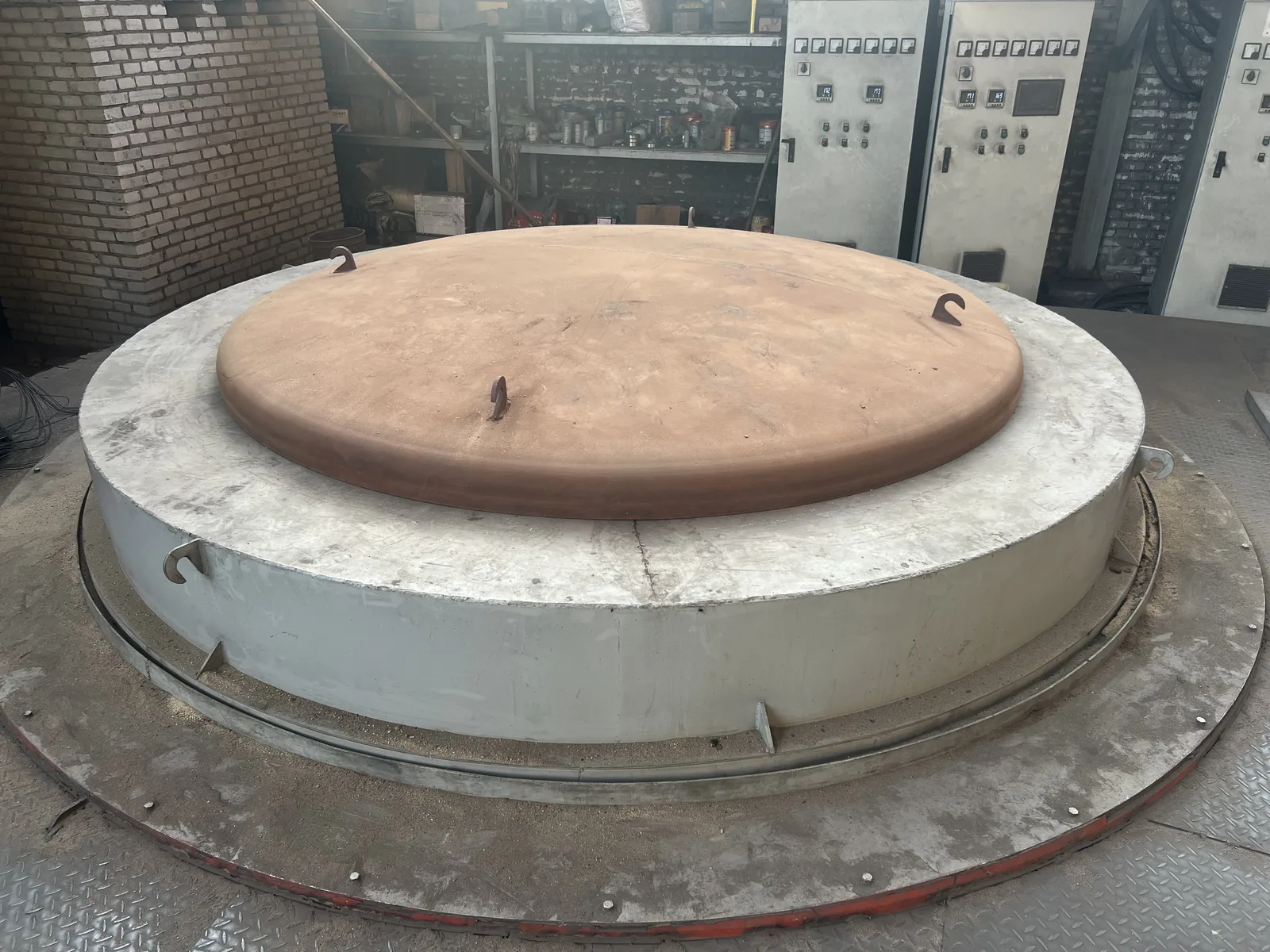
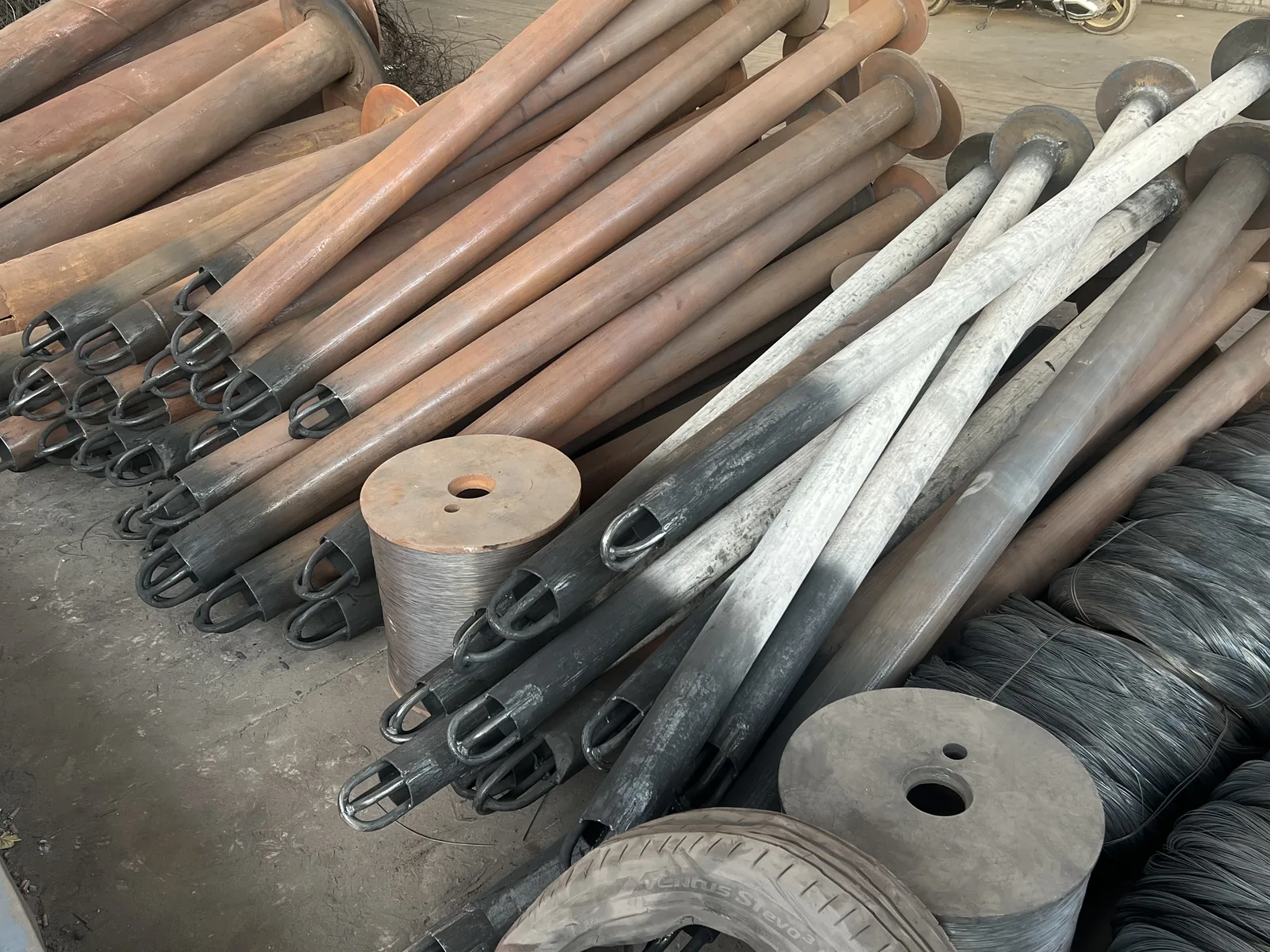
At our Dingzhou, Hebei production base, we draw and anneal black annealed rebar tie wire, U-type tie wire and tie wire reels in oxygen-free pit furnaces monitored by 100 kN tensile testing machines.
What are the 4 root causes of snapping tie wire on a jobsite?
When ironworkers complain that a batch of 3.5 lb (1.58 kg) coils or automatic tool reels is breaking mid-twist, the failure traces back to one of four factory or jobsite root causes:
| Root Cause | Metallurgical / Physical Mechanism | Measured Lab Signature | Field Symptom During Tying |
|---|---|---|---|
| 1. Under-Annealing (Short Soak or Fast Cooling) | Cold-drawn wire (650–850 MPa) was pulled from the pit furnace before full recrystallization at 700–750 °C (1,290–1,380 °F) or cooled too rapidly | Tensile 500–620 MPa (72.5–90.0 ksi); Elongation 6%–10% (vs ≥15% spec) | Wire feels springy, resists wrapping tightly around the bar, and snaps abruptly on the 2nd twist |
| 2. Over-Annealing / Surface Decarburization | Excessive furnace temperature (>820 °C / 1,508 °F) or oxygen leak burns surface carbon and grows coarse ferrite grains + thick brittle scale | Tensile <310 MPa (<45.0 ksi); heavy black oxide flaking | Wire stretches like lead, necks down prematurely, and pulls apart under heavy rebar mat bounce |
| 3. Off-Grade Wire Rod Chemistry (C, P, S Spikes) | Using induction-furnace scrap steel instead of prime Q195 / SAE 1008 BOF wire rod (Carbon >0.15% or Phosphorus/Sulfur >0.045%) | Hard martensitic/pearlitic pockets; erratic tensile swings of ±120 MPa along one coil | Random brittle snaps every 5th to 10th tie while adjacent ties twist normally |
| 4. Worn Drawing Dies & Undersized Gauge | Scratched tungsten-carbide drawing dies score longitudinal micro-grooves into the wire, or 16.5GA (1.47 mm) is sold as 16GA (1.60 mm) | Diameter <1.55 mm** or ovality **>0.04 mm; notch stress concentration under torsion | Wire shears cleanly at a specific scratch mark on the first high-torque pull of the pliers |
How does the pit annealing process control tie wire ductility?
Cold-drawing a 5.50 mm (0.217") Q195 steel wire rod down to 1.60 mm (16GA) reduces its cross-sectional area by 91.5% across 8 to 10 consecutive tungsten-carbide dies. That severe cold work elongates the steel grains and drives tensile strength up to 700–850 MPa (101,500–123,000 psi) with less than 2%–3% elongation — far too brittle to twist.
To convert hard-drawn wire into dead-soft tie wire, our Dingzhou mill runs a 4-stage sealed pit-annealing cycle:
- Spool Carrier Loading: Coils are stacked on heat-resistant alloy carrier rods with spacer plates so heat penetrates the inner and outer windings evenly.
- Oxygen-Free Pit Sealing: The carrier is lowered into the refractory pit furnace and sealed under a protective atmosphere to prevent scaling and carbon soot deposit.
- Recrystallization Soak (700–750 °C / 1,290–1,380 °F for 6–8 hours): Equiaxed ferrite grains reform, erasing cold-drawing strain across the entire coil cross-section.
- Controlled Slow Pit Cooling (10–14 hours to <180 °C): Slow cooling inside the insulated pit guarantees a uniform 350–450 MPa (50,700–65,200 psi) dead-soft temper from the outside wrap to the core.
How to test tie wire annealing quality on site in 60 seconds
You do not need a 100 kN universal tensile tester on the jobsite to spot a bad pallet of tie wire. Run these three field checks during incoming receiving inspection:
- The 180° Finger-Wrap & Springback Test: Cut a 300 mm (12") strand and wrap it tightly around a #4 (12 mm / 1/2") rebar using bare hands (no pliers). Properly annealed 350–450 MPa wire molds snugly against the bar ribs with less than 5°–10° of springback. If the loop springs open like a coat hanger, tensile strength is above 500 MPa.
- TheTwist-to-Failure Count Test: Loop a strand around two crossed #5 (16 mm / 5/8") bars, grip the tails 25 mm (1") from the intersection with standard 9-inch ironworker pliers, and count full 360° twists until the wire shears.
- 1 to 2 twists before snap: Brittle / under-annealed (Reject lot).
- 4 to 6 full twists before clean shear: Optimal dead-soft 350–450 MPa temper with ≥15% elongation (Pass).
- The 3-Point Digital Micrometer Check: Measure wire diameter at three points 10 meters apart, rotating the micrometer 90° at each point to check ovality. True 16 US Steel Wire Gauge must read 1.58 to 1.62 mm (0.0625" ± 0.0008"). Wire measuring 1.45–1.50 mm is 16.5GA — roughly 12%–15% weaker in torsional shear.
Trade-offs: Dead-Soft (350–400 MPa) vs Medium-Soft (420–480 MPa) tie wire
Not every tying method wants the softest possible wire:
- Manual hand-tying with pliers (3.5 lb belt coils): Prefers 350–420 MPa (50.7–60.9 ksi) dead-soft wire. It minimizes wrist fatigue over 3,000+ daily ties and Cinches tight without snapping when the ironworker pulls and twists simultaneously.
- Battery-powered automatic rebar tying guns (0.8 mm / 1.0 mm reels): Prefers 400–480 MPa (58.0–69.6 ksi) controlled-soft wire with strict ±0.02 mm roundness. If the wire is softer than 340 MPa, the tool's internal feed gears can buckle the wire tip inside the curl guide, causing nose jams.
Frequently asked questions
What is the ideal tensile strength and elongation for 16-gauge rebar tie wire?
For hand-tying with pliers or belt reels, the optimal specification is 350 to 450 MPa (50,700 to 65,200 psi) tensile strength with ≥15% elongation at break ($A_{50}$) (our mill typical is 16.5%–18.0%). Wire above 500 MPa is too stiff and snaps on the second twist; wire below 320 MPa lacks the holding strength to keep heavy rebar mats from shifting during concrete pumping.
Does surface rust make black annealed tie wire snap?
Light superficial flash rust on black annealed wire does not reduce tensile strength or cause snapping, and actually improves bond friction if embedded in concrete. However, deep pitting corrosion from seawater intrusion or long outdoor unroofed storage creates stress notches that cause the wire to snap under torsion — which is why export shipments should be packed with light anti-rust oil, VCI paper and PE shrink wrap.
Why does tie wire jam or snap in battery-powered rebar tying tools?
Automatic rebar tiers (using 0.8 mm / 21GA or 1.0 mm / 19GA spools) snap wire for three reasons: (1) excessive torque setting on the tool for thin wire, (2) tangled or non-level winding on third-party plastic spools, or (3) excessive oil or carbon soot gumming up the feed rollers. Always specify level-wound, dry or micro-oiled tool reels with ±0.02 mm diameter tolerance.
Manufactured by Hebei Leeter Import and Export Co., Ltd., operating dedicated cold-drawing and oxygen-free thermal pit-annealing facilities in Dingzhou, Hebei, China under ISO 9001:2015.
