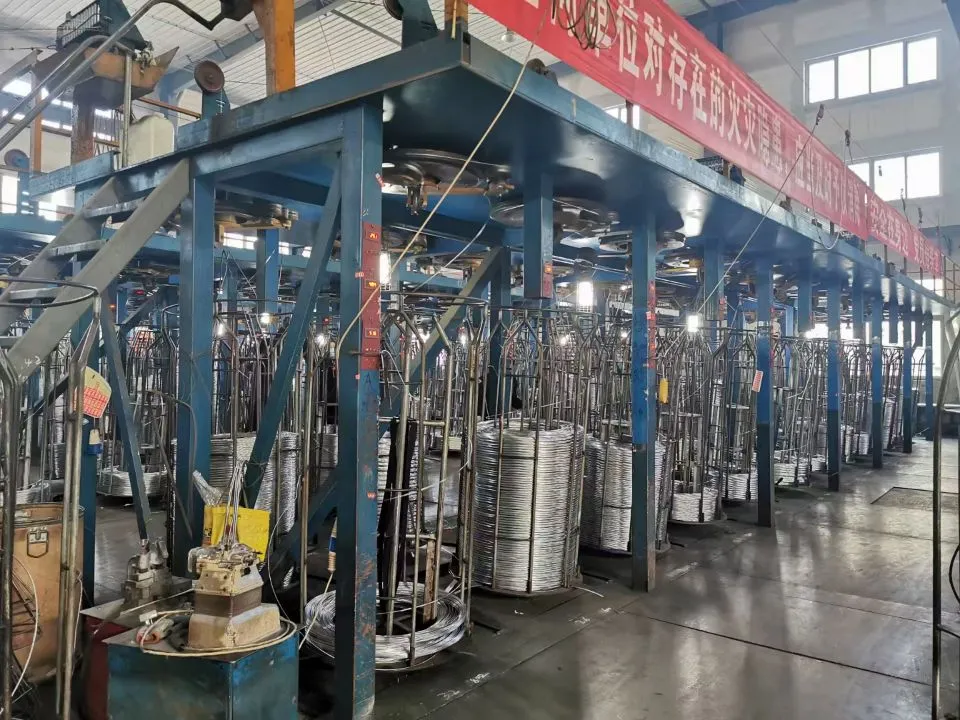
We are Hebei Leeter Import and Export Co., Ltd ("Leeter"), a construction wire, mesh and fencing manufacturer in Dingzhou, Hebei, China, exporting since 2006 to buyers across North America and Europe. This guide is written from the export desk: which of our product lines an EU customs broker is likely to treat as CBAM goods, and what a European buyer should ask before the first 2026 shipment clears. It is orientation for buyers, not legal or customs advice — the CN code decides scope, so confirm yours with your customs broker or in the EU TARIC database.
What CBAM is, and where it stands in autumn 2026
CBAM (Regulation (EU) 2023/956) puts a carbon cost on selected imports so that they carry a price comparable to goods made in the EU under its Emissions Trading System. The definitive regime applies from 1 January 2026, and the certificate price is set as a quarterly average in 2026 and a weekly average from 2027 (European Commission). The dates that matter for an importer of 2026 goods:
| Date | What happens |
|---|---|
| 1 Jan 2026 | Definitive regime applies to all CBAM goods |
| 31 Mar 2026 | Latest application date for importers above the threshold to keep importing while their authorised-declarant status is pending |
| From Feb 2027 | CBAM certificates for 2026 imports can be bought on the central platform |
| 30 Sep 2027 | First annual declaration and certificate surrender, covering 2026 imports |
| 1 Jan 2028 | Proposed start for about 180 downstream goods, including netting, fencing and nails (a proposal, not yet law) |
Which wire, mesh, nail and fence products are in scope
Scope follows the customs (CN) code of the product, not what it is called. Based on published CBAM scope lists, this is how our main lines fall in 2026:
| Product | Typical CN heading | In CBAM in 2026? | 2028 extension proposal |
|---|---|---|---|
| Galvanized (GI) wire, black annealed tie and binding wire | 7217 | Yes — declare | Already in scope |
| Screws, bolts, nuts, washers | 7318 | Yes — declare | Already in scope |
| Welded wire mesh, woven mesh, chain-link fabric, hexagonal netting | 7314 | No | "Netting and fencing" named |
| Barbed wire | 7313 | No | Not named in the summaries we reviewed — check |
| Nails and staples | 7317 | No | Nails named |
| Fence panels, posts, rebar chairs and other steel articles | Varies | Depends on the exact code; some subheadings of 7326 are in scope | Not settled |
PVC-coated wire is normally classified in heading 7217 too, but the subheading depends on the coating, so confirm it. The classification of a fence panel matters more than its name: a plain welded-mesh panel and a panel with a heavy tube frame can land under different headings, and the heading decides whether CBAM applies. Do not assume that "fence" means "out of scope".
The 50-tonne rule: who actually has to act
CBAM obliges the EU importer of record (or its indirect customs representative), not the overseas supplier. Importers whose cumulative net mass of imported CBAM goods — cement, iron and steel, fertilisers and aluminium together — stays at or below 50 tonnes in a calendar year are exempt from the authorised-declarant requirement and from buying certificates (DEHSt). Above 50 tonnes, the importer must hold authorised-declarant status.
The arithmetic matters for wire buyers. A full 20 ft container of wire typically weighs 20–22 tonnes (about 44,000–48,000 lb), so roughly three containers of galvanized wire or screws in a year takes an importer over the line. Mixed containers count only their in-scope part: in a container holding 12 tonnes of galvanized wire and 8 tonnes of chain-link fabric, only the 12 tonnes count toward the threshold today. If the 2028 proposal is adopted as drafted, the mesh weight would count too.
Actual emissions data or default values
An importer can report embedded emissions using the Commission's standard (default) values, published in the CBAM registry, or using actual values from the producing installation, which must be monitored with the prescribed methods and verified by an accredited verifier (DEHSt). Default values are intended for cases where actual installation-level data is not available.
Two points turn this from paperwork into a supply-chain question. First, the embedded emissions of a CBAM good include those of the precursor materials used to make it. Drawn wire is made from wire rod, so the rod is a precursor: the wire drawer's own emissions are only part of the picture, and the rod mill's steelmaking route matters too. Second, an importer who wants actual data can only get it if the producers — the wire mill and the rod mill behind it — are willing and able to supply it. That is why the conversation belongs at the RFQ stage, not after the goods have shipped.
What to ask your wire supplier before the first order
- The CN code on the commercial invoice and packing list for each product line, so the declaration matches the customs entry.
- Net mass per CN code for every shipment, especially mixed containers, so your 50-tonne count is right.
- Wire rod origin: mill name, country and lot or heat number on the EN 10204 3.1 mill test certificate. It is the same traceability US buyers ask for when they raise melt-and-pour questions under Section 232.
- Emissions data: whether the supplier can provide actual, installation-level emissions data for the wire and its rod, or whether you will report with default values.
- Contract wording for any supply agreement running past 2027: who supplies emissions data if netting, fencing and nails are pulled in from 2028.
On our side, we trace material from wire rod through drawing and galvanizing and issue EN 10204 3.1 mill test certificates on request. Tell us at RFQ stage whether you will report with default values or need supplier-specific data — it changes what has to be asked of the rod mill, and it is much easier to arrange before an order than after the ship has sailed. Build the duty side of the order with our landed-cost calculator, and choose coating and packing with our guides to hot-dip vs electro-galvanized wire and galvanized wire coil weights and packing.
What could change in 2028
In December 2025 the European Commission proposed extending CBAM to about 180 downstream goods from 1 January 2028; the wording quoted in law-firm summaries names "netting and fencing, nails". The proposal still has to be adopted by the Parliament and the Council. Trade press has reported Parliament support for the extension, but the final scope and CN codes are not settled. For buyers, the practical reading is that mesh, chain link, fence panels and nails are outside CBAM today and may well be inside it within two years. Selling into the US instead? The equivalent cost driver there is Section 232 — see our Section 232 note.
Frequently asked questions
Is steel wire covered by CBAM?
Yes. Drawn wire of iron or non-alloy steel (CN 7217), which includes galvanized and black annealed wire, is in scope in 2026 according to published CBAM scope lists. Confirm the exact subheading for your product with your customs broker or in TARIC.
Is wire mesh covered by CBAM?
Not today. Wire cloth, netting and fencing (CN 7314) sit outside the current scope, but "netting and fencing" are named in the December 2025 proposal to extend CBAM to downstream goods from 1 January 2028.
Are nails covered by CBAM?
Not today: nails and staples (CN 7317) are outside the current scope, and nails are named in the 2028 extension proposal. Screws and bolts (CN 7318) are in scope now.
Do I need to buy CBAM certificates if I import under 50 tonnes?
No. Importers whose cumulative net mass of CBAM goods does not exceed 50 tonnes in a calendar year are exempt from the authorised-declarant requirement and from surrendering certificates.
When must CBAM certificates be bought and declared?
Certificates for 2026 imports can be purchased from February 2027, and the first annual declaration and certificate surrender is due by 30 September 2027.
Does CBAM apply to the supplier or to the importer?
To the importer. The obligations fall on the EU importer or its indirect customs representative, but the supplier's data drives the importer's cost, which is why it is worth agreeing what data will be supplied before the order is placed.
Sources
- European Commission — CBAM definitive regime
- DEHSt (German Emissions Trading Authority) — CBAM definitive regime from 2026
- European Commission — default values for determining embedded emissions
- Mayer Brown — Commission issues CBAM operational rules and proposes downstream extension (Dec 2025)
- CBAM Guide — steel CN codes, Chapters 72 and 73
