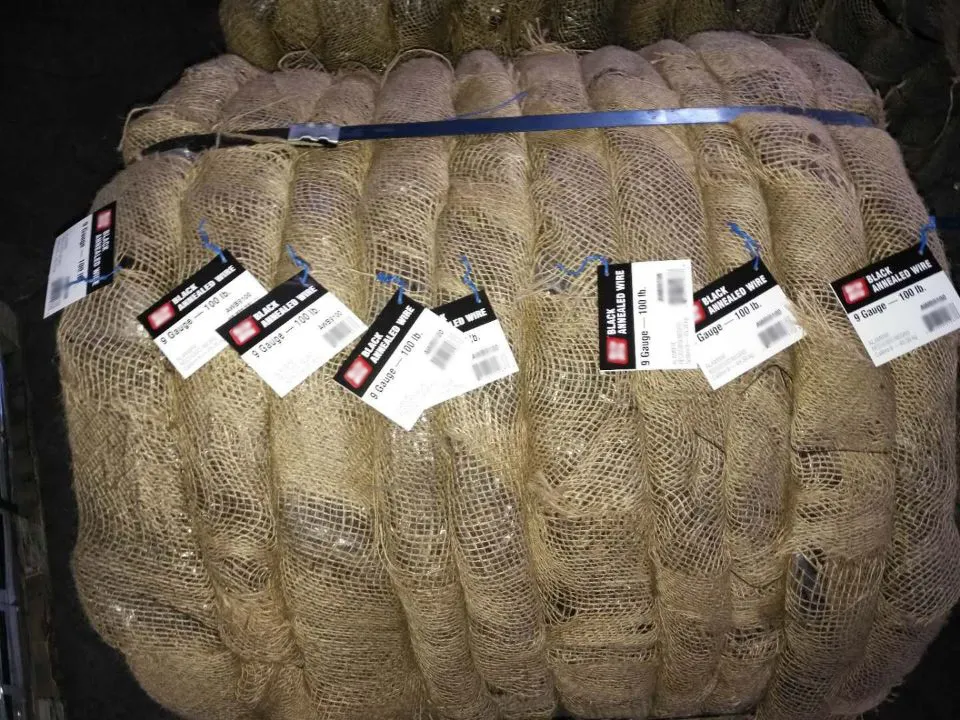
We are Hebei Leeter Import and Export Co., Ltd ("Leeter"), a construction wire and mesh manufacturer in Dingzhou, Hebei, China, exporting since 2006 to North America and Europe. Galvanized wire is a core line, and the coil-weight and packing map below is exactly what we work through with hardware importers and building-material distributors before we quote a container.
Coil types and weight ranges
| Coil type | Weight range | Typical ID / OD | Packing | Best for |
|---|---|---|---|---|
| Small coil | 0.5–5 kg | 90–200mm ID | PE + label, then carton | Retail packs, hardware stores, DIY |
| Medium coil | 25–100 kg | 200–300mm ID | Inner PE + hessian/woven PP | Trades, tie wire, mesh weaving |
| Big coil (Z1) | 250–500 kg | 400–600mm ID | Coil on pallet, strapped, wrapped | Manual mesh and fencing lines |
| Big coil (Z2) | 500–1000 kg | 500–800mm ID | Eye-vertical on pallet, steel-strapped | Automated drawing, welding lines |
| Spool / bobbin | 5–50 kg | Carrier-specific | On plastic/metal carrier, boxed | Continuous-feed machines, PVC lines |
Small coils are sold by the piece to end users; the 0.5, 1, 2 and 5kg tie-wire packs are the fast movers. Z2 big coils are a mill-to-mill format that feeds a wire-drawing or welded-mesh machine straight off the pallet, so the coil weight is set to match the machine's payoff capacity rather than to a retail price point.
Kg-per-coil vs wire gauge
Coil weight and wire gauge are linked: at a fixed coil OD, a thicker wire holds fewer metres and a thinner wire holds more, so a "1kg coil" of BWG 14 wire and a "1kg coil" of BWG 20 wire look very different on the shelf. The table below gives approximate length per kilogram for common galvanized gauges — useful when a buyer specs retail coils by length rather than weight.
| Gauge (BWG) | Diameter | Approx. m per kg | 1kg coil OD |
|---|---|---|---|
| BWG 8 | 4.19mm | ~9 m | ~120mm |
| BWG 12 | 2.77mm | ~21 m | ~110mm |
| BWG 14 | 2.11mm | ~36 m | ~100mm |
| BWG 16 | 1.65mm | ~59 m | ~95mm |
| BWG 18 | 1.24mm | ~104 m | ~90mm |
| BWG 20 | 0.89mm | ~202 m | ~85mm |
Figures assume plain low-carbon galvanized wire at 7.85 g/cm³ steel plus a thin zinc layer; a heavier hot-dip coating adds a few percent to weight, which matters when you sell by fixed piece weight. For the full gauge cross-reference see our wire gauge chart, and note that the coating choice — electro vs hot-dip — changes both the finish and the per-coil weight.
Inner and outer packing
Export GI wire takes a two-layer wrap that protects the zinc through humidity, salt air and rough handling:
- Inner layer — a PE (polyethylene) film wound over the coil body keeps moisture off the zinc and stops white rust in transit. For small retail coils this is a printed PE sleeve or shrink film; for medium and big coils it is a full spiral PE overwrap.
- Outer layer — hessian (jute cloth) or woven PP fabric over the PE takes the abrasion of loading, forklift tines and stacking. Hessian breathes and suits long sea legs; woven PP is tougher and water-shedding. Both are sewn or strapped closed.
- Strapping and ID card — steel or PET straps hold the coil shape, and a coil ID card (heat/lot number, gauge, weight, coating) is tucked under the outer wrap for traceability against the mill test report.
Buyers who private-label add a printed carton or a branded PE sleeve at the inner stage; OEM artwork is set before the run so labels match the coil weights ordered.
Pallet configurations
Big coils travel on pallets, and the layout sets both stability and how the weight lands in the container:
- Eye-vertical on pallet — the coil sits with its axis vertical, eye up, one coil per pallet for Z2 500–1000kg coils. Steel strapping ties the coil to the pallet; this is the standard for automated payoff lines that lift the coil by the eye.
- Eye-horizontal, stacked — medium 25–100kg coils lie flat and stack 2–3 high on a pallet, then get stretch-wrapped as a unit. This packs more weight per pallet footprint for manual off-take.
- Cartons on pallet — small retail coils go into cartons, cartons palletise and shrink-wrap. A pallet typically carries 800–1000kg of small coils depending on coil size.
Standard pallets are 1.0–1.2m square to suit both a 20ft door and the mill's forklifts. Tell us your unloading method — crane, forklift or hand — and we set the pallet format to match.
Container loading and payload planning
Galvanized wire is dense, so containers "weigh out" long before they "cube out": you hit the payload limit with the floor barely stacked. Plan to weight, not volume.
| Container | Typical net payload | Big coils (1t) | Medium coils / small on pallets |
|---|---|---|---|
| 20ft GP | ~25–26 t (max ~28 t) | ~24–26 coils | ~24 pallets floor-loaded |
| 40ft GP | ~26–27 t (volume-limited) | not weight-efficient | ~40 pallets, weight-capped |
For heavy wire, the 20ft container is almost always the right box — it accepts the full 25–26 tonne road-legal payload on its floor, while a 40ft fills up on floor space before it reaches its weight limit and ships partly empty of value. A 20ft loaded with 24–26 one-tonne Z2 coils, or with pallets of medium coils to ~25 tonnes, is the standard export unit. Mixed containers are fine: Leeter combines galvanized wire with black annealed tie wire, fence staples or nails to fill out a first order, with MOQ from about one pallet.
How buyers should specify coil weight and packing
Give us six fields and the quote is exact: gauge (BWG/SWG + mm), coating (electro or hot-dip, with zinc g/m² if critical), coil weight (e.g. 1kg retail or 800kg Z2), coil ID/OD limits if your machine constrains them, packing (inner PE + hessian or woven PP, cartoned or bare), and container type. A spec that says only "galvanized wire, 25 tonnes" leaves the coil format open and usually gets re-quoted; a spec that pins coil weight and packing loads first time. We supply mill test reports, pre-shipment inspection and AQL sampling against the ordered coil weights, with lead time of 15–35 days FOB or CIF.
Frequently asked questions
What are standard galvanized wire coil weights?
Galvanized wire ships in four coil formats: small coils of 0.5–5kg for retail and DIY, medium coils of 25–100kg for trades and mesh weaving, big coils of 250–1000kg (Z1 and Z2) on pallets for automated lines, and spools or bobbins of 5–50kg for continuous-feed machines. The right weight is set by your end use and your machine's payoff capacity, not by a single standard.
What is a Z2 coil?
A Z2 coil is a big galvanized wire coil, typically 500–1000kg, wound and packed eye-vertical on a pallet with steel strapping so an automated wire-drawing or welded-mesh machine can lift and pay it off by the eye. Z2 coils are a mill-to-mill format sized to the receiving machine, not a retail pack, and they load a 20ft container at roughly 24–26 coils to the full payload.
How is galvanized wire packed for export?
Export galvanized wire takes two layers: an inner PE film that keeps moisture off the zinc and prevents white rust, then an outer hessian (jute) or woven PP cover that resists abrasion during loading and stacking. Coils are steel- or PET-strapped, carry a coil ID card with heat number and gauge, and big coils sit on 1.0–1.2m pallets. Small retail coils add a printed carton or branded PE sleeve.
How much galvanized wire fits in a 20ft container?
A 20ft container carries roughly 25–26 tonnes of galvanized wire net, up to about 28 tonnes maximum — around 24–26 one-tonne Z2 coils, or pallets of medium and small coils loaded to the same weight. Galvanized wire weighs out before it cubes out, so the 20ft box is more weight-efficient than a 40ft, which fills its floor before reaching its payload limit.
Does coil weight change with wire gauge?
Coil weight itself is what you order, but length per coil changes sharply with gauge: at a fixed weight, thicker wire holds far less length than thin wire. A 1kg coil is about 9 metres in BWG 8 (4.19mm) but around 202 metres in BWG 20 (0.89mm). If you sell retail coils by length, specify both length and gauge so the coil weight comes out right; a heavier hot-dip coating also adds a few percent to weight.
