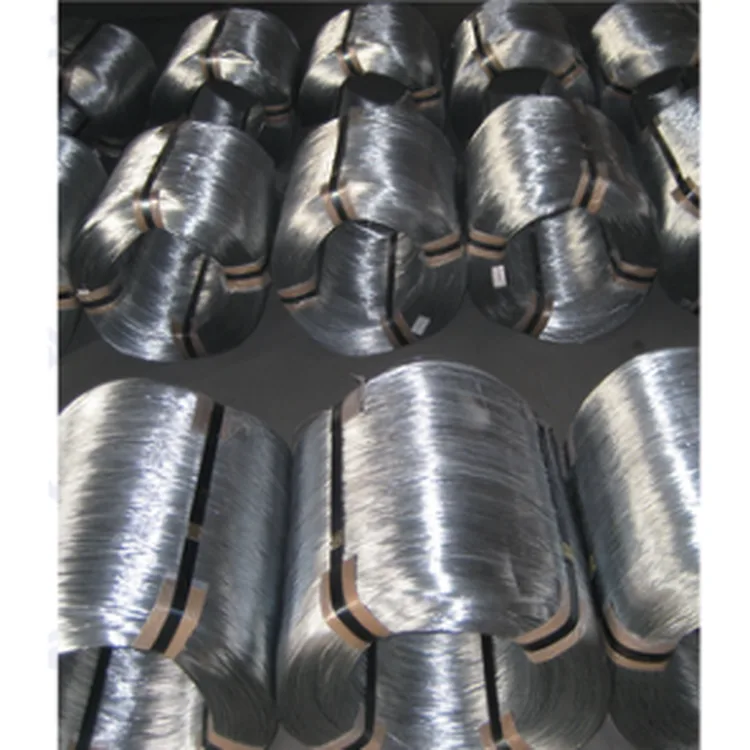
We are Hebei Leeter Import and Export Co., Ltd ("Leeter"), a wire, mesh and construction hardware manufacturer in Dingzhou, Hebei, China, exporting since 2006 to distributors and importers across North America and Europe. We draw and galvanize wire in-house in both electro and hot-dip lines, so the coating weights below are the numbers we certify on our own galvanized wire, not catalogue values.
How the two processes differ
Both processes put metallic zinc on drawn steel wire; the difference is how the zinc gets there and how much of it sticks.
Electro-galvanizing (EG) deposits zinc from an electrolyte bath using an electric current. The wire never sees molten zinc, so the base wire keeps its drawn tensile strength and exact diameter, and the coating comes out bright, smooth and very uniform. The trade-off is thickness: commercial electro lines deposit 10 to 40 g/m², a layer measured in single-digit microns.
Hot-dip galvanizing (HDG) runs the wire through a molten zinc bath at around 450°C (842°F). The zinc alloys metallurgically with the steel surface, building a much thicker, tougher coating. Commercial hot-dip coatings start above 50 g/m²; heavy coatings for fence-line and marine-adjacent service exceed 200 g/m². The finish is slightly duller and the diameter tolerance a touch looser, but the corrosion reserve is in a different class.
| Property | Electro-galvanized | Hot-dip galvanized |
|---|---|---|
| Zinc coating weight | 10–40 g/m² (0.03–0.13 oz/ft²) | Commercial >50 g/m²; heavy >200 g/m² (0.66+ oz/ft²) |
| Process | Electrolytic deposition, room temp | Molten zinc bath, ~450°C (842°F) |
| Surface finish | Bright, smooth, uniform | Silver-grey, slightly textured |
| Zinc-to-steel bond | Mechanical/electrodeposited layer | Metallurgical zinc-iron alloy layers |
| Outdoor service life | Short — months to a few years | Long — many years, scales with zinc weight |
| Relative price | Lower | Higher (more zinc per ton) |
| Typical uses | Tie wire, indoor mesh, craft and binding wire | Fence wire, hex netting, field fence, outdoor mesh |
Zinc coating weight is the spec that matters
Buyers often specify "galvanized" and stop there, but the coating weight in g/m² (or oz/ft²; 1 oz/ft² ≈ 305 g/m²) is what actually determines service life. Zinc corrodes instead of the steel beneath it, and once the zinc is gone, red rust follows quickly. As a working rule, doubling the zinc weight roughly doubles the time to red rust in the same environment.
| Coating class | Zinc weight | Approx. oz/ft² | Where it belongs |
|---|---|---|---|
| Electro-galvanized | 10–40 g/m² | 0.03–0.13 | Indoor tie and binding wire, packaging, short-term use |
| Hot-dip commercial | >50 g/m² | >0.16 | General outdoor mesh and wire, sheltered exposure |
| Hot-dip heavy | >200 g/m² | >0.66 | Fence lines, agriculture, coastal and high-humidity sites |
For reference, US buyers usually call these out through ASTM A641 (zinc-coated carbon steel wire), which grades coating weight by class and wire diameter; European buyers reference EN 10244-2. When you send an RFQ, quoting a g/m² number or an ASTM/EN class removes all ambiguity — "hot-dip galvanized" alone can legally cover anything from 50 to 300 g/m², and the zinc is where the cost sits.
A third route worth knowing: for maximum weather resistance with color options, a PVC jacket extruded over a galvanized core outperforms either bare coating. See our PVC-coated wire for that construction.
Our galvanized wire specification range
The table below is the export range we quote most often. All of it starts from low-carbon rod in SAE 1006/1008 or Chinese Q195/Q235 grades.
| Spec | Range | Imperial |
|---|---|---|
| Wire diameter | 0.50–6.00mm | 25–4 BWG (0.020–0.238 in) |
| Steel grade | SAE 1006/1008, Q195/Q235 | Low-carbon |
| Tensile strength | 30–55 kgf/mm² (≈300–540 MPa) | ≈43,000–78,000 psi |
| Electro zinc | 10–40 g/m² | 0.03–0.13 oz/ft² |
| Hot-dip zinc | >50 g/m² commercial, >200 g/m² heavy | 0.16 / 0.66+ oz/ft² |
| Coil weight | 1–1,000 kg | 2.2–2,200 lb |
| Packing | Plastic-film inner + woven cloth outer | Sea-worthy export packing |
Small coils from 1 kg suit retail hardware programs; 500 to 1,000 kg carrier coils feed nail, mesh-weaving and fence-making plants. The plastic-film inner wrap keeps condensation off the zinc during the ocean voyage — white rust on arrival is almost always a packing failure, not a coating failure.
If you need springy, high-strength wire rather than soft low-carbon wire, that is a different product: see high-carbon wire, which we galvanize to 40–300 g/m² over 1300–2200 MPa steel.
Choosing between electro and hot-dip
Use this decision logic, which mirrors how our long-term buyers order:
- Indoor, dry, or consumed quickly (tie wire used inside a concrete pour, binding wire, craft wire): electro-galvanized. The zinc only needs to prevent rust in the warehouse and look clean on the shelf.
- Outdoor but sheltered or short-term (temporary netting, seasonal garden use): hot-dip commercial, >50 g/m².
- Outdoor, permanent, agricultural or coastal (fence line, welded mesh panels, vineyard wire): hot-dip heavy, >200 g/m². The extra zinc costs more per ton but far less per year of service.
- Wire that will be re-bent or dragged during installation: hot-dip. The alloyed coating survives handling abrasion that flakes a thin electro layer.
One more variable for mesh products: whether the wire is galvanized before or after weaving or welding changes how well the joints are protected. We cover that trade-off in detail in our galvanized-before-vs-after guide, and it applies to hex netting and welded mesh alike.
How to order and verify coating weight
Specify five things on your purchase order: wire diameter (mm or BWG), steel grade, tensile range, zinc type with a minimum g/m² figure, and coil weight with packing. On our side, every heat is verified by the standard strip-and-weigh test: a measured length of wire is weighed, stripped of zinc in an antimony chloride solution, and weighed again — the difference divided by surface area gives g/m² directly. We report this on the mill certificate along with diameter and tensile results, and third-party inspectors (SGS, BV, TÜV) can witness the same test before shipment. Insist on the number, not the word "galvanized".
Frequently asked questions
Is hot-dip galvanized wire better than electro-galvanized?
For outdoor service, yes — hot-dip carries 50 to 200+ g/m² of zinc against 10 to 40 g/m² for electro, and service life scales with zinc weight. For indoor tie wire, binding wire or products where finish and price matter more than weather resistance, electro-galvanized is the better commercial choice.
How long does each coating last outdoors?
It depends on zinc weight and environment. A thin 10–40 g/m² electro coating may show red rust within months to a couple of years outdoors. Hot-dip commercial coatings above 50 g/m² last years in rural exposure, and heavy coatings above 200 g/m² are the standard for permanent fence lines. Humid, coastal or industrial air shortens all of these; the ratio between them stays roughly constant.
How is zinc coating weight measured?
By the strip-and-weigh method: weigh a wire sample, dissolve the zinc chemically, weigh again, and divide the zinc mass by the wire's surface area to get g/m². ASTM A641 and EN 10244-2 both define the procedure and the minimum weights per class. Ask for the measured value on the mill certificate.
Can I tell electro from hot-dip by looking?
Usually. Electro-galvanized wire is bright, shiny and very smooth; hot-dip wire is matte silver-grey with a slightly textured surface and occasionally minor drips or spangle. Appearance is not proof of coating weight, though — only the strip-and-weigh test confirms the g/m² figure.
Does hot-dip galvanizing weaken the wire?
The 450°C zinc bath can slightly relieve the drawn strength of the wire, which is why finished tensile is specified after galvanizing. Our low-carbon galvanized wire is certified at 30–55 kgf/mm² (about 300–540 MPa) as shipped, so the number on the certificate is what you get in the coil.
