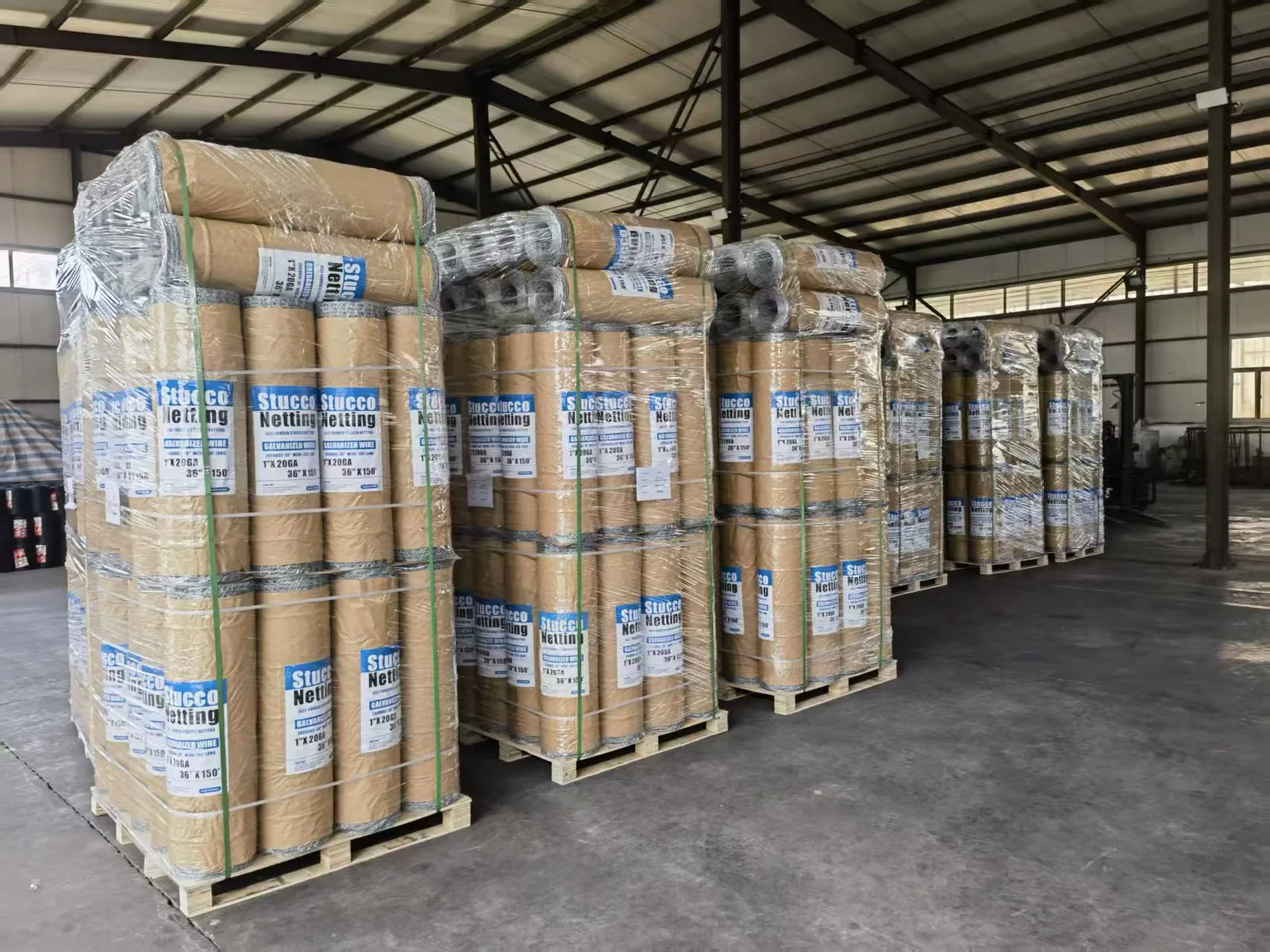
 Actual product reference
Stucco Netting (Hex Netting)
Galvanized hex netting for plaster & stucco reinforcement
Stucco netting is galvanized woven hexagonal wire mesh used as a plaster base — it keys the scratch coat to walls, ceilings and sheathed surfaces. It is the ASTM C1032 "woven wire plaster base" and is installed per ASTM C1063, which requires the mesh to stand at least 1/4 in (6 mm) off the substrate and lap 1 in (25 mm) at the seams. Leeter draws, galvanizes and weaves plain and self-furring stucco netting at our factory in Dingzhou, Hebei, with wire gauge, hex opening, furring and roll size specified to your market.
Specification locked
Process controlled
Dimension verified
Packing documented
Technical specifications
Final values confirmed on approved order| Specification item | Available range | Order control |
|---|---|---|
| Standard | ASTM C1032 (woven wire plaster base); installed per ASTM C1063 | Confirmed on sample, drawing or order sheet |
| Type | Plain hex netting, self-furring stucco netting | Confirmed on sample, drawing or order sheet |
| Mesh opening | 1" (25mm) and 1-1/2" (38mm) hexagonal | Confirmed on sample, drawing or order sheet |
| Wire gauge | 17GA (1.47mm, 1-1/2" mesh), 18GA (1.24mm, 1" mesh) per C1032; 19–20GA hex netting available | Confirmed on sample, drawing or order sheet |
| Finish | Galvanized before weaving (GBW) or after weaving (GAW); zinc coating to spec | Confirmed on sample, drawing or order sheet |
| Self-furring offset | ≈ 1/4" (6mm) dimples, per ASTM C1063 embedment | Confirmed on sample, drawing or order sheet |
| Lap allowance | 1" (25mm) side and end laps built into roll width | Confirmed on sample, drawing or order sheet |
| Roll size | 36" (914mm) / 48" (1219mm) wide × 150 ft (45.7m); custom lengths | Confirmed on sample, drawing or order sheet |
| Backing | Optional building-paper / kraft backing bonded to the mesh | Confirmed on sample, drawing or order sheet |
Get pricing, packing and lead time.
Trial orders welcome
15–35 days from PO
FOB and CIF planning
Packing built around handling
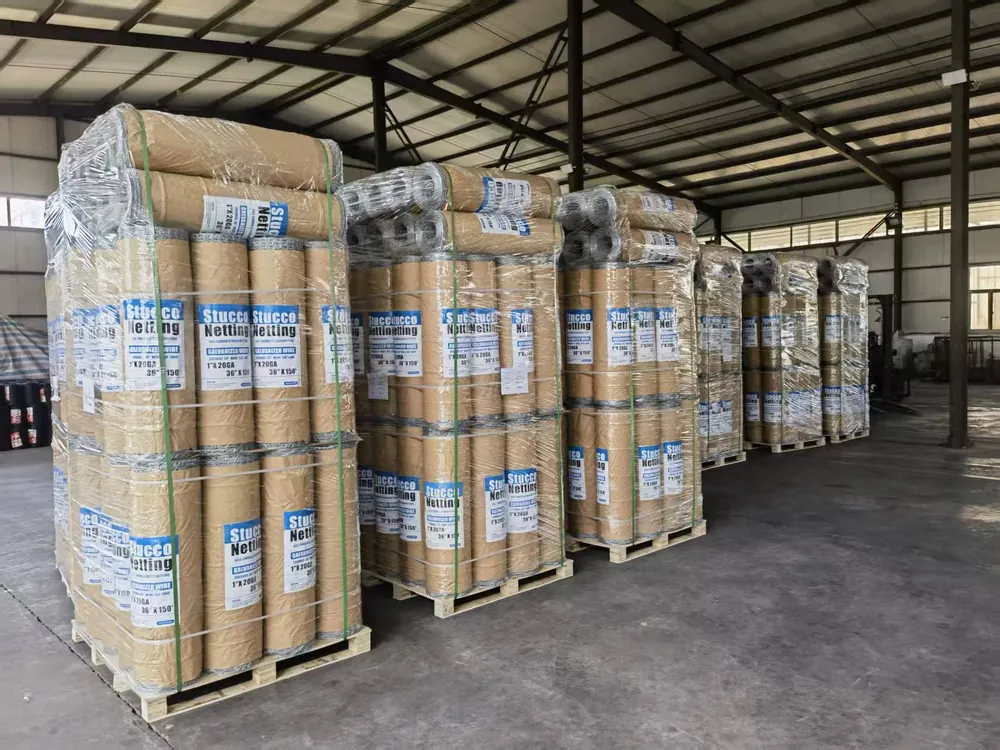
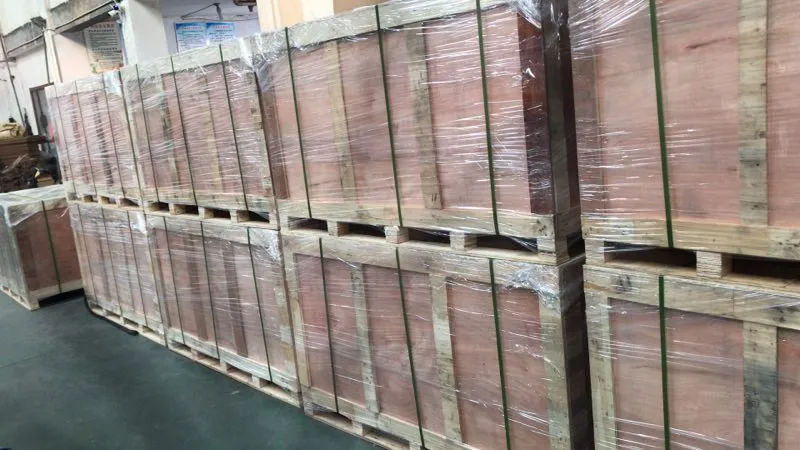
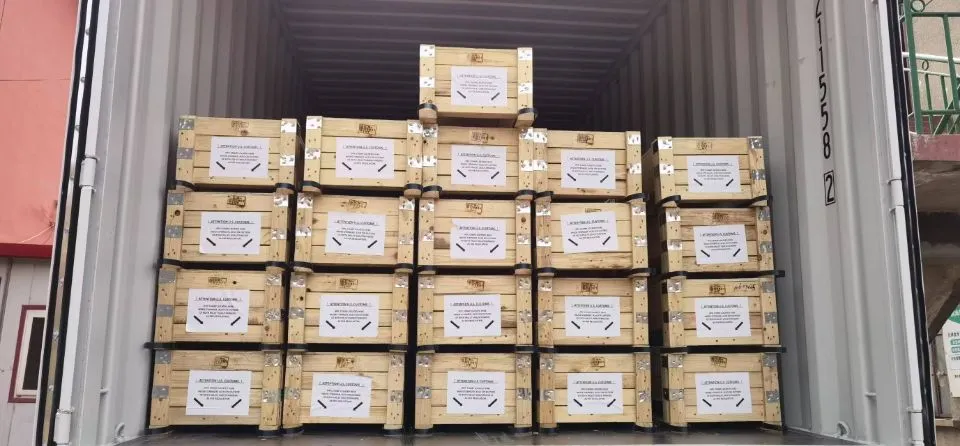
Packing reference
Rolls wrapped and labeled, palletized for container loading. Mill test certificate on the zinc coating supplied on request; private-label wrap available.
- ✓ Unit and outer pack confirmed
- ✓ Shipping marks checked
- ✓ Loading plan and photos available
Quality documents
Applications
- →Three-coat (7/8" nominal) and one-coat stucco reinforcement per ASTM C926
- →Portland cement and gypsum plaster on walls and ceilings
- →Scratch-coat backing over sheathing, building paper, masonry and foam
- →Re-stucco and repair over existing substrates
 Explore applications →
Related buyer guides
Fiberglass Mesh vs Galvanized Steel for Stucco: Which Reinforcement?
How fiberglass mesh and galvanized steel wire mesh do different jobs in stucco, and which reinforcement your coat system actually needs.
4 min read →Masonry & Wall TiesStucco Lath: Wire Lath vs Paper-Backed and How to Choose
The types of stucco lath — woven, welded and expanded — with self-furring and paper-backed options and how to choose for your plaster job.
4 min read →Wire MeshStucco Wire Mesh: Wire, Gauge, Mesh Size and How to Specify
What stucco wire mesh is, the woven and welded types, gauges and finishes, and how to specify it for a plaster job or a bulk order.
5 min read →Wire MeshMetal Lath Types: Diamond Mesh Weights, Self-Furring and Paper-Backed
Diamond mesh lath weights, self-furring and paper-backed types, sheet sizes and corner bead from a China manufacturer.
7 min read →Buyer FAQ
What is self-furring stucco netting?
Self-furring stucco netting has dimples pressed into the mesh that hold it about 1/4" (6mm) off the substrate, so the plaster or stucco scratch coat pushes behind and fully embeds the wire. ASTM C1063 requires that offset, which is why self-furring netting is the standard choice over sheathing or building paper — flat netting needs separate furring nails to achieve the same gap.
What is the difference between stucco netting and metal lath?
Stucco netting is woven hexagonal wire (ASTM C1032) — economical and flexible for keying a stucco basecoat on framed and sheathed walls. Expanded metal lath (ASTM C847) is diamond-cut sheet, stiffer, for surfaces needing more rigidity; welded wire lath (ASTM C933) sits between them. The IBC recognizes all three, and all install under ASTM C1063.
What wire gauge and mesh size is stucco netting?
The common ASTM C1032 sizes are 17 gauge (1.47mm) wire in a 1-1/2" (38mm) hex opening and 18 gauge (1.24mm) in a 1" (25mm) opening. Lighter 19–20 gauge hex netting is available for economy or lighter plaster. Heavier gauge and smaller openings hold more plaster weight and are chosen for ceilings and thicker basecoats.
How much stucco netting do I need, and how much does a roll cover?
A 48" × 150 ft (1219mm × 45.7m) roll covers about 600 sq ft (55.7 m²) gross, but you lose roughly 1" per seam to the required C1063 laps, so estimate about 5–8% waste on top of your wall area. Tell us your total wall area and we convert it to rolls for the quote.
Galvanized before or after weaving — which should I order?
Galvanized-before-weaving (GBW) is drawn from pre-galvanized wire and is economical; galvanized-after-weaving (GAW) dips the finished mesh so the cut wire ends and weave points are also coated, giving better corrosion life in wet or coastal climates. For long-life exterior stucco we recommend GAW or a heavier zinc coating; state your climate and we match the finish.
Need a matched answer?
Send the drawing, destination and expected quantity to the same team that prepares your quotation.
Talk to our buyer desk
Ready to source Stucco Netting (Hex Netting)?
Turn your requirement into a quote.
Pricing, packing and lead time tied to the confirmed specification.