We are Hebei Leeter Import and Export Co., Ltd ("Leeter"), a construction wire, mesh and lath manufacturer in Dingzhou, Hebei, China, exporting since 2006. We build stucco netting and metal lath to a specified gauge, weight and furring so the plaster base is consistent across a shipment.
The three types of stucco lath
Woven wire netting — the flexible hexagonal "stucco netting" or lathing wire. It follows curves, arches and irregular masonry, and is the traditional base for three-coat stucco on framed and sheathed walls. Usually 17 gauge, galvanized, self-furring.
Welded wire lath (ASTM C933) — straight wires welded into a rigid grid. It stays flat and planar, giving a stiff base for flat walls; it is often supplied paper-backed for open-frame construction.
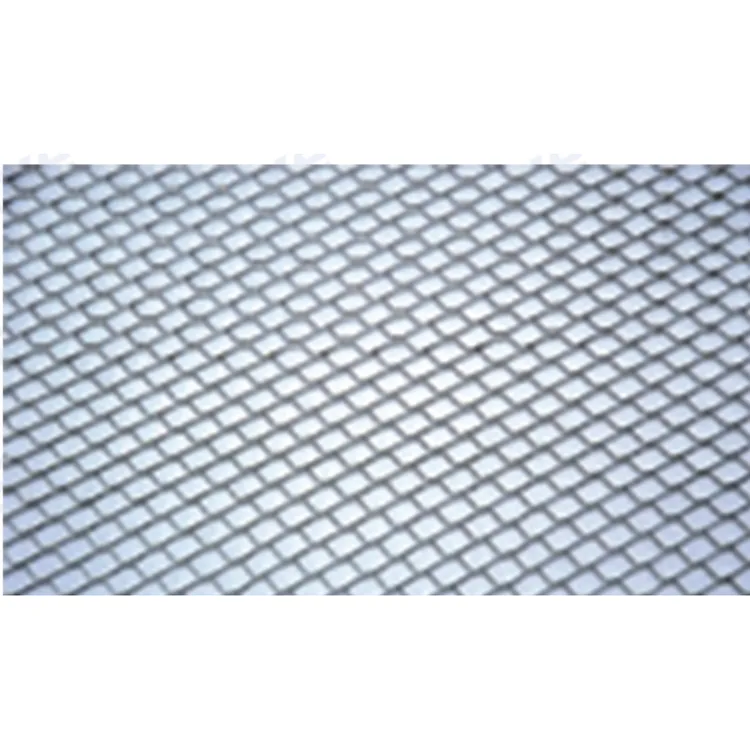
Expanded metal (diamond) lath (ASTM C847) — a steel sheet slit and stretched into diamond openings. It is the stiffest, keys plaster hard, and is graded by weight (1.75, 2.5 and 3.4 lb per square yard). Best for flat framed walls and where a strong, rigid key is wanted; our metal lath weights guide breaks the grades down.
Wire lath vs paper-backed lath
Plain lath is bare wire or metal you fasten over a separate weather-resistive barrier. Paper-backed lath has that barrier — usually a two-ply asphalt-saturated Kraft paper — factory-bonded to the back of the mesh, so one product delivers both the drainage plane and the plaster key in a single pass.
Paper-backed is faster on open studs and where the barrier and lath want to go up together; plain wire lath is common over sheathing that already carries a housewrap. Both are still fastened at the same spacing and both need furring so plaster passes fully behind the mesh.
Self-furring: why it matters
Most exterior stucco lath is self-furring — dimples or crimps hold the mesh about 1/4 in (6 mm) off the substrate so the scratch coat embeds the wire completely and keys to the wall per ASTM C1063. Without furring, plaster only touches the front of the lath and the bond is weak. See self-furring lath for the furring-depth detail.
Lath at a glance
| Type | Standard | Base shape | Best for |
|---|---|---|---|
| Woven wire netting | ASTM C1032 | Flexible | Curves, arches, masonry, three-coat |
| Welded wire lath | ASTM C933 | Rigid, planar | Flat framed walls, paper-backed runs |
| Expanded / diamond lath | ASTM C847 | Rigid, stiff | Flat walls, heavy/commercial plaster |
Frequently asked questions
What is stucco lath?
Stucco lath is the wire or metal base fastened to a wall or ceiling that plaster is applied over. It gives the scratch coat a mechanical key so the stucco holds to the surface. It comes as woven wire netting (ASTM C1032), welded wire lath (ASTM C933) or expanded metal lath (ASTM C847), any of which may be self-furring and paper-backed.
What is stucco lathing wire?
Stucco lathing wire is the woven galvanized wire netting used as a plaster base — the flexible hexagonal net, typically 17 gauge and self-furring, tied and fastened to the framing. It is the same family as stucco netting and suits curved or irregular surfaces that rigid lath cannot follow.
Is stucco lath the same as stucco netting?
Stucco netting is one type of stucco lath — the woven wire kind. "Stucco lath" is the broader term that also covers welded wire lath and expanded metal (diamond) lath. If a job calls for "lath," confirm whether they mean flexible woven netting or a rigid metal lath, because they install and perform differently. See stucco netting vs metal lath.
Do I need paper-backed stucco lath?
Use paper-backed lath when you want the weather-resistive barrier and the plaster base to go up in one step, typically over open studs. If the wall already has a housewrap or building paper over sheathing, plain wire lath is usually enough. Local code and the plaster system dictate the number of barrier layers.
What gauge is stucco wire lath?
Woven stucco lathing wire is commonly 17 gauge (about 1.4 mm) for exterior work, with 18 gauge for lighter interior use. Confirm the diameter in millimetres and the gauge system on the order, and specify galvanized-before or galvanized-after finish for the exposure.
