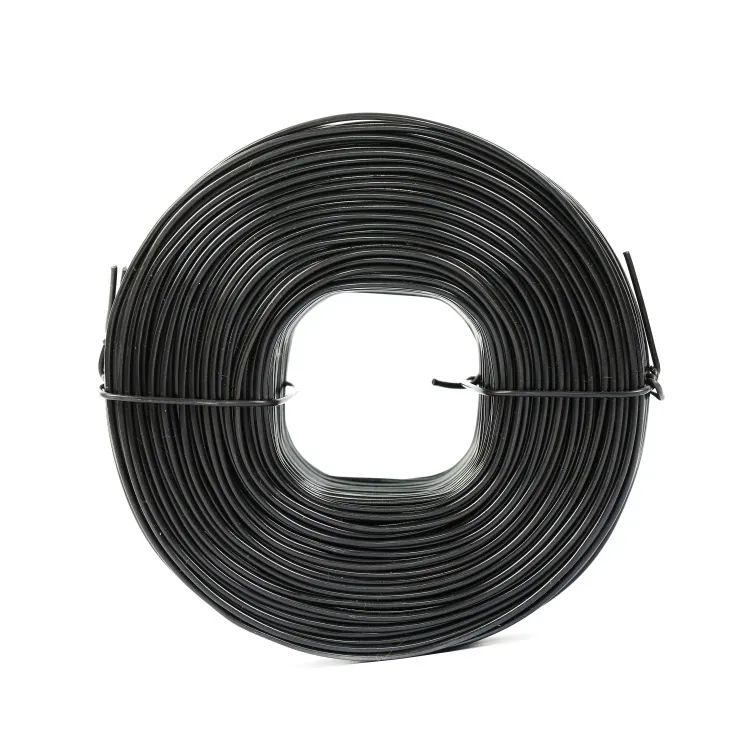
We are Hebei Leeter Import and Export Co., Ltd ("Leeter"), and this is our home turf: our own factory draws and anneals rebar tie wire in Dingzhou, Hebei, and we export through Tianjin (Xingang). This guide maps the supplier landscape the way we'd explain it to a buyer visiting the region — including the checks and the RFQ format that make quotes comparable.
The three clusters
Anping County, Hengshui, Hebei — the wire mesh capital
Anping is the largest concentration of wire and mesh producers on earth: over 13,000 wire mesh enterprises, an industry output of 100.6 billion yuan (2023) — Hebei's first national-level SME cluster to pass the 100-billion mark — around 210,000 workers, and exports to 190+ countries. The tradition runs deep: silk gauze weaving here dates to 1495 (Ming dynasty), with metal wire drawing introduced in 1925. Anping's core strength is mesh — woven and welded mesh, fencing, filter cloth in 400+ varieties — with annealed binding wire produced as an adjacent product line.
Dingzhou, Hebei — wire drawing, annealing and nails
Dingzhou (our base) is the upstream counterpart: a concentrated production area for drawn steel wire, black annealed and galvanized wire, and nails, anchored by the Shahe industrial zone along the G4 Beijing–Hong Kong–Macao Expressway. Where Anping's identity is weaving and welding mesh, Dingzhou's is wire processing itself — drawing rod down to gauge, annealing it soft, coiling and spooling. If your product is tie wire rather than mesh, the factory you're looking for is more often here.
Tianjin — the port cluster
Tianjin combines production with logistics: steel-processing towns such as Daqiuzhuang (Jinghai District) host nail, galvanized-wire and fastener makers, many operating as combined manufacturer-exporters. The decisive advantage is the port: the Port of Tianjin handled 23.28 million TEU in 2024, a record, ranking among the world's ten busiest container ports and serving as the maritime gateway for Hebei, Beijing, Shanxi and Inner Mongolia. Hebei-made tie wire is overwhelmingly quoted FOB Tianjin (Xingang) for exactly this reason.
A few exporters also operate from Shandong (Dezhou area) — real companies, but a company-level presence rather than a designated cluster.
Why the clusters matter to your price
- Raw material at the doorstep. Hebei is China's largest steel province by a wide margin (roughly 20–25% of national crude steel output), so Q195/Q235 wire rod — the feedstock for every coil of tie wire — is local. Shorter rod-to-wire supply chains mean structurally lower conversion costs.
- One day to the port. From Dingzhou or Anping, drayage to Tianjin/Xingang is about 300 km — same-day trucking on the G4 corridor. Freight from factory gate to container yard is a rounding error, not a cost line.
- Depth = leverage. With thousands of producers inside a 100 km radius, you can collect genuinely comparable quotes, audit several factories in one trip, and consolidate a mixed container (tie wire + mesh + nails) from one cluster.
Factory or trading company? Five checks
Both exist in every cluster (and some legitimate firms are both, especially in Tianjin). To know what you're dealing with:
- Business licence scope. Look the company up on GSXT (China's National Enterprise Credit Information Publicity System — free). A manufacturer's scope includes 生产/制造 (production/manufacturing); a trader's lists only wholesale/import-export. The registered address should be an industrial zone, not an office tower.
- Ask who issues the mill test report. A factory's MTR carries its own name and chop; a trader forwards someone else's. The MTR header should match the quoting entity.
- VAT invoices. A manufacturer invoices under its own name for goods it produced; a trader's paperwork reveals the upstream seller.
- Live video walkthrough. A wire factory can point a phone at its own drawing and annealing lines on a video call, today. Traders schedule "partner factory" visits.
- Bank account name must exactly match the licence name.
For the fuller due-diligence process — samples, audits, AQL clauses — see our supplier vetting guide.
The RFQ that gets comparable quotes
Vague enquiries get incomparable quotes. Specify every line below and every factory in the cluster is pricing the same product:
| Field | Example |
|---|---|
| Diameter + gauge system | 1.6 mm (16 GA) — state both; BWG vs SWG mixups are a real quote-mismatch cause |
| Finish | Black soft annealed (or electro-/hot-dip galvanized + zinc g/m²) |
| Steel grade | Q195 / SAE 1006–1008 low-carbon; US-bound tie wire often cites ASTM A853 |
| Tensile & elongation | e.g. 350–550 MPa, ≥15% elongation (fully annealed) |
| Coil weight + ID/OD | 3.5 lb small coils / 25 kg / 50 kg; ID/OD for palletization |
| Oiled or dry | Oiled for ocean-transit rust protection, dry for clean handling |
| Packing | Poly bag + carton, pallet, shrink-wrap |
| Certification | Mill test report (EN 10204 3.1) required; sample before production |
| Quantity, port, incoterm | e.g. 20 t, FOB Tianjin (Xingang) |
Typical commercial norms in this category: MOQ from about 1 tonne (trial) to 5 tonnes, mixed containers accepted; lead times 20–45 days; quotes on an FOB Tianjin/Xingang basis with T/T or L/C payment. Many factories — ours included — take one-pallet trial orders to start a relationship. For quantity math, our bulk-buying guide covers container economics.
Leeter's supplier snapshot
For a like-for-like comparison against any supplier table:
| Company | Hebei Leeter Import and Export Co., Ltd (Leeter) |
| Factory | Dingzhou, Hebei (own plant; export HQ Shijiazhuang) |
| Tie wire products | Black annealed 16 GA/1.6 mm, 16.5 GA/1.47 mm, 18 GA/1.2 mm; galvanized tie wire; double-loop bar ties; reels for automatic tying tools |
| Adjacent lines | Welded mesh, rebar supports, F1554 anchor bolts, nails, fencing — one mixed container |
| Quality | ISO 9001; EN 10204 3.1 mill test reports; AQL/pre-shipment inspection on request |
| Terms | Trial orders and mixed containers welcome; FOB/CIF Tianjin (Xingang) |
Exporting since 2006, with the wire drawn and annealed in our own Dingzhou plant — the full sourcing guide covers gauges, standards and specification detail.
Frequently asked questions
Where are China's tie wire suppliers located?
Mainly in three clusters: Anping County in Hebei (the "wire mesh capital", 13,000+ wire-product enterprises), Dingzhou in Hebei (a wire-drawing, annealing and nail production base), and Tianjin (a port-city cluster of wire and fastener makers). Hebei produces roughly a fifth to a quarter of China's crude steel, which is why the wire industry concentrates there.
How do I tell a tie wire factory from a trading company?
Check the business licence scope on GSXT (manufacturers list production, traders list only trade), ask who issues the mill test report (a factory's MTR carries its own name), review VAT invoices, request a live video walkthrough of the drawing and annealing lines, and confirm the bank account name matches the licence. Some legitimate firms are both factory and exporter, which is common in Tianjin.
What is the typical MOQ and lead time for tie wire from China?
MOQs commonly run from about 1 tonne for a trial to 5 tonnes for standard production, with mixed containers accepted; many factories also take a one-pallet trial order. Lead times are typically 20–45 days depending on specification and quantity, and quotes are usually on an FOB Tianjin (Xingang) basis.
What should a tie wire RFQ specify?
Diameter with the gauge system stated (e.g. 1.6 mm / 16 GA), finish (black annealed or galvanized with zinc weight), steel grade (Q195 / SAE 1006–1008, ASTM A853 for US-bound), tensile and elongation targets, coil weight and ID/OD, oiled or dry, packing, mill-test-report requirement, quantity, destination port and incoterm. With every field pinned, quotes from different suppliers become directly comparable.
Which port do Hebei tie wire suppliers ship from?
Almost always Tianjin (Xingang) — the world-top-ten container port that serves as the maritime gateway for Hebei. Dingzhou and Anping are about 300 km from the port, a same-day trucking run on the G4 corridor, which is why FOB Tianjin is the standard quoting basis for the region's wire products.
Sources
- Global Times — Anping: 13,000+ wire mesh enterprises exporting to 190+ countries
- Great Wall Net (Hebei) — Anping wire mesh cluster passes 100 billion yuan output
- Fastmarkets — Hebei's share of China's crude steel output
- Global Times — Port of Tianjin container throughput record
- ASTM A853 — Steel Wire, Carbon, for General Use
