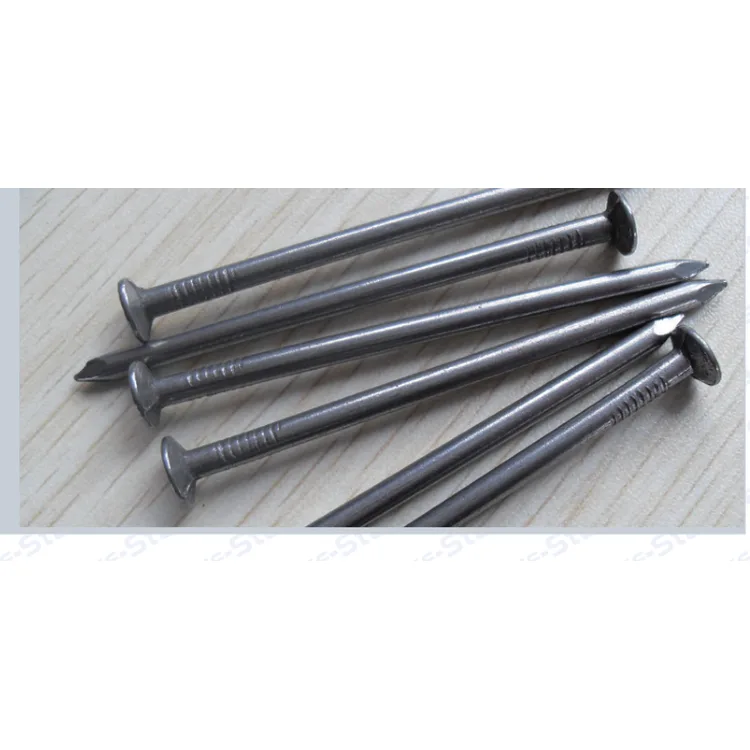
We are Hebei Leeter Import and Export Co., Ltd ("Leeter"), a construction wire and nail manufacturer in Dingzhou, Hebei — a wire-drawing corridor — so the wire that becomes our nails is drawn in-house, and this is a first-hand screen, not a directory scrape.
The duty check comes first (US and EU)
Before you compare any factory quote, confirm what the finished nail owes at your border — it can dwarf the FOB price:
- US — antidumping order on steel nails. Certain steel nails from China are under a US AD order (originally 73 FR 44961, 1 Aug 2008; continued by the 2025 sunset review). In the latest administrative review the China-wide AD cash-deposit rate is 118.04% of entered value; individually reviewed exporters can be far lower (one 2023–24 example was 28.28%). The rate that applies depends on the specific exporter, so for US entries, confirm the exporter's own AD rate and HTS scope before you cost anything — this single number decides whether Chinese nails make sense for the US at all.
- US — Section 232 steel tariff. On top of any AD duty, steel nails are a steel-derivative product and carry the Section 232 tariff (50% of the steel content in 2026). See Section 232 for wire, mesh and fence importers for the HTS logic.
- EU — CBAM. For European importers the lever is different: the Carbon Border Adjustment Mechanism phases in on steel goods including nails — see CBAM 2026 for steel wire, mesh, nails and fence importers. A factory that can report verified embedded emissions saves you CBAM cost and paperwork.
The practical consequence: for the US, Chinese nails are viable mainly through an exporter with a low individual AD rate, or for product scopes the order does not cover — otherwise buyers source nails elsewhere and keep China for mesh, wire and fence. For Europe and much of the world, the AD order does not apply and the screen below is what matters.
The factory screen: five questions
- Wire-drawing in-house, or nails only? A factory that draws its own rod controls wire diameter, temper and coating from rod to finished nail, and its mill test report covers its own wire. A nail-only workshop buys wire in, so origin and certificate are a step removed. Ask to see the drawing and nail-making lines on live video.
- Which nail types from one campus? Construction buyers want one bill of lading: common wire nails, concrete/masonry nails (hardened 45#/55#/70# steel), coil and umbrella roofing nails, ring/spiral pallet nails, duplex form nails, finish nails. A full-range maker consolidates a mixed container; a single-type shop does not. See the construction nail types guide.
- Loose or collated — and to which tool? Pneumatic buyers need the right collation: paper-tape or plastic-strip framing nails (common strips are 21°, 28°/30° and 34°), 15° wire-coil nails, roofing coils, and staples. Collation angle is a tool-compatibility spec set by convention, not by ASTM F1667, so name the gun/brand the strip must feed. Confirm strip count, glue vs wire weld, and moisture packaging.
- Finish and steel grade. Polished (bright), electro-galvanized, hot-dip galvanized, or stainless; hardened carbon for concrete nails. State the finish and, for concrete nails, the steel hardness — a soft "concrete nail" bends on the first strike.
- Factory or trader? Check the GSXT business-licence scope (a manufacturer's reads production/manufacturing), ask who issues the mill test report, and — for US entries — confirm the exporter's AD rate is in the entity's own name, because the AD rate is exporter-specific.
Standards to name in the RFQ
- ASTM F1667/F1667M ("Driven Fasteners: Nails, Spikes, and Staples") is the US specification; it classifies Type I nails, Type II cut nails, Type III spikes and Type IV staples, and sets material, dimensional and coating requirements. Name it plus the nail designation.
- Dimensional / penny sizing: specify length and the penny (d) size and wire gauge — see the nail size chart and penny system.
- Galvanizing: for exterior nails, specify hot-dip galvanized (and ASTM A153 class where your market requires) rather than electro-galvanized, which is thin.
The RFQ that gets comparable quotes
| Field | Example |
|---|---|
| Product | Common wire nails (or concrete / roofing coil / pallet) |
| Size | 3-1/4" × 0.131" (name length × shank dia, plus penny size) |
| Head / shank | Flat head, smooth / ring / spiral shank |
| Steel | Low-carbon (common); hardened 45#/55#/70# for concrete |
| Finish | Bright / electro-galv / hot-dip galv (ASTM A153 class if required) |
| Collation | Loose bulk, or 30° paper-tape strip / 15° wire coil — name the tool |
| Standard | ASTM F1667 type and designation |
| Packing | 1/5/25 kg boxes, moisture-barrier, on pallets |
| Quantity | 1 × 20' container (state tonnes) |
| Documentation | EN 10204 3.1 mill test report |
| Price basis | FOB Tianjin (Xingang) |
| Duty (US) | Exporter's AD rate + Section 232 — confirmed before order |
Then ask for net weight per carton, cartons per container, lead time and payment terms, and compare kilograms of steel per dollar landed — including the AD and 232 duties, not just FOB.
Leeter's nail-supply snapshot
| Company | Hebei Leeter Import and Export Co., Ltd (Leeter) |
| Factory | Dingzhou, Hebei — own wire-drawing and nail-making lines |
| Nail range | Common 3/8"–7" (9.5–178 mm), hardened concrete 3/4"–3", coil/umbrella roofing, ring/spiral pallet, duplex, finish, cut masonry; polished, EG or HDG |
| Collation | Loose bulk, strip and coil collation to tool spec |
| Standards | ASTM F1667; ASTM A153 galvanizing on request; EN 10204 3.1 MTR |
| Markets / duty | Confirm destination duty first — US AD order + Section 232; EU CBAM. We supply the paperwork (MTR, HTS, emissions data) importers need |
| Terms | Trial orders and mixed containers (nails + wire + mesh + fence) welcome; FOB/CIF Tianjin |
For a first mixed container, Hebei lets you consolidate nails with tie wire, welded mesh and fencing from one region and one bill of lading.
Frequently asked questions
Who are the nail suppliers in China?
Most Chinese nails come from wire-drawing regions — Hebei (including the Dingzhou corridor) and Shandong among them — where factories draw rod to wire and head, point, collate and coat nails on one campus. The reliable ones draw their own wire, make the full nail range, issue their own EN 10204 3.1 mill test report, and quote to ASTM F1667. Hebei Leeter (leeter.cn), in Dingzhou, is one such manufacturer. For US entries, screen on the exporter's antidumping rate as well, because that number — not the FOB price — usually decides the deal.
Can I still import nails from China to the USA?
Yes, but steel nails from China carry a US antidumping duty order (since 2008, continued by the 2025 sunset review). The China-wide cash-deposit rate in the latest review is 118.04% of entered value, while individually reviewed exporters can be much lower (a 2023–24 example was 28.28%), and Section 232 steel tariffs stack on top. So it only pencils out through an exporter with a low individual AD rate or for nail scopes the order does not cover. Confirm the exact exporter rate and HTS scope with your customs broker before ordering — this is the first check, not the last.
What is the antidumping duty on Chinese steel nails?
Certain steel nails from China are subject to a US AD order originally issued in 2008 (73 FR 44961). In the 2023–2024 administrative review (final results 19 May 2026), the China-wide entity rate is 118.04% and individually reviewed exporters received their own, lower rates. AD rates are exporter-specific and change with each annual review, so verify the current cash-deposit rate for your specific supplier in the ITA AD/CVD database rather than assuming a number.
What standard covers nails for US construction?
ASTM F1667/F1667M, "Driven Fasteners: Nails, Spikes, and Staples," is the US specification. It classifies Type I nails, Type II cut nails, Type III spikes and Type IV staples, and sets material, dimensional and coating requirements. Specify the F1667 type and designation plus the penny (d) size, length, shank and finish; collation angle is a separate tool-compatibility spec, not set by F1667.
What is the typical MOQ and lead time for nails from China?
Trial orders from a pallet to a few tonnes are common, with mixed containers (nails plus wire, mesh or fencing) accepted; production lead times typically run 20–40 days. Hebei suppliers quote FOB Tianjin (Xingang). For US buyers, build the exporter's antidumping rate and Section 232 into the landed cost from the start, because they can exceed the FOB price many times over.
