
We are Hebei Leeter Import and Export Co., Ltd ("Leeter"). The export office is in Shijiazhuang, Hebei, the factory is in Dingzhou, and we have shipped construction wire, mesh and fencing to North America and Europe since 2006. The photograph at the top of this page is our chain-link temporary fence standing on flat steel feet in the workshop. The diamond is a standard construction mesh and gives a toe hold. An anti-climb spec is a tighter opening on a panel of this kind.
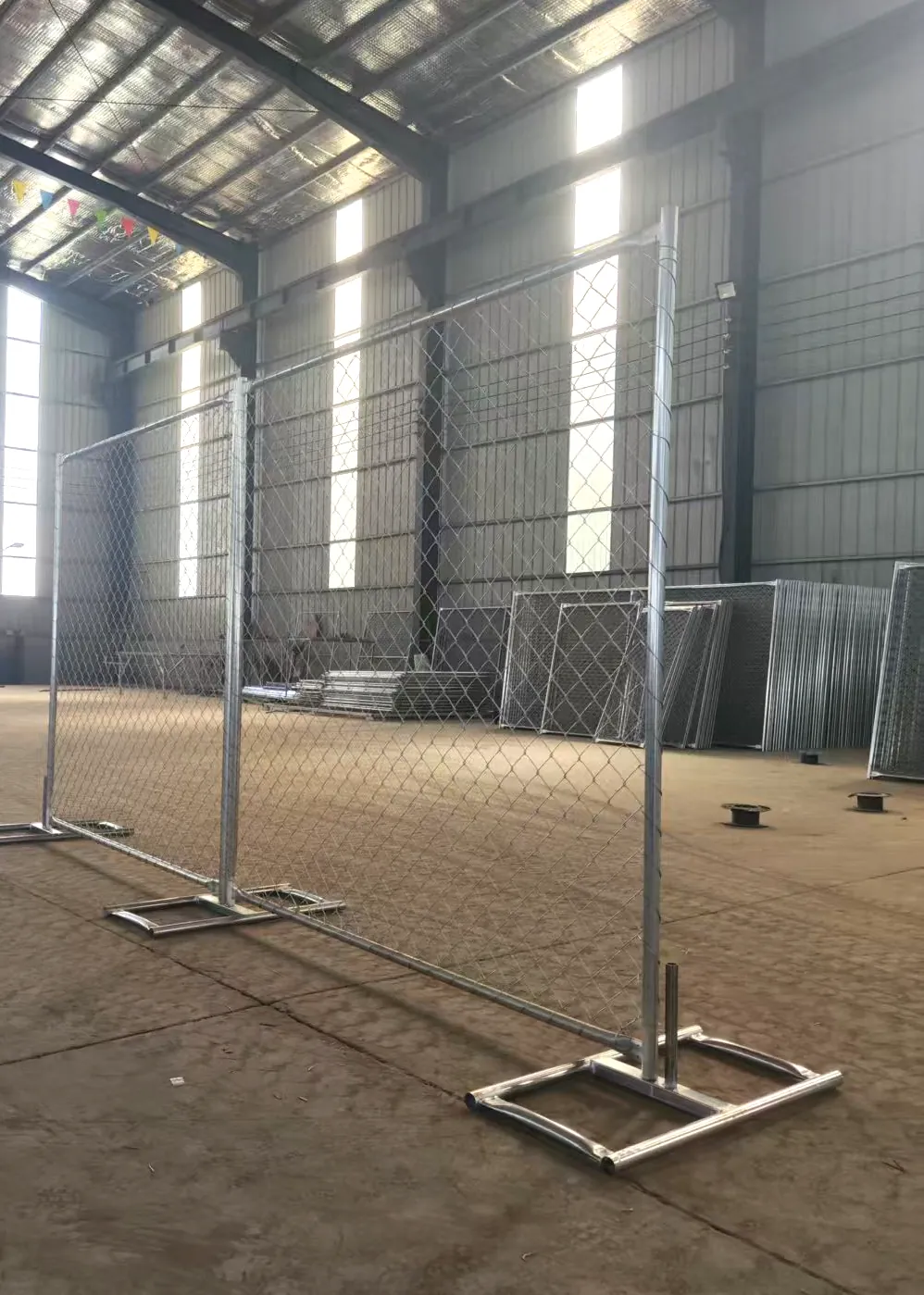
What anti-climb means on a temporary panel
Anti-climb, on a temporary panel, is the mesh aperture. A taller frame with the same diamond is still a ladder. Buyers also mix this up with anti-lift, which is the coupler: a fitting that stops someone lifting a panel off its feet or undoing the joint by hand. You specify both, and they solve different problems. The fuller version of that split is in our temporary fencing panel specifications guide.
Published high-security temporary systems use 358 mesh: an opening of 76.2 mm × 12.7 mm (3 in × 0.5 in) in about 4 mm (8 gauge) wire, in panel heights of 2.0 m, 2.4 m and 3.0 m (6.6 ft, 7.9 ft and 9.8 ft). The 12.7 mm (0.5 in) side leaves little room for a finger or toe hold. One published 2.0 m × 2.5 m (6.6 × 8.2 ft) kit pairs that mesh with security screws and 200 kg (441 lb) of ballast. Another lists the same opening on 455 kg (1,003 lb) bases, with a 910 kg (2,006 lb) option, and anti-tamper fixings. Those weights belong to those post-and-block systems. They are not a rating of a rental panel on a light foot.
Tight mesh adds time. A crew with cutting tools can still open a panel. Delay is the job of security temporary fencing on a line that only stands for the length of the build.
Standard mesh and anti-climb mesh
Match the opening to the risk. A general construction perimeter and a yard full of copper do not want the same mesh.
| Mesh | Opening | What a climber gets | Where it belongs |
|---|---|---|---|
| Chain-link temporary fence | 50×50 mm to 70×70 mm diamond (2.0–2.8 in), wire 1.5–4.0 mm (0.06–0.16 in) | A wire to stand on, even when the diamond looks small | US and Canadian rental fleets, short-term site lines |
| Standard welded temporary mesh | 75×150 mm or 80×160 mm (3.0×5.9 in or 3.1×6.3 in); UK-style panels often near 100×200 mm (3.9×7.9 in) | A boot in the rectangle | Events, general perimeters, Heras-style lines |
| Tighter welded step-up | 50×100 mm (2.0×3.9 in) in 4.0–6.0 mm wire (0.16–0.24 in) | Harder to climb than the open rectangle; a finger still fits 50 mm | Higher-security portable panels |
| Finger-denying 358 mesh | 76.2×12.7 mm (3×0.5 in) in about 4 mm (8 gauge) wire | Little room for a finger or toe hold on the 12.7 mm side | High-security temporary lines and permanent perimeters |
Our welded mesh temporary fence is listed at 50×100 mm, 75×150 mm and 80×160 mm, with wire from 2.5 mm to 6.0 mm (0.10–0.24 in), and anti-climb mesh on request. The higher-security step-up already on that page is 4.0–6.0 mm wire at 50×100 mm. A 76.2 × 12.7 mm opening is tighter than that list. Send the aperture and the wire diameter on the inquiry form and we will quote it as a custom mesh. We do not publish a stock 358 temporary panel, a climb test, or a cut test.
Regional outside sizes — US 6×9.5 ft and 6×12 ft, Australia 2.1×2.4 m, UK 2.0×3.5 m — are in the temporary fence panel sizes guide. Welded mesh and chain-link compared on handling and security are in welded mesh vs chain-link temporary fence.
Panel height and length for US and Canadian sites
ASTM F3342-19, Standard Guide for Temporary Fence Applications for Construction Sites, describes temporary construction enclosures 6 ft or 8 ft (1.83 m or 2.44 m) high: a continuous barrier, panels joined by a steel fitting that makes a positive connection. It tells the user to check the contract, the site plan and local codes, and to look at the ground before the fence goes up. A city ordinance can ask for something else, including a solid hoarding. Fence height on a US site comes from that contract and the local authority. OSHA 29 CFR 1926.200 covers signs: they stay visible while work is underway, they come down when the hazard is gone, and points of hazard get legible traffic-control signs. It does not set a perimeter height.
Ontario Regulation 213/91, section 65, applies when work may endanger a person using a public way. In that case a sturdy fence at least 1.8 m (5 ft 11 in) high goes between the public way and the project. The section sets a height. It does not set a mesh aperture.
Our listed welded-mesh heights are 1.0, 1.2, 1.5, 1.8, 2.0 and 2.1 m (3.3, 3.9, 4.9, 5.9, 6.6 and 6.9 ft). Lengths are 2.0, 2.4, 2.5, 3.0 and 3.5 m (6.6, 7.9, 8.2, 9.8 and 11.5 ft). A 1.8 m panel is about 5 ft 11 in, which meets the Ontario 1.8 m figure and sits just under a true 6 ft (1.83 m) panel. If the contract says 6 ft or 8 ft, write the height in feet on the inquiry. An 8 ft (2.44 m) panel is above the listed range, so it is a custom height to quote, the same way a 2.4 m or 3.0 m 358 line is a custom height to quote. Chain-link panels for US rental fleets are commonly 6 ft × 10 ft and 6 ft × 12 ft (1.83 × 3.05 m and 1.83 × 3.66 m).
Feet, clamps, bracing and ballast
A tight mesh on a panel that lifts off its foot, or blows over, does not hold a line. ASTM F3342 warns that a windscreen turns the fence into a solid barrier, and that the temporary fence in that guide is not capable of handling a 110 mph gust under ASCE/SEI 7-10. If screening goes on, the fence has to be designed the way a permanent fence is designed for that wind. Open mesh sheds wind. Shade cloth and banners do not. The practical side of ballast, sandbags and stays is in how to keep temporary fencing from blowing over and the bases and feet guide.
The hardware below is what we photograph with the temporary-fence panels. None of it is an anti-climb mesh, and the clamp is a standard bolt clamp.
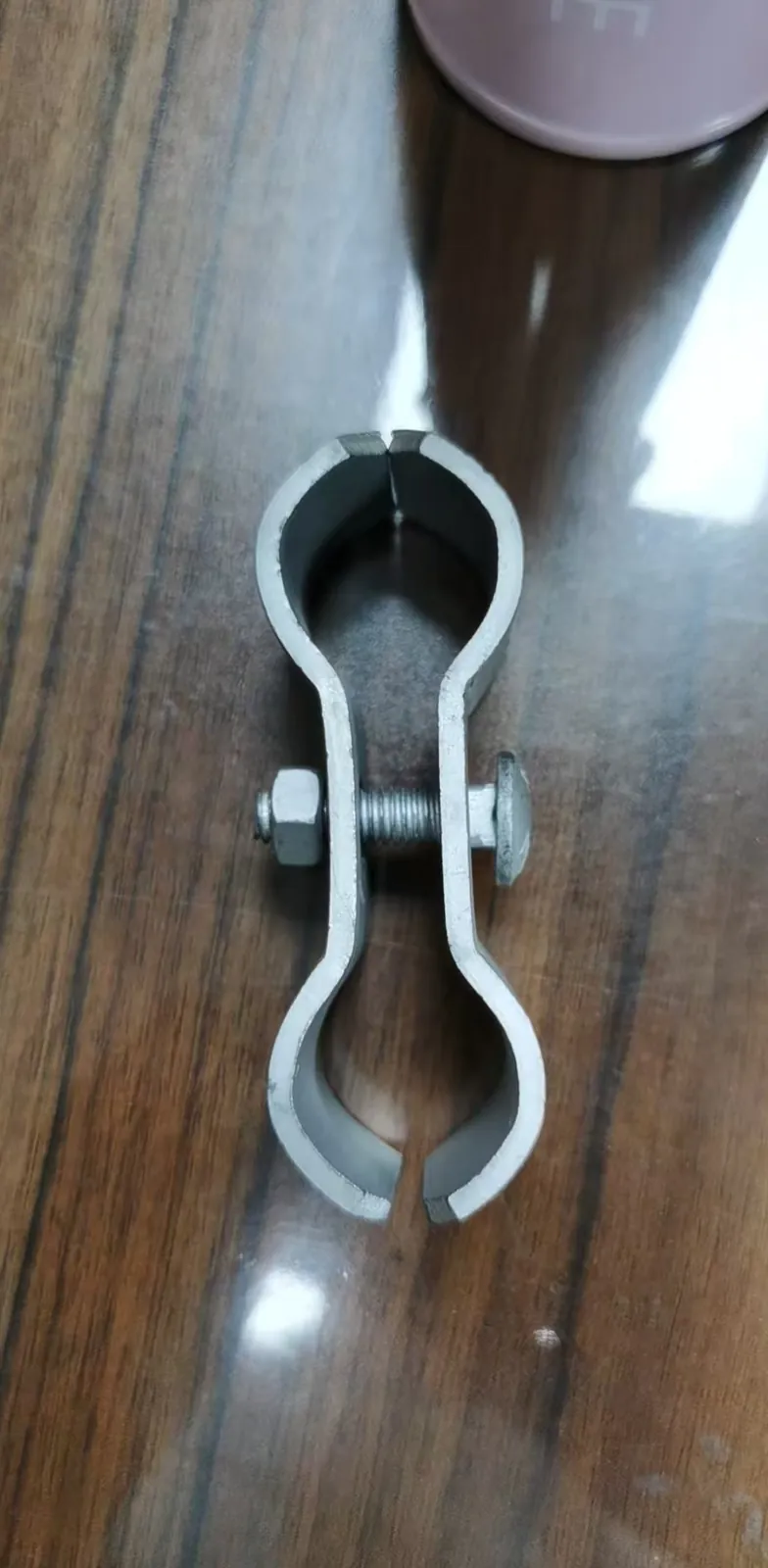
The clamp in the photo is a figure-8 fitting with a hex bolt. It joins two frame tubes, and a wrench undoes it. Anti-lift hardware is a coupler low on the frame, closed with a security nut or a clutch-head fastener. Published 358 temporary systems list anti-tamper fixings for that job. Our welded-mesh panels ship with clamps and couplers. Name a security fastener on the inquiry when the rental contract requires one. The hex-bolt clamp in this photo is the standard fitting.
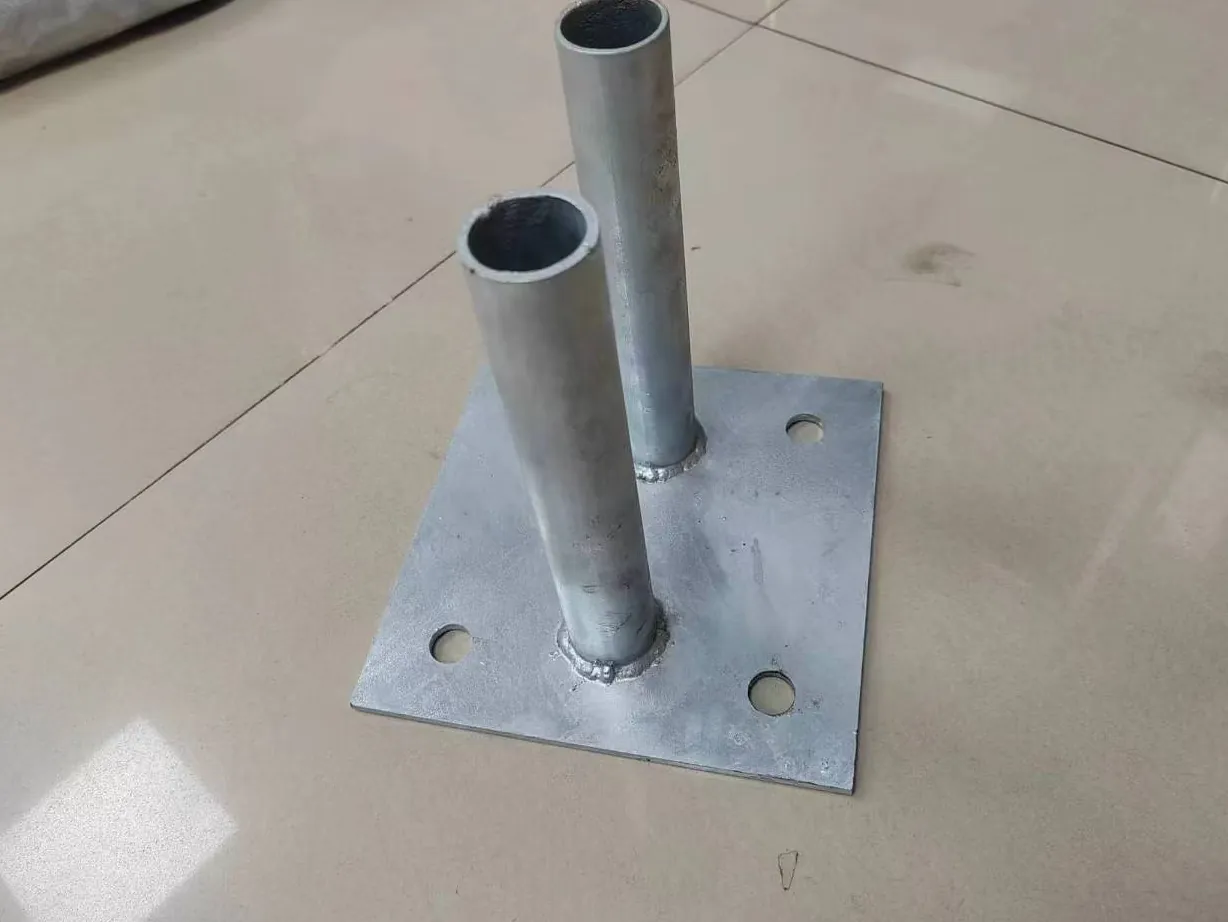
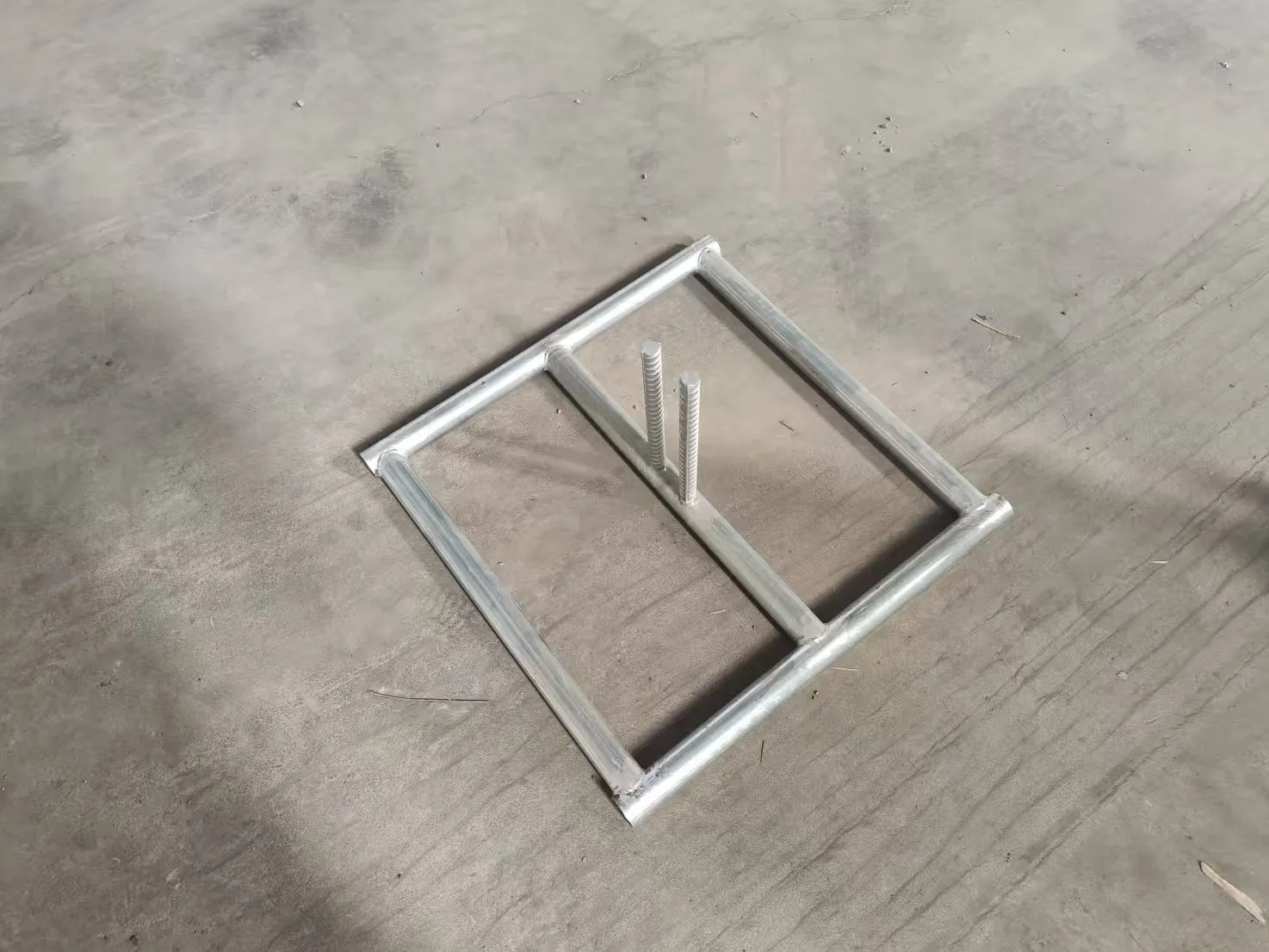
The product range also includes plastic and concrete block feet. Set the base on the inside of the line where the ground allows. A light foot on a screened run needs added ballast. The 200 kg, 455 kg and 910 kg figures above are the published high-security systems, not these portable feet.
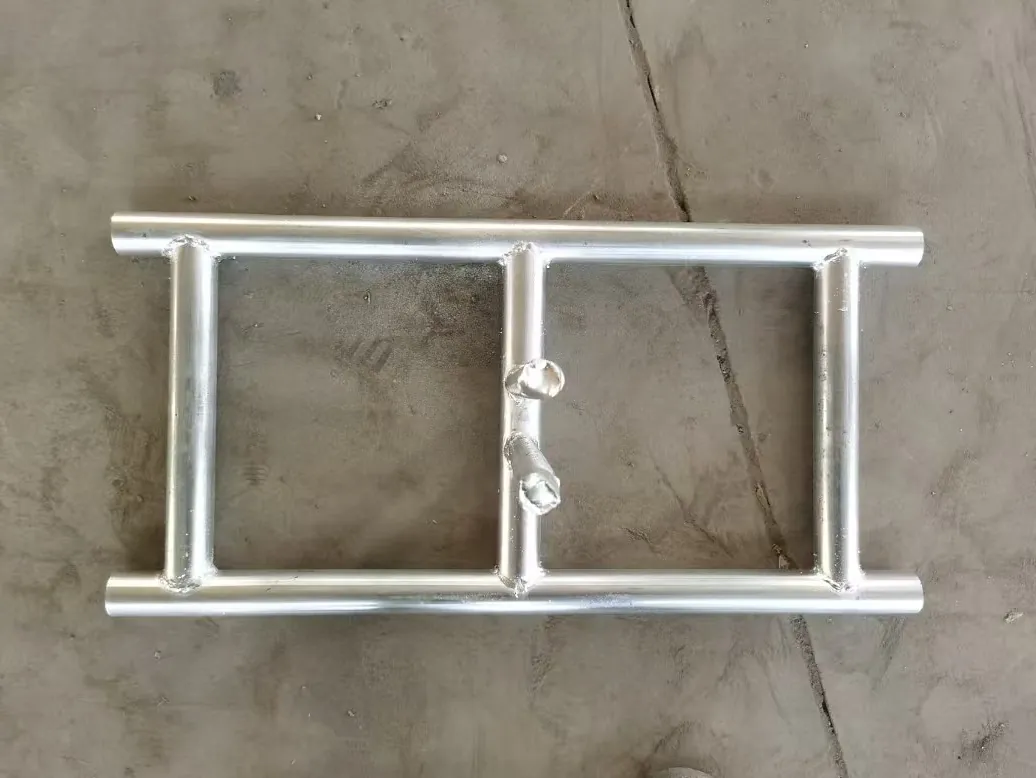
Put stays at gates, corners and along screened runs. The brace in the photo is a galvanized stay, used with ballast, not in place of it.
Gates and site signs
The gate is where a vehicle has to pass, so it is where a weak line usually starts. Published high-security temporary systems supply a framed gate in the same mesh, in single-leaf and double-leaf forms. One of them lists a 1.2 m (3.9 ft) single leaf and a 4 m (13.1 ft) double leaf. Specify the clear opening you need, and swing the leaf into the site so it does not occupy the sidewalk. A panel tied across a gap with wire is not a gate.
On 22–23 September 2026, the Culpeper County Sheriff's Office reported that thieves cut a padlock on the front gate of a data-center construction site and removed copper piping valued at more than $200,000. On 18–19 October they cut the east perimeter fence and took power tools. On 21–22 October investigators believe they used that same cut. Sheriff Timothy Chilton said the same two people had come back three times in a month. The report describes a cut padlock and a cut fence, and it does not name the mesh, so it is not a verdict on any one panel. What it shows is the set of delays to specify together: the mesh, the coupler, the gate, a lock on the copper and the tool store, and someone watching the cameras.
Under OSHA 1926.200, post points of hazard with legible traffic-control signs while work is underway, and remove or cover them when the hazard is gone. Use a danger sign where an immediate hazard exists.
Temporary fence during the build, permanent fence after
Security temporary fencing is the line that stands while the building is still a site: generators, cable reels, tools and copper on the pad, crews in and out all day. When the campus is occupied, the fence that stays is a permanent perimeter. The comparison of 358 anti-climb mesh and steel palisade for that permanent line is in our data-center perimeter fencing guide. Plan the temporary spec in the site-setup package, before the first reel of copper lands, and plan the permanent spec as its own order.
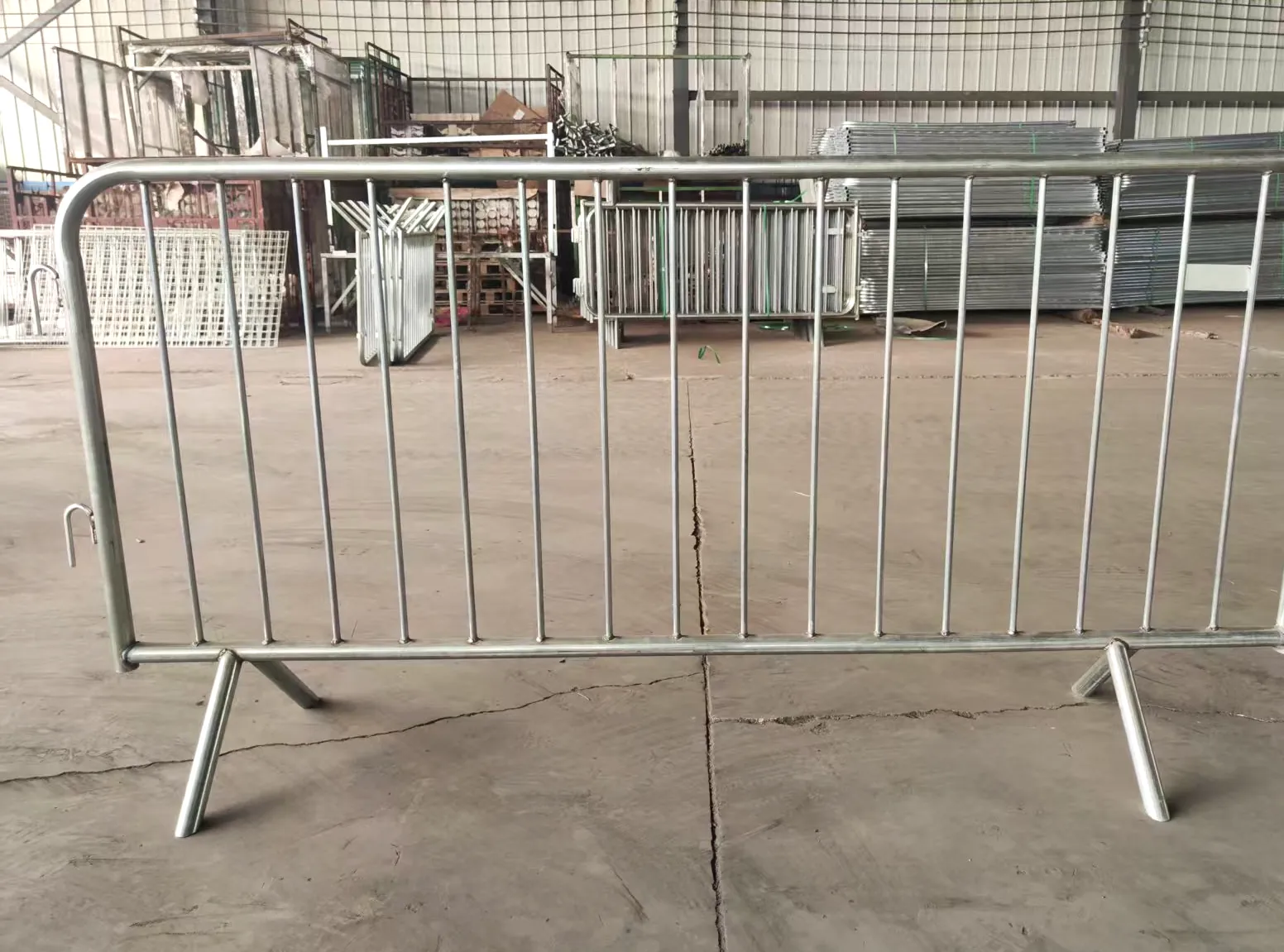
A steel-tube crowd barrier is a third product. Our listed size is about 1.1 m high × 2.0–2.5 m long (3.6 ft × 6.6–8.2 ft), with hook-and-eye ends. It guides a queue. It is not an anti climb construction fence.
If the shipment is bound for the United States, read temporary fencing suppliers in China for the origin question before you lock a factory. Panel, foot, clamp and brace still have to match, whichever plant builds them.
How to set up an anti-climb temporary fence line
- Confirm the line before the panels arrive. Walk the perimeter, mark every gate and corner, and read the contract and the local code for height. ASTM F3342-19 describes 6 ft (1.83 m) or 8 ft (2.44 m) enclosures and tells you to inspect the site before installation.
- Stand each panel in its feet. Put the base on the inside of the line where the ground allows, so the foot is not a step on the public side. Keep the mesh close to grade so there is no crawl gap, including on a slope where panels step.
- Join every panel with a steel clamp. Use a fitting that makes a positive connection, high and low on the frame. Where the contract asks for anti-lift hardware, close the low coupler with a security fastener.
- Brace and ballast for the wind on that site. Leave the mesh open unless you have designed the line for the sail of a screen. ASTM F3342 warns that a screened temporary fence is not rated for a 110 mph gust under ASCE/SEI 7-10. Add stays at gates and corners, and put the weight on the feet.
- Hang a framed gate and lock what is stored inside. Swing the leaf into the site. The Culpeper County reports started with a cut padlock on the front gate and continued through a cut in the fence, so the perimeter and the copper store each need their own delay.
- Post the hazard and walk the line. Keep OSHA 1926.200 signs visible while the work is underway, and walk the full run at the end of the shift so a lifted panel or a fresh cut is found before night.
What to send with the inquiry
Send the mesh opening and wire diameter, the panel height and length in millimetres and in feet, the foot type, whether the coupler has to be tamper-resistant, the gate clear opening, and the destination port. For a listed welded-mesh panel, the openings we publish are 50×100 mm, 75×150 mm and 80×160 mm, with anti-climb mesh on request. For a 76.2 × 12.7 mm finger-denying mesh, or for an 8 ft (2.44 m) height, ask for a custom quote. Use the inquiry form or write to sales@leeter.cn. Drawings of the gate and a note on whether the line will carry screen help us quote the braces with the panels.
Frequently asked questions
What is an anti-climb temporary fence?
An anti-climb temporary fence is a free-standing site panel with a mesh opening small enough that a hand or a boot cannot take a hold. Published high-security systems use 358 mesh, 76.2 mm by 12.7 mm (3 in by 0.5 in) in about 4 mm (8 gauge) wire. A standard chain-link construction panel, with a 50–70 mm (2.0–2.8 in) diamond, still gives a toe hold. The tight mesh deters a casual climb and adds time for anyone who tries. A crew with cutting tools can still open a panel, so the gate, the stored copper and the cameras stay in the spec.
How is anti-climb mesh different from a standard construction fence panel?
Standard US chain-link temporary panels use a 50–70 mm diamond that a boot can stand on. Standard welded temporary mesh is often 75×150 mm or larger, which takes a whole boot. A 50×100 mm welded opening in 4.0–6.0 mm wire is harder to climb, and a finger still fits the 50 mm side. Finger-denying mesh steps down to 12.7 mm (0.5 in) on the short side. Height alone does not make a panel anti-climb.
What height should a construction site fence be in the US and Canada?
On a US project, take the height from the contract and the local authority. ASTM F3342-19, when the spec cites it, describes 6 ft or 8 ft (1.83 m or 2.44 m) temporary construction enclosures. OSHA 1926.200 covers signs at points of hazard and does not set a perimeter-fence height. In Ontario, Regulation 213/91 section 65 requires a sturdy fence at least 1.8 m (5 ft 11 in) between a public way and a project when the work may endanger a person using that public way. Our listed temporary heights run from 1.0 m to 2.1 m. A true 6 ft or 8 ft panel should be written in feet on the order, because 1.8 m is about 5 ft 11 in.
Do anti-climb panels stop theft on a data-center build?
They add delay at the perimeter. In September and October 2026 a data-center construction site in Culpeper County, Virginia, was entered three times in a month: first through a cut padlock on the front gate, then through a cut in the fence, then through what investigators believe was the same cut. Copper piping valued at more than $200,000 and a later haul of power tools left the site. Specify the mesh, a hard-to-undo coupler, a framed gate, locks on the storage itself, and a way for someone to see the line at night. The fence is one layer of that.
Can you quote an anti-climb mesh on a temporary panel?
Yes, as a custom mesh on request. The welded-mesh temporary fence we list today has openings of 50×100 mm, 75×150 mm and 80×160 mm, wire from 2.5 mm to 6.0 mm, and anti-climb mesh on request. The published higher-security step-up on that product is 4.0–6.0 mm wire at 50×100 mm. A 76.2 × 12.7 mm aperture is tighter than the listed openings. Send the opening, the wire diameter, the height and the destination through the inquiry form and we will quote that mesh. We do not publish a test certificate for climb or cut resistance.
Is a crowd-control barrier the same as security temporary fencing?
A steel-tube crowd barrier in our range is a separate product, about 1.1 m (3.6 ft) high, built to guide pedestrians with interlocking ends. Security temporary fencing for a construction site or a data-center build is a full-height mesh line, commonly in the 6–8 ft range when the spec follows ASTM F3342, with a tight aperture, couplers, ballast and a gate.
Sources
- ASTM F3342-19, Standard Guide for Temporary Fence Applications for Construction Sites
- Ontario Regulation 213/91, Construction Projects, section 65
- OSHA 29 CFR 1926.200, Accident prevention signs and tags
- WTOP, 23 October 2026: three thefts at a Culpeper County data-center construction site
- Published temporary 358-mesh site-fence specification: 76.2 × 12.7 mm mesh, 4 mm wire, heights of 2.0 m, 2.4 m and 3.0 m, anti-tamper fixings, 455 kg and 910 kg bases
- Published 2.0 m × 2.5 m temporary 358-mesh kit with security screws and 200 kg of ballast
